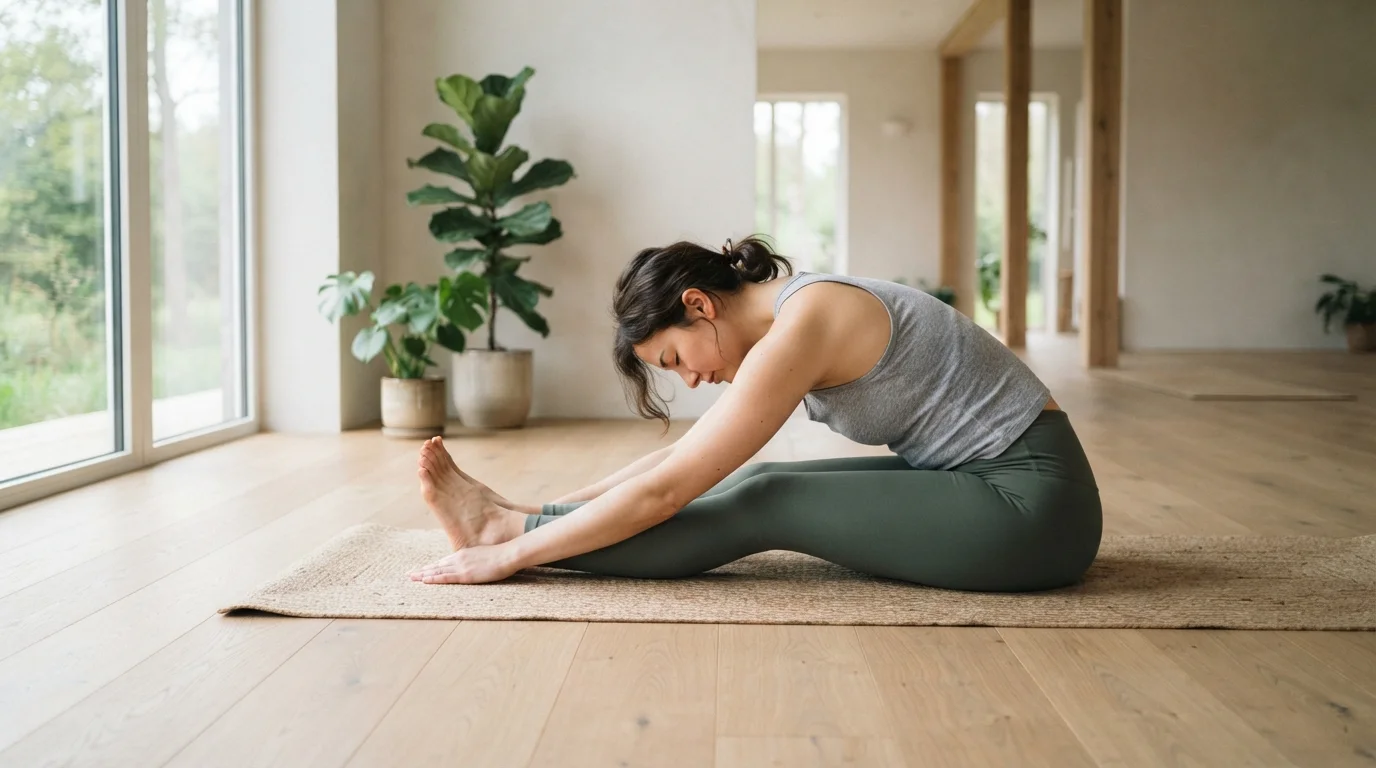
Three Terms, Three Distinct Meanings
In fitness conversations - and often in workout classes, apps, and social media - the words flexibility, mobility, and stretching are used as if they mean the same thing. They don't. Each describes something different, and conflating them can lead to misplaced training goals or unrealistic expectations about what movement practice can deliver.
Flexibility
The passive ability of a muscle or group of muscles to lengthen when an external force - such as gravity or a partner - is applied. It describes tissue pliability rather than active control.
Mobility
The ability to move a joint actively through its full range of motion with control and stability. Mobility involves strength, coordination, and neuromuscular control - not just tissue length.
Stretching
A practice or technique - such as static holds, dynamic movement, or proprioceptive neuromuscular facilitation - used to increase range of motion in muscles and connective tissue.
Range of Motion (ROM)
The extent of movement possible at a joint, typically measured in degrees. ROM can be passive (assisted) or active (self-directed).
Static Stretching
Holding a stretch position for a sustained period, typically 15-60 seconds, without movement. Commonly used in cool-downs to reduce muscle tension.
Dynamic Stretching
Controlled, movement-based stretches that take joints through their range of motion repeatedly. Often used in warm-ups to prepare the body for activity.
Hypermobility
A condition in which joints move beyond their typical range of motion. While sometimes called 'flexible,' hypermobility without adequate muscular control can increase injury risk.
The clearest way to separate them: flexibility is a property of tissue, mobility is a function of the whole movement system, and stretching is a set of techniques you can use to influence both. Think of flexibility as raw material, mobility as how well you can use it, and stretching as one of the tools in the process.
Why the Distinction Matters for Everyday Movement
If you've ever watched someone perform a deep squat effortlessly, your first instinct might be to say they're 'flexible.' But what they're actually demonstrating is mobility - active control through a wide range of motion. That requires not just tissue length but also strength in the muscles surrounding the hip, knee, and ankle joints, plus coordination between the nervous system and muscles.
These Terms Describe Different Things
Someone can be highly flexible - able to fold deeply in a stretch - yet lack the mobility to control that position under load. Conversely, a person with modest passive flexibility can have excellent functional mobility for daily activities and athletic performance. Understanding the difference helps you train more intentionally and avoid the false belief that being 'not flexible' means you can't improve your movement quality.
This matters practically. For example, runners and weightlifters often benefit more from targeted mobility work - exercises that challenge joints under load and through movement - than from long passive stretching sessions alone. Meanwhile, someone recovering from a muscle strain may specifically need to address tissue flexibility as part of guided rehabilitation. A qualified physical therapist or exercise professional can help you identify which approach fits your situation.
For a broader look at movement options that are gentle on joints, see our article on low-impact exercise.
| Flexibility involves | Passive muscle lengthening |
| Mobility involves | Active joint control and range of motion |
| Stretching is | A technique, not a physical trait |
| Best warm-up stretch type | Dynamic stretching (American College of Sports Medicine) |
| Best cool-down stretch type | Static stretching (American College of Sports Medicine) |
| High flexibility guarantees | Nothing - control matters equally |
Stretching: A Practice, Not a Destination
Stretching is commonly misunderstood as something you either 'do' or 'skip.' In reality, it's a broad category of techniques, each with distinct applications:
- Static stretching - holding a position - is generally best reserved for after activity, when muscles are warm, to help reduce tension and support recovery.
- Dynamic stretching - controlled, repetitive movement through a range - is more appropriate before exercise to prepare joints and tissues for load.
- Proprioceptive Neuromuscular Facilitation (PNF) - a technique involving alternating contraction and relaxation - is used in clinical and advanced settings and is typically guided by a trained professional.
The goal of stretching isn't to become 'more flexible' as an end in itself. The goal is to support functional, pain-free movement in daily life, sport, or rehabilitation. Consistency matters far more than intensity - brief, regular practice tends to produce more durable results than infrequent marathon sessions.
37%
Adults reporting limited mobility or joint pain
According to CDC survey data, musculoskeletal conditions affect a significant share of American adults, highlighting the importance of movement education.
2-3x/week
Recommended stretching frequency for adults
The American College of Sports Medicine recommends stretching major muscle groups at least two to three days per week for general fitness maintenance.
This article is for general informational and educational purposes only. It is not a substitute for professional medical or exercise guidance. Consult a qualified healthcare or fitness professional before beginning any new exercise or stretching program, particularly if you have an existing injury or health condition.