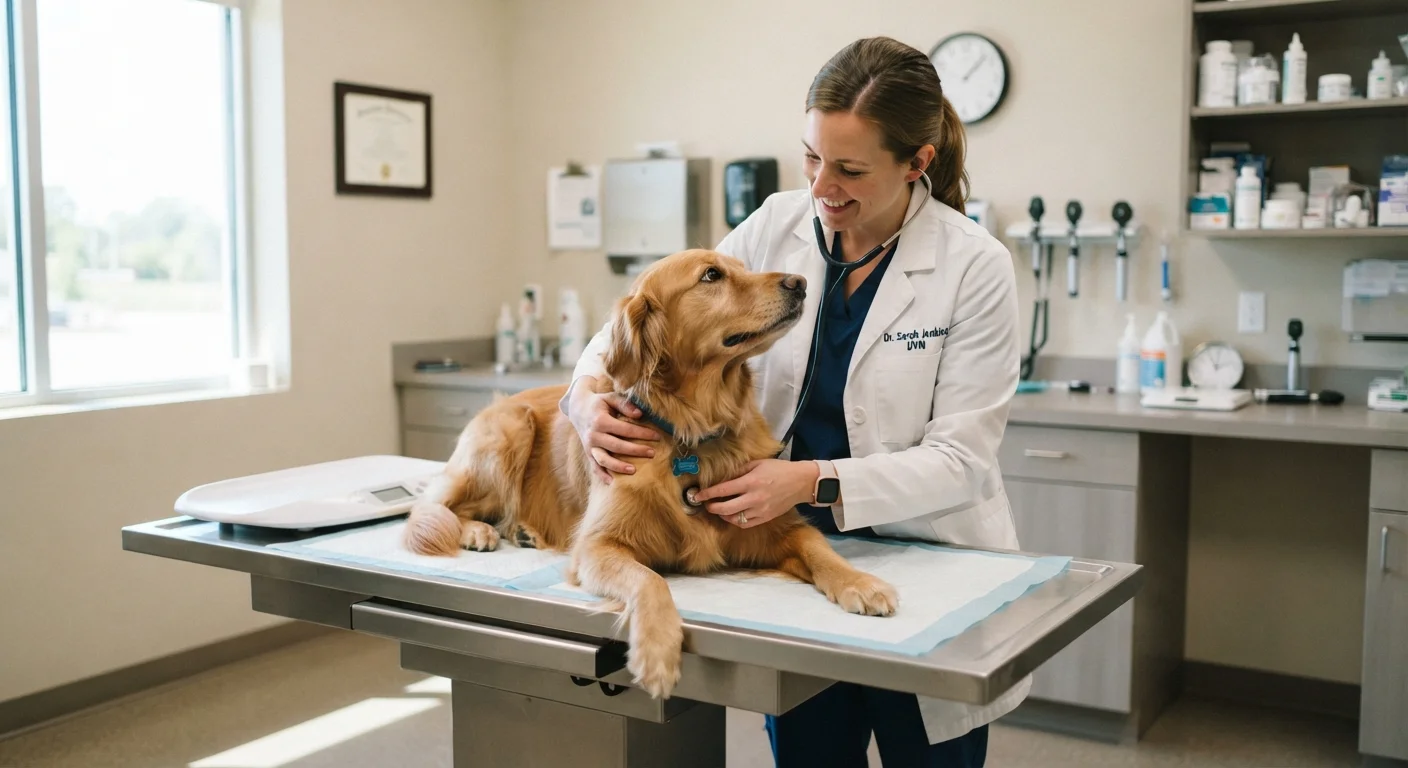
What Happens During a Routine Wellness Exam
A wellness exam follows a methodical sequence that most owners don't fully witness from the vet's perspective. It begins before the vet even touches your pet - observing how the animal moves, holds its weight, and reacts to the environment.
The physical exam itself moves through distinct areas:
- Eyes and ears: Checked for discharge, redness, cloudiness, or signs of infection.
- Mouth and teeth: Dental disease is one of the most underdiagnosed conditions in pets. The vet looks for tartar buildup, gum inflammation, cracked teeth, and odor.
- Lymph nodes and abdomen: Palpated for unusual swelling, pain response, or organ enlargement.
- Heart and lungs: Listened to with a stethoscope to detect murmurs, irregular rhythms, or abnormal breath sounds.
- Skin and coat: Inspected for parasites, hair loss, lumps, or skin changes that may signal allergies or hormonal issues.
- Weight: Compared against prior visits to identify gradual gain or loss - both of which can indicate underlying problems.
After the physical, the vet discusses vaccination status, parasite prevention, diet, and any behavioral concerns you've noticed. This conversation is as clinically valuable as the hands-on exam. See our related article on pet vaccination schedules to understand how vaccine decisions are made during these visits.
Write Down Changes Before You Go
Even minor behavioral shifts - drinking more water, sleeping in a different spot, being slower on stairs - can be clinically meaningful. Keep a short running note on your phone in the weeks before the appointment so nothing gets forgotten in the exam room.
Why Skipping a Year Carries Real Risk
Pets cannot describe symptoms. By the time a health problem is visible - limping, significant weight loss, labored breathing - it has often been developing quietly for months. Annual exams function as an early detection system that owners cannot replicate at home.
70%
Pets showing dental disease by age three
The American Veterinary Medical Association notes that the majority of dogs and cats show signs of periodontal disease by age three - a condition frequently identified during routine wellness exams.
2x/year
Recommended exam frequency for senior pets
AAHA guidelines suggest that dogs and cats aged seven and older be examined at least twice annually, reflecting the faster pace of age-related health changes in companion animals.
Conditions commonly caught during routine exams before owners notice symptoms include:
- Early-stage kidney and liver disease
- Heart murmurs
- Dental abscesses
- Thyroid dysfunction (especially in cats)
- Skin masses and lumps
- Obesity-related joint stress
Each annual visit also builds a longitudinal health record. When a vet sees that a dog's weight has crept up two pounds over three visits, or that a cat's kidney values are trending toward the edge of normal, they can act early - well before a crisis. That baseline simply doesn't exist if visits are skipped.
For aging animals, this matters even more. Senior pets have accelerating health needs that often require more frequent monitoring and adjusted care strategies.
Frequency Varies by Age and Species
Once-a-year exams are the general standard for healthy adult dogs and cats, but your vet may recommend a different cadence based on breed predispositions, chronic conditions, or life stage. Rabbits, birds, and exotic pets often have their own recommended exam schedules - ask your vet what applies to your specific animal.
Making the Most of Every Visit
Preparation turns a routine appointment into a genuinely productive health conversation. Before the visit, jot down any changes - however minor - in your pet's eating, drinking, energy level, bathroom habits, or behavior. Vets can't observe your pet over weeks; your observations fill that gap.
Bring any medications, supplements, or flea and tick products your pet currently uses. These affect clinical decisions. If you've noticed a lump, take a photo to share its location and how it has changed.
Diet is another productive discussion point. If you've been unsure whether your pet's current food is working well, the wellness visit is a natural moment to ask. You can also review this pet nutrition checkup guide beforehand to identify specific signs to flag.
Finally, think of the wellness exam as the anchor of a broader preventive routine. Consistent at-home habits - brushing teeth, checking ears, monitoring weight - complement what the vet can assess once a year. Our guide to building a preventive care routine offers a practical starting point for owners who want to stay ahead between visits.
This article is for general informational purposes only and is not a substitute for professional veterinary advice. Always consult a licensed veterinarian for guidance specific to your pet's health needs.