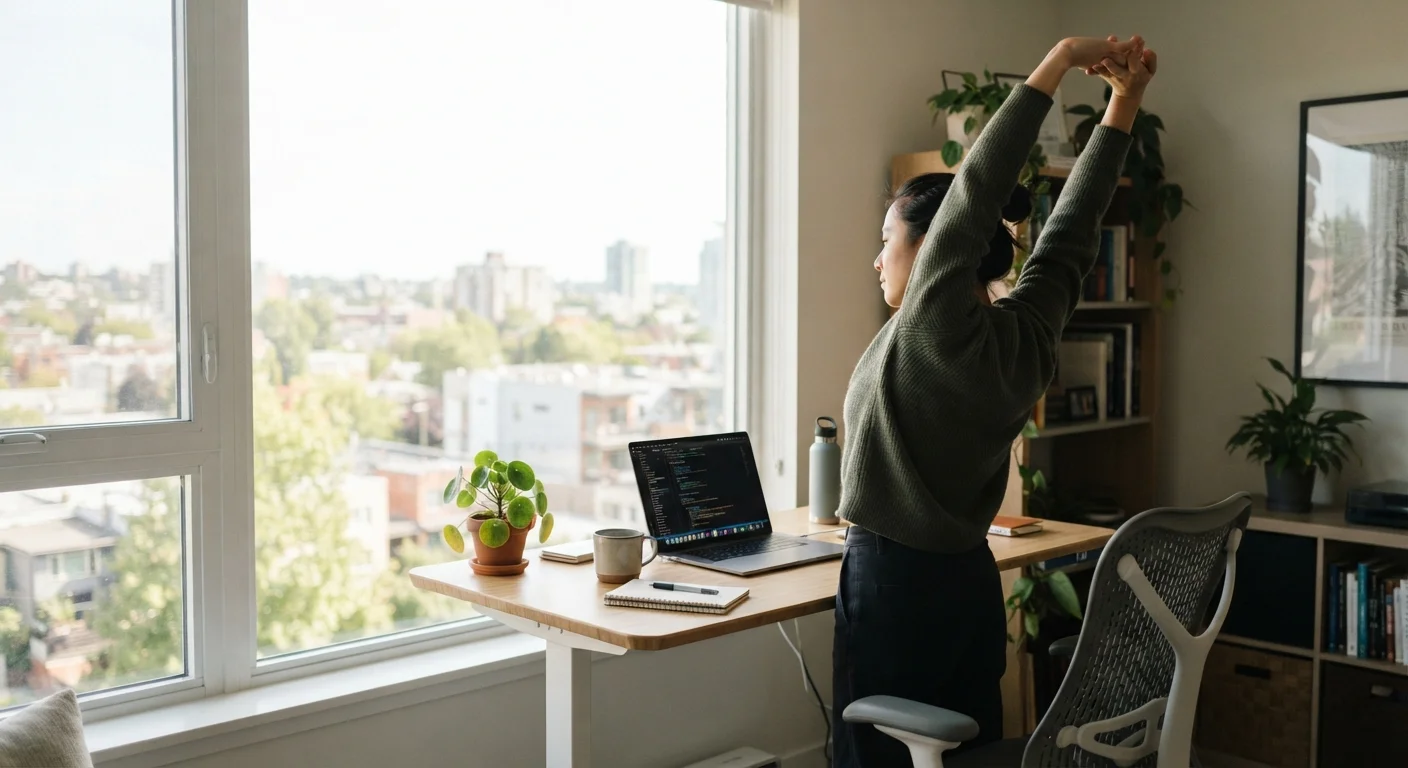
Why Prolonged Sitting Is a Distinct Problem
Most people know that exercise matters. What's less widely understood is that prolonged, unbroken sitting carries its own set of health concerns - ones that aren't automatically erased by a morning gym session. Research published in leading public health journals has associated long daily sitting time with increased risk of cardiovascular issues, metabolic disruption, and musculoskeletal discomfort, independent of whether a person otherwise meets exercise guidelines.
The mechanism isn't fully understood, but one key factor is that muscles - particularly large lower-body muscles - become largely inactive during seated work. This slows blood flow and reduces the body's moment-to-moment regulation of blood sugar and fats. A dedicated workout helps, but it covers a fraction of your waking hours. The other 8-10 hours of desk time still matter.
Sedentary behavior
Any waking activity done while sitting or lying down with very low energy expenditure - such as desk work, watching TV, or driving for extended periods.
Movement break
A brief, intentional pause from sitting to stand, walk, or perform light activity - typically lasting 2 to 5 minutes.
NEAT
Non-Exercise Activity Thermogenesis - the calories burned through everyday movements like standing, walking, and fidgeting, separate from formal exercise.
Low-impact movement
Physical activity that places minimal stress on the joints - such as walking or gentle stretching - making it accessible to people of most fitness levels.
What Counts as a Movement Break
A movement break doesn't need to be a workout - it just needs to interrupt stillness. Standing up, walking to another room, doing a few shoulder rolls, or taking the stairs all qualify. The threshold is low on purpose: the goal is frequency and consistency, not intensity.
Public health researchers generally suggest breaking up sitting every 30 to 60 minutes with 2 to 5 minutes of light movement. Over an 8-hour workday, that adds up to meaningful cumulative activity - a concept captured by the term NEAT. As our guide on consistency versus intensity explains, small, repeated efforts often produce more durable results than occasional intense ones.
Simple Moves You Can Do Right Now
None of the following require equipment, a change of clothes, or more than a few square feet of space:
- Standing calf raises: Rise onto your toes and lower slowly while standing at your desk. Engages lower-leg muscles and improves circulation.
- Seated spinal twist: Sitting upright, rotate your torso gently to one side, holding for a few breaths. Eases tension in the mid-back.
- Shoulder blade squeeze: Draw your shoulder blades together and hold for a few seconds. Counters the forward-rounding posture common at computers.
- Walk to a colleague: Replace a message or email with a short walk to deliver it in person.
- Standing desk intervals: If you have access to a standing desk, alternate between sitting and standing in roughly equal periods rather than standing all day.
Use Existing Cues to Trigger Breaks
Attach a movement break to something you already do - refilling your water, ending a call, or sending a report. Habit-stacking like this removes the need to remember and makes breaks feel automatic rather than effortful.
For people who want to expand their routine beyond the desk, building a simple walking habit is one of the most evidence-supported starting points available.
Building the Habit Into Your Day
The single biggest barrier to movement breaks isn't motivation - it's forgetting. A few practical approaches help:
- Set a recurring timer on your phone or computer for every 45-60 minutes as a standing reminder.
- Habit-stack breaks onto existing routines: stand up every time you start or end a call, or walk while reviewing non-urgent messages.
- Make water your ally: Keeping your water at a distance from your desk means more trips - and more movement - across the day.
Listen to Your Body
If you experience pain, dizziness, or discomfort during any movement, stop and rest. This content is general educational information, not medical advice. Consult a qualified healthcare professional if you have an injury, chronic condition, or are unsure whether specific movements are appropriate for you.
If you're interested in low-impact exercise options that complement desk-break movement, that's a natural next step once short breaks feel routine.
Beyond the Desk: Making Movement Stick
Movement breaks are a foundation, not a ceiling. As they become habitual, many people find it easier to add slightly longer or more structured activity - a lunchtime walk, an evening stretch, or a beginner fitness class. The key insight is that you're building a relationship with movement, not completing a program.
Movement Affects More Than Fitness
Regular physical activity is linked to improvements in sleep quality, mood regulation, and daily energy - not just physical health markers. If you want to explore that connection further, see how movement supports sleep, mood, and energy.
When you're ready to think about a more structured routine, building a routine you'll actually stick to offers a practical framework grounded in behavioral science rather than willpower. The progress you make during your workday - one standing break at a time - is real progress worth building on.
This article is for general informational and educational purposes only and is not a substitute for professional medical advice. Consult a qualified healthcare provider before starting any new physical activity program, especially if you have an existing health condition.