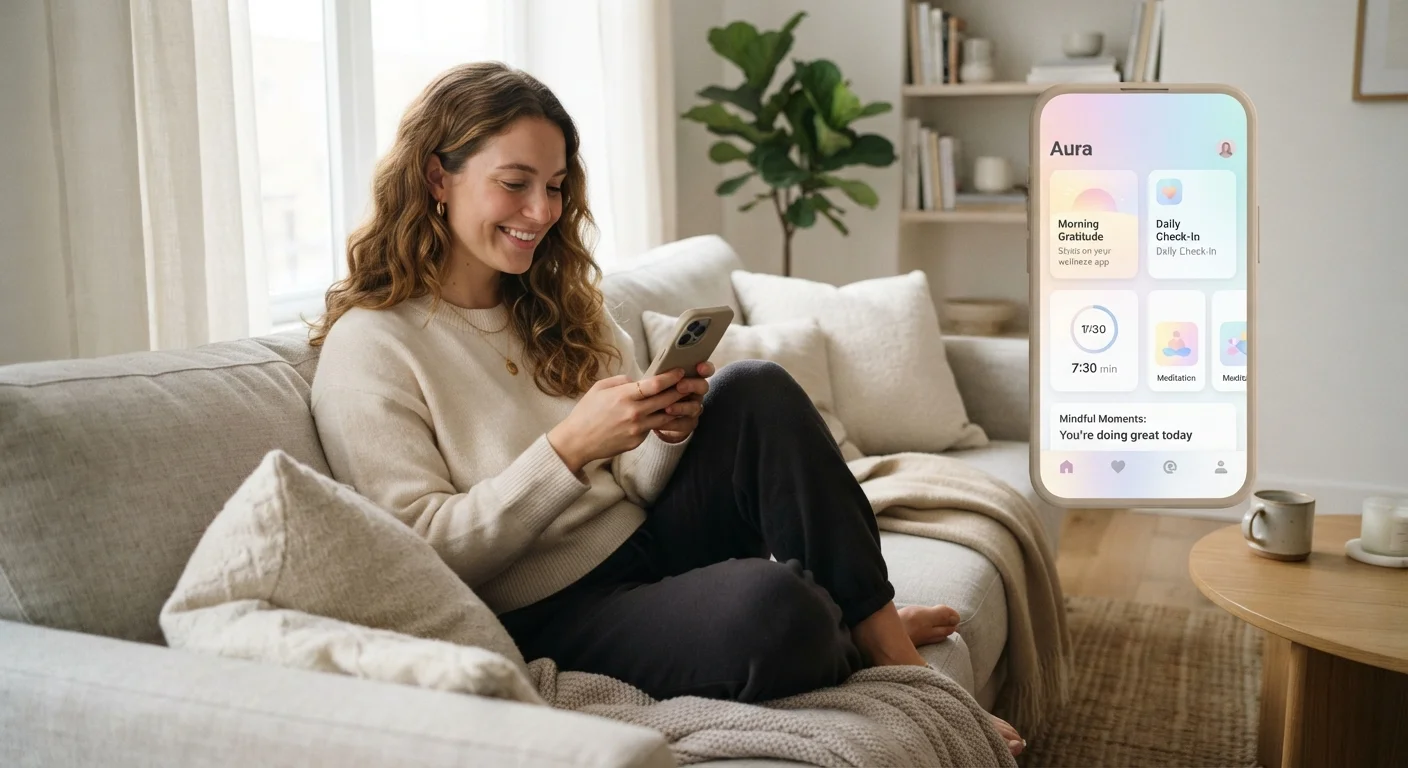
What Digital Mental Health Apps Actually Do
The category broadly labeled mental health apps covers a wide range of tools: guided meditation and mindfulness programs, mood journals, cognitive behavioral therapy (CBT)-informed skill-builders, sleep improvement programs, and peer support communities. Some are designed for everyday stress management, while others target specific concerns like anxiety, depression symptoms, or insomnia.
It helps to understand that most apps are wellness tools, not medical devices. Only a small subset have sought regulatory clearance as clinical interventions. For plain definitions of terms like CBT or anxiety disorder, see the mental health glossary that covers key concepts in accessible language. Knowing the difference between a general wellness tool and a clinically validated one is the first step in evaluating whether a given app suits your situation.
This article is for general informational purposes only and is not a substitute for professional mental health advice, diagnosis, or treatment. Always consult a qualified healthcare provider with questions about your mental health.
The Real Advantages
There are meaningful, evidence-supported reasons why millions of people incorporate these apps into their routines.
Available anytime, from anywhere
Apps eliminate common access barriers like long wait times or geographic distance. Someone in a rural area or working irregular hours can access guided exercises at any hour.
Lower cost than traditional therapy
Many apps are free or low-cost compared to out-of-pocket therapy sessions, which can be prohibitive for people without adequate insurance coverage.
Can build sustainable daily wellness habits
Short, structured exercises - like a five-minute breathing session or a nightly mood log - can help users develop consistent self-care routines over time.
Reduces stigma around seeking support
Using an app privately may lower the psychological barrier for people who feel reluctant to seek in-person help due to stigma or uncertainty about whether their concerns 'qualify.'
Effective as a supplement to professional care
Therapists increasingly incorporate app-based homework between sessions, using tools like mood tracking to extend the impact of face-to-face work.
Accessibility stands out as the most significant benefit. For people who face barriers to in-person care - whether geographic, financial, or related to scheduling - an app can provide immediate access to structured coping tools. Research published in peer-reviewed journals has found that app-delivered CBT-based programs can reduce mild to moderate anxiety and depression symptoms in some users, though results vary considerably by individual and app design.
Apps also complement professional care. A therapist may suggest a mood-tracking or mindfulness app as homework between sessions. Used this way, they can reinforce skills learned in therapy rather than replacing the therapeutic relationship. This is explored further in our overview of mental well-being across the lifespan.
The Honest Disadvantages
The limitations of mental health apps are just as important to understand as the benefits - and they tend to receive less attention in marketing materials.
Not a substitute for clinical care
Apps cannot diagnose conditions, prescribe medication, or deliver evidence-based therapies for serious mental health disorders. Relying on them in place of appropriate professional treatment can be harmful.
Evidence base is thin for many apps
The majority of mental health apps on the market have limited or no published clinical evidence. Popularity and clinical effectiveness are not the same thing.
Significant data privacy concerns
Mental health data is among the most sensitive personal information. Policies on data sharing, selling, or storage vary widely and are not always clearly communicated to users.
High drop-off rates limit real-world benefit
Studies show many users disengage from apps within weeks of downloading them. Sustained benefit typically requires consistent, long-term engagement that most people do not maintain.
Cannot replicate human therapeutic relationship
The alliance between a person and their therapist is itself a key therapeutic factor. No algorithm or chatbot replicates the attunement, judgment, and relational depth of a trained clinician.
May encourage avoidance of necessary professional help
If someone uses an app to manage symptoms that genuinely require clinical attention, the false sense of action may delay care and allow conditions to worsen.
Clinical depth is the most significant gap. Conditions that require accurate diagnosis, medication management, or trauma-focused therapy cannot be adequately addressed by any app currently available. Relying solely on a wellness app for serious mental health concerns may delay appropriate care.
The evidence base also remains uneven. A 2019 analysis found that the majority of apps available in major app stores had no published clinical evidence supporting their effectiveness. Engagement drop-off is another documented issue - many users stop using apps within the first few weeks, which limits potential benefit.
Finally, the social dimension of mental health deserves consideration. Research on social connection and mental health consistently shows that human relationships are a foundational element of psychological well-being - something no app can replicate.
When to Prioritize Professional Support
If you are experiencing persistent low mood, significant anxiety, thoughts of self-harm, or symptoms that interfere with daily functioning, an app is not an appropriate primary resource. Please reach out to a licensed mental health professional or, in a crisis, contact the 988 Suicide and Crisis Lifeline by calling or texting 988 in the United States. Apps can be a useful tool in mild-to-moderate wellness maintenance, but they are not crisis resources.
How to Evaluate an App Before You Commit
Not all apps are created equal, and a few practical questions can help you separate more credible options from those with little substance behind them.
- Is there published evidence? Look for apps affiliated with academic institutions or that cite peer-reviewed studies, not just testimonials.
- What does the privacy policy actually say? Mental health data is sensitive. Review what data is collected, how it is stored, and whether it may be shared or sold.
- Who designed the content? Apps developed with input from licensed clinicians generally have stronger content frameworks.
- Does it complement - not replace - professional support? If you are managing a diagnosed condition, consult your provider before relying on an app as part of your care.
Practices like mindfulness embedded in these apps are backed by a reasonable body of evidence when applied consistently. If you want to understand the underlying techniques, our article on mindfulness vs. meditation explains how these approaches differ and what research supports each.
10,000+
Mental health apps available in major app stores
Researchers reviewing the digital health landscape have noted that tens of thousands of mental health-related apps exist, yet only a fraction have published clinical evidence supporting their effectiveness.
~4%
Apps with peer-reviewed evidence of effectiveness
A frequently cited analysis of mental health apps found that only a small minority had been evaluated in published, peer-reviewed research at the time of review.