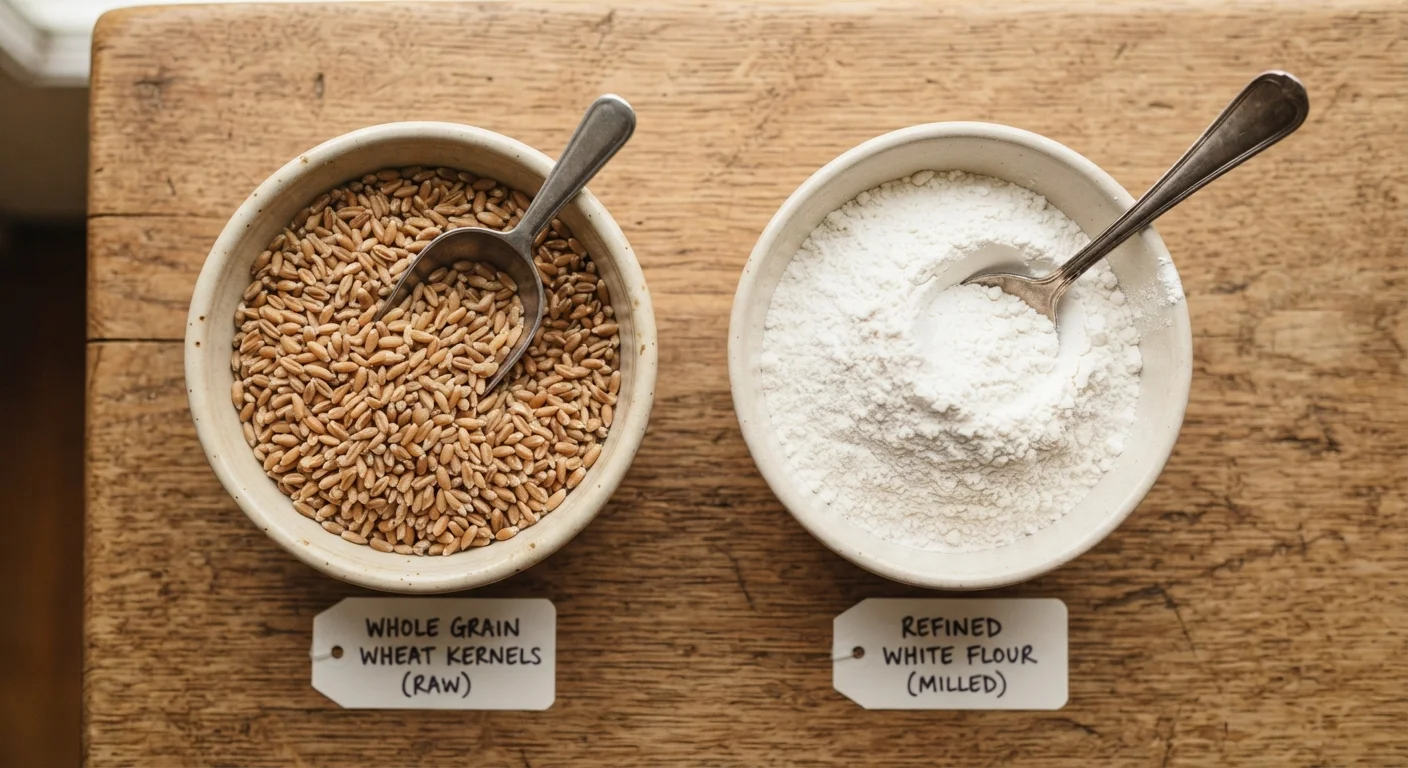
Inside the Kernel: What Each Part Does
A grain kernel has three distinct anatomical parts, and understanding them is the key to understanding the whole vs. refined debate.
- Bran (outer layer): Rich in dietary fiber, B vitamins such as thiamine and niacin, and minerals including magnesium and iron. It also contains antioxidants and phytochemicals.
- Germ (embryo): The nutrient-dense core that would sprout into a new plant. It contains healthy fats, vitamin E, B vitamins, and various antioxidants.
- Endosperm (starchy interior): Primarily composed of starch and a modest amount of protein. This is the portion retained after refining.
When grain is milled into white flour or processed into white rice, the bran and germ are mechanically separated and discarded, leaving only the endosperm. The result is a product that cooks faster, has a milder flavor, and stays shelf-stable longer - but at a significant nutritional cost.
What Refining Actually Removes
Milling is not a trivial change. According to data from the U.S. Department of Agriculture, refining wheat into white flour removes roughly 25% of its protein and the majority of at least 17 key nutrients compared to whole wheat flour. These losses include:
- Up to 80% of dietary fiber
- Significant reductions in B vitamins (thiamine, riboflavin, niacin, folate, B6)
- Substantial losses of iron, zinc, magnesium, and phosphorus
- Nearly all of the vitamin E
To compensate, the U.S. government mandated grain enrichment in the 1940s. Enriched refined grains have thiamine, riboflavin, niacin, folic acid, and iron added back. However, enrichment is selective - it does not restore fiber, vitamin E, magnesium, zinc, or the many phytochemicals naturally present in the bran and germ.
| Criterion | Whole Grains | Refined Grains |
|---|---|---|
| Parts retained | Bran, germ, and endosperm | Endosperm only |
| Dietary fiber | High (naturally intact) | Very low (mostly removed) |
| B vitamins | Naturally present, broad range | Partially added back via enrichment |
| Vitamin E | Present in germ | Largely removed, not enriched |
| Magnesium & zinc | Naturally present | Substantially reduced |
| Glycemic impact | Generally lower (slower digestion) | Generally higher (faster glucose release) |
| Shelf life | Shorter (germ oils can go rancid) | Longer (stable endosperm only) |
| Texture in baking | Denser, heartier | Lighter, softer |
For a deeper look at why fiber specifically matters in your diet, see our guide to dietary fiber.
Health Implications Supported by Research
Large-scale epidemiological studies consistently associate higher whole grain intake with lower rates of cardiovascular disease, type 2 diabetes, and colorectal cancer. The 2020-2025 Dietary Guidelines for Americans recommend that at least half of all grains consumed should be whole grains, yet national nutrition data suggests most adults fall well short of this target.
<5%
Americans meeting whole grain recommendations
Research published in public health nutrition literature estimates fewer than 5% of U.S. adults consistently meet the Dietary Guidelines recommendation of making half their grains whole grains.
~80%
Fiber lost during grain refining
USDA nutrient data comparisons indicate that milling whole wheat into refined white flour removes approximately 75-80% of its naturally occurring dietary fiber.
21%
Lower cardiovascular disease risk
A meta-analysis published in the British Medical Journal found that higher whole grain intake was associated with approximately a 21% lower risk of cardiovascular disease compared to low whole grain consumption.
Mechanistically, researchers point to several pathways: the intact fiber slows digestion and moderates blood sugar spikes; fermentable fibers feed beneficial gut bacteria; and antioxidants in the bran and germ may reduce systemic inflammation. These effects work together and are difficult to replicate simply by adding fiber supplements to a refined-grain diet.
It is worth noting that most evidence comes from observational studies, which show associations rather than direct cause and effect. Still, the consistency of findings across populations and study designs has led major health organizations globally to endorse whole grain consumption as part of a health-supporting dietary pattern.
This article is for general educational purposes only and is not medical or dietary advice. Consult a registered dietitian or qualified healthcare professional before making significant changes to your diet, especially if you have a chronic health condition.
Making Practical Shifts Without Overhauling Your Pantry
Switching to whole grains does not require eliminating every refined product from your kitchen. Research on dietary behavior consistently shows that gradual, sustainable substitutions are more likely to stick than dramatic overhauls.
Label Reading: 'Multigrain' Is Not 'Whole Grain'
Terms like "multigrain," "wheat bread," or "made with whole grain" on packaging do not guarantee a product is predominantly whole grain. Under FDA guidelines, only products listing a whole grain as the first ingredient and meeting specific criteria can claim to be a "good" or "excellent" source of whole grain. When in doubt, look for the word "whole" as the first listed grain ingredient on the nutrition label.
Practical entry points include:
- Choosing whole wheat bread or whole grain crackers in place of white varieties when the texture difference is acceptable to you
- Trying oats, barley, or farro as alternatives to refined grain side dishes
- Using brown rice, wild rice, or quinoa in meals where white rice was previously the default
- Reading ingredient labels carefully - "whole wheat" or "whole grain" should appear as the first ingredient, not as a secondary listing after refined flour
Even small, consistent changes accumulate over time. The goal for most people is progress toward dietary guidelines, not perfection. If you are managing a specific health condition such as celiac disease, diabetes, or irritable bowel syndrome, your personal grain choices should be discussed with a healthcare provider or dietitian, since individual tolerance and medical needs vary considerably.