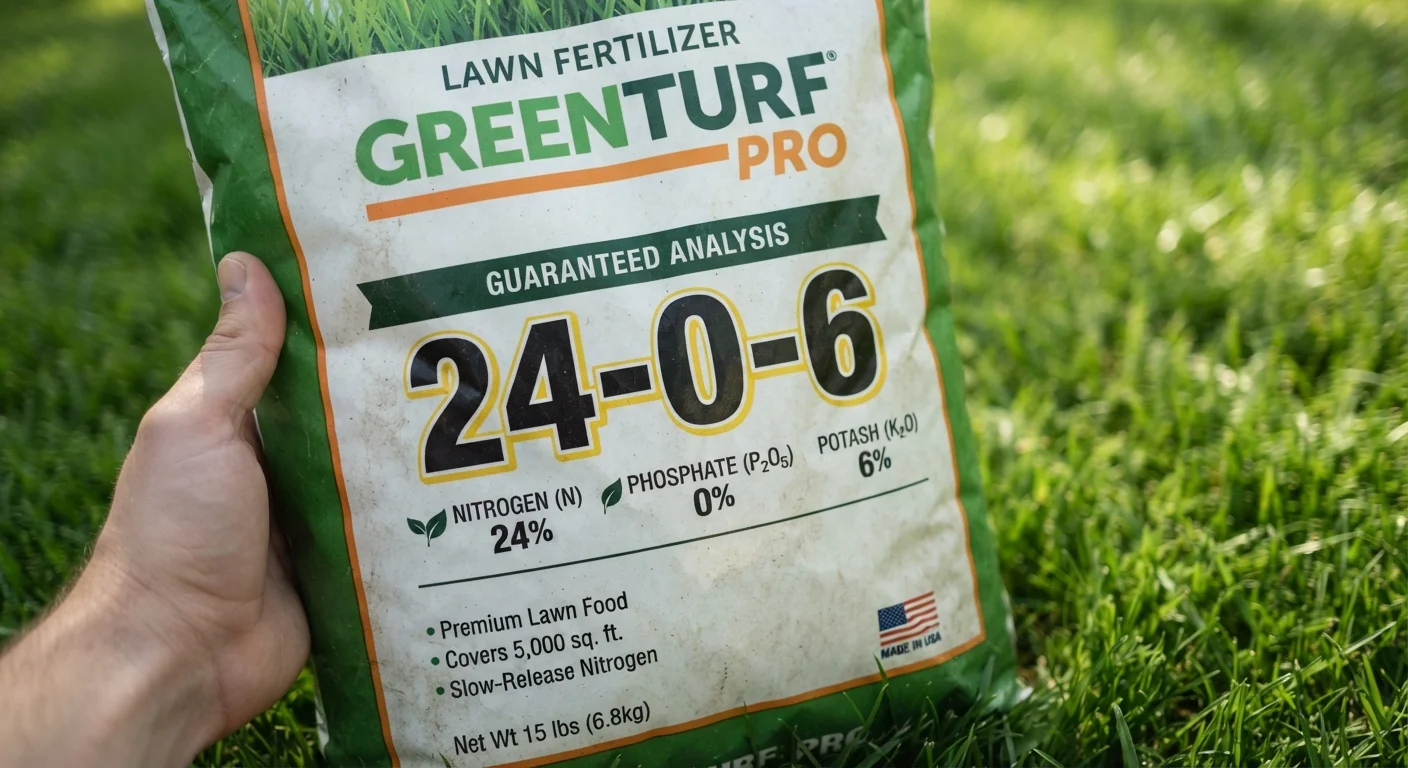
What Those Three Numbers Actually Mean
Pick up any fertilizer bag and you'll see three numbers separated by dashes - something like 24-6-12 or 10-10-10. These numbers are the N-P-K ratio, and they tell you the percentage of each primary macronutrient by weight inside the bag.
| What N-P-K stands for | Nitrogen, Phosphorus, Potassium |
| What the numbers represent | Percentage of each nutrient by weight in the bag |
| Primary role of nitrogen (N) | Leaf and shoot growth; green color |
| Primary role of phosphorus (P) | Root development and flowering |
| Primary role of potassium (K) | Overall plant hardiness, drought and disease tolerance |
| Recommended test before fertilizing | Soil test to identify actual nutrient deficiencies (University cooperative extension services generally advise soil testing every 2-3 years.) |
| Common lawn starter ratio | Higher phosphorus blend (e.g., 10-20-10) |
| Common maintenance ratio | Higher nitrogen blend (e.g., 30-0-4 or 28-0-6) |
A bag labeled 24-6-12 contains 24% nitrogen, 6% phosphorus (expressed as phosphate, P₂O₅), and 12% potassium (expressed as potash, K₂O). The remaining weight is carrier material - typically sand, clay, or other filler - that helps distribute the nutrients evenly when you spread them. This matters because a bag with a higher N-P-K total isn't always better; it simply means more active nutrient per pound.
These numbers are part of what regulators call the Guaranteed Analysis, a standardized label section required by law in every U.S. state. Just as you'd read a nutrition label on food, the Guaranteed Analysis gives you an apples-to-apples comparison across brands and formulations.
N-P-K
The three-number code on every fertilizer label representing the percentages of nitrogen (N), phosphorus (P), and potassium (K) by weight. These are the three macronutrients most essential to plant growth.
Guaranteed Analysis
The section of a fertilizer label legally required to state the minimum percentages of each declared nutrient. It gives you a verifiable, standardized way to compare products.
Slow-Release Nitrogen
A form of nitrogen coated or chemically bound so it breaks down gradually in soil over weeks or months, reducing the risk of burn and providing a steadier nutrient supply.
Soil Amendment
Any material added to soil to improve its physical or chemical properties - such as lime to adjust pH - distinct from fertilizers, which primarily supply nutrients.
Micronutrients
Elements like iron, manganese, and zinc that plants need in very small quantities. Some fertilizer blends include them, but they are secondary to the three primary macronutrients.
Complete Fertilizer
A fertilizer that contains all three primary macronutrients - nitrogen, phosphorus, and potassium - in a single product.
What Each Nutrient Does - and When You Need More of It
Nitrogen (N) - The Green-Up Driver
Nitrogen fuels leaf and shoot growth and gives grass its deep green color. A lawn that looks pale, yellowed, or grows slowly often needs nitrogen. It's the most commonly applied nutrient and the one most likely to leach out of soil quickly, especially after heavy rain.
Look for the words slow-release or controlled-release on the label - these formulations break down gradually, reducing the risk of burning your lawn and extending the feeding period.
Phosphorus (P) - The Root Builder
Phosphorus is critical during establishment - when you're seeding or laying sod - because it drives root development. Mature, established lawns often need very little additional phosphorus, and some states restrict or ban its use in maintenance fertilizers to protect lakes and streams from runoff.
Potassium (K) - The Hardiness Factor
Potassium doesn't make grass visibly greener, but it strengthens cell walls and helps plants tolerate drought, cold, and disease. If your lawn tends to thin out under summer heat stress or struggles through winter, a potassium boost may help - but confirm with a soil test first.
Soil Testing Changes Everything
Before you buy any fertilizer, consider getting a soil test through your local cooperative extension service. A test tells you which nutrients are actually deficient, so you avoid over-applying - which can harm your lawn and local waterways. Many extension offices offer low-cost testing kits. See how soil pH affects nutrient availability for related context.
Reading the Full Label: Beyond the Three Numbers
The N-P-K ratio is the headline, but the full label carries important details that affect how a fertilizer performs:
- Slow-release vs. fast-release nitrogen: Labels may list both WIN (water-insoluble nitrogen) and fast-release forms. A higher WIN percentage means longer, steadier feeding.
- Secondary nutrients and micronutrients: Some blends add iron, sulfur, or calcium. These can be useful but are secondary to fixing primary deficiencies first.
- Application rate: This is printed on the label for a reason. Applying more than directed doesn't help faster - it risks burning the lawn and adding excess nutrients to groundwater.
- Timing guidance: Many labels specify whether the product is suited for spring, fall, or year-round use. Matching timing to your grass type (cool-season vs. warm-season) matters as much as the ratio itself.
Matching the right N-P-K ratio to your lawn's actual condition - ideally confirmed by a soil test - is the most reliable way to fertilize effectively. A balanced 10-10-10 works for general maintenance, while a higher-nitrogen formula suits a lawn that needs green-up, and a high-phosphorus blend fits new seeding.
This article is for general informational purposes only. Fertilizer regulations, nutrient runoff rules, and application guidelines vary by state and locality. Check with your local cooperative extension office for region-specific recommendations before fertilizing.