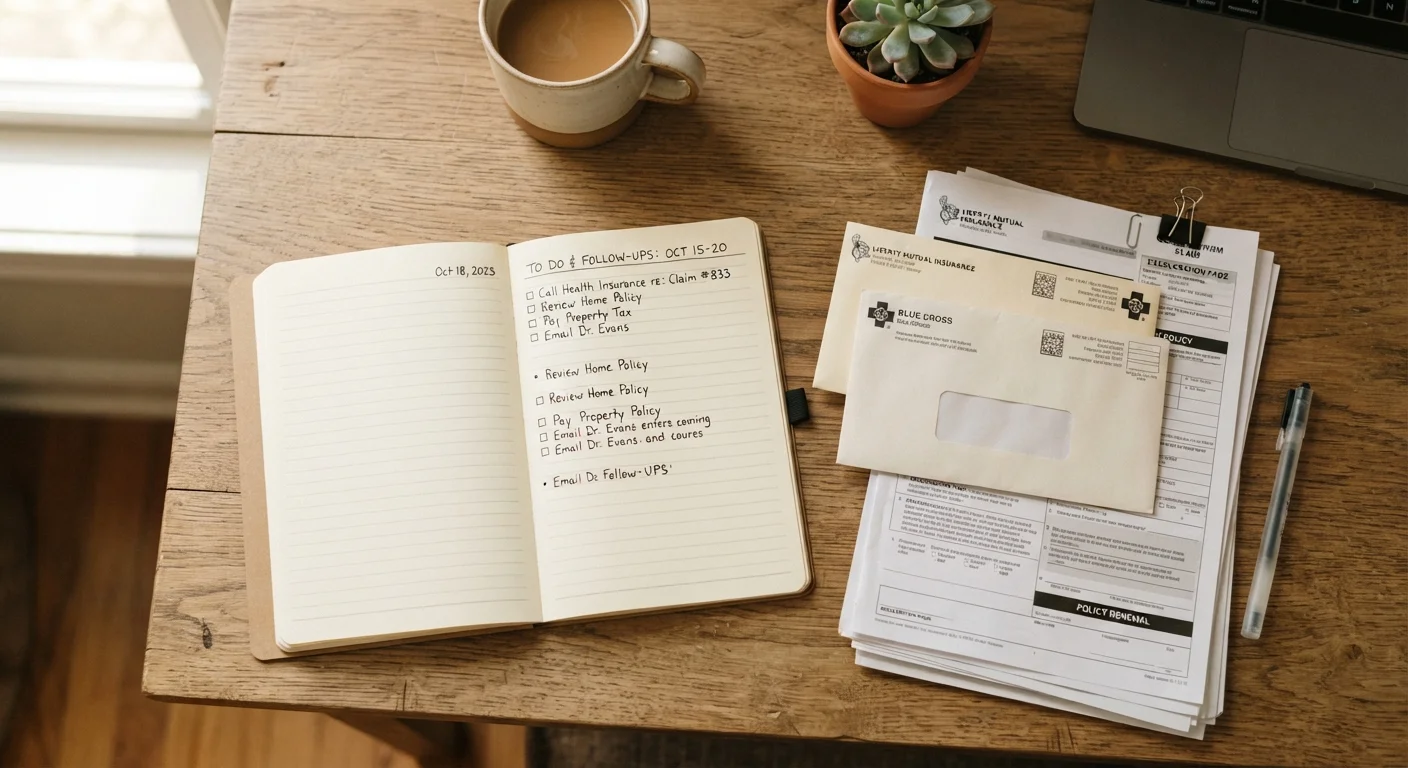
Why a Claims Journal Matters
Filing an insurance claim is rarely a single event. It unfolds over days, weeks, or sometimes months - involving multiple phone calls, adjuster appointments, repair estimates, and written notices. Keeping a dedicated claims journal means you're building a running record of that entire process as it happens.
Without documentation, disputes often come down to your word against the insurer's. With a journal, you have dated, specific entries that can substantiate your account of events. Whether your concern is a delayed response, a changed coverage interpretation, or a settlement that seems too low, that written record carries real weight - including in formal complaints filed with your state's department of insurance.
If you want an overview of how the process unfolds from start to finish, see our guide to the insurance claims process.
Log every phone call immediately after it ends, including the date, time, representative's name, and what was said.
Memory fades quickly, especially during a stressful claims period. A same-day entry captures accurate detail that can later contradict an insurer's conflicting account of the same conversation.
Keep copies of every written communication, including emails, letters, and claim decision notices.
Written records are harder to dispute than verbal ones. Having originals on hand means you can reference exact policy language, denial reasons, or settlement figures during any review.
Photograph or video-document all damage before any repairs begin.
Visual evidence establishes the pre-repair condition of your property. Adjusters and reviewers can't dispute what they can see in a dated photograph taken at the scene.
Note every deadline communicated by your insurer and track whether they meet it.
State insurance regulations require insurers to acknowledge claims and respond within specified timeframes. Documenting missed deadlines gives you grounds for a regulatory complaint if needed.
Record your own actions throughout the claims process, not just the insurer's.
A dispute may hinge on whether you met your own obligations - reporting the loss promptly, cooperating with inspections, or submitting required documents. Your entries confirm you did.
Best Practices for Keeping a Claims Journal
The following approaches are grounded in how insurance disputes are actually evaluated - by internal review teams, state regulators, and mediators. Apply them consistently from the day you file your claim.
One often-overlooked step: keep your journal separate from your general files. A dedicated notebook or digital folder prevents entries from getting lost and signals that this record was maintained intentionally and contemporaneously - which adds to its credibility.
Using Your Journal if a Dispute Arises
If your claim is denied or you receive a settlement offer you believe is inadequate, your journal becomes active evidence rather than just a reference tool. Reviewers - whether at the insurer's appeals desk or at the state level - respond to specifics: exact dates, the names of representatives, the precise language used.
1 in 7
Home insurance claims that face some form of dispute
Industry estimates suggest a meaningful share of property claims involve negotiation or formal dispute before final settlement.
30-45 days
Typical state-mandated claim resolution window
Most U.S. states require insurers to accept or deny a claim within 30 to 45 days of receiving all necessary documentation, though timelines vary.
Before filing a formal appeal, review your journal entries against your policy's stated timelines and coverage terms. Gaps between what a representative told you and what appears in writing often surface at this stage. You can learn more about the appeals process in our article on disputing an insurance claim denial.
Know Your Rights as a Policyholder
State insurance regulations give you specific rights during the claims process - including the right to a timely response and a fair investigation. Your journal can serve as evidence if those standards aren't met. For a full breakdown, see our article on policyholder rights during the claims process.
Keeping good records also helps you avoid common missteps that reduce payouts. Our piece on things policyholders get wrong when filing a first claim covers several patterns worth knowing before a dispute reaches a critical stage.
This article is for general informational purposes only and does not constitute legal, financial, or insurance advice. Coverage terms, claim procedures, and consumer rights vary by state and by policy. Consult a licensed insurance professional or your state's department of insurance for guidance specific to your situation.