The Most Common Reasons Claims Are Denied
Most claim denials trace back to one of a few recurring issues. Knowing which category your denial falls into is the clearest first step toward deciding what to do next.
- Excluded loss or peril. Your policy lists specific causes of loss it covers - and, crucially, those it does not. A standard homeowners policy, for example, typically excludes flood damage. If the damage you're claiming falls under an exclusion, the insurer has no contractual obligation to pay. See what insurance actually covers and what it doesn't for a broader look at how exclusions work.
- Lapsed or inactive coverage. If your policy was not in force at the time of the loss - because a premium payment was missed, a renewal was not completed, or a cancellation took effect - the insurer can deny the claim entirely.
- Late or missed filing deadline. Policies require you to report a claim and submit documentation within a stated timeframe. Missing that window can give the insurer grounds to deny, even if the loss itself would otherwise be covered.
- Insufficient documentation. Claims require proof: receipts, medical records, police reports, photographs, or other supporting materials. A denial may result simply because the insurer did not receive enough evidence to verify the loss.
- Policy limits exhausted. If your coverage maximum for a particular type of loss has already been reached - through prior claims or a single large event - subsequent claims may be denied because no remaining benefit is available.
- Misrepresentation on the application. If the insurer determines that you provided inaccurate information when you applied for the policy, it may deny the claim and in some cases rescind the policy altogether. Common missteps that void coverage covers this in more detail.
Denials and Bad Faith Are Different Things
A claim can be legitimately denied under a valid policy exclusion without involving any wrongdoing. "Bad faith" is a legal standard - it refers to situations where an insurer unreasonably denies or delays a valid claim without a defensible basis. If you believe a denial was made improperly, your state's insurance regulator is the appropriate first contact.
How to Read a Denial Letter
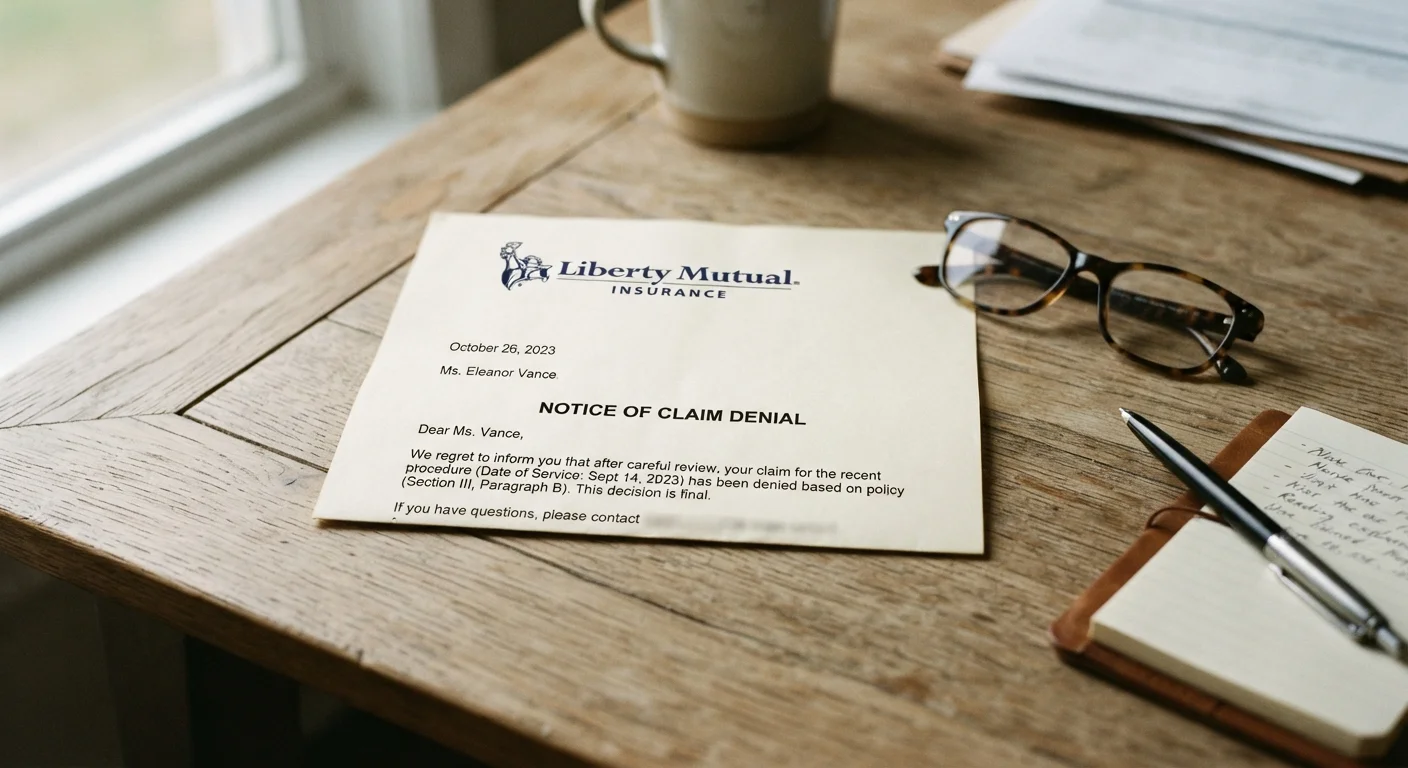
Denial letters can be dense with policy language, but every letter should contain three things: the reason for the denial, the specific policy provision or exclusion being cited, and information about your right to appeal or dispute the decision.
When you receive a denial, find the section that cites a policy number, clause, or exclusion title - something like "Section II, Exclusion B" or "Condition 7: Timely Reporting." Then pull out your actual policy document and read that section directly. Insurers sometimes interpret provisions broadly, and seeing the exact wording yourself can reveal whether the denial is well-founded or whether there is room to push back.
Pay close attention to phrases like "reservation of rights," which signals that the insurer is investigating further before making a final decision. That is a different situation from an outright denial. Understanding reservation of rights letters explains what that language means and how to respond.
“The single most important thing a policyholder can do after receiving a denial is to read the actual policy language being cited - not just the insurer's summary of it. The words in the document control the outcome.”
— National Association of Insurance Commissioners, U.S. insurance regulatory standards body
What Your Options Are After a Denial
A denial is not automatically the end of the road. Most policies include an internal appeal process, and state law often provides additional protections on top of that.
Internal appeal: Start by filing a formal written appeal with your insurer. Include any additional documentation, a written explanation of why you believe the denial was incorrect, and a reference to the specific policy language you are relying on. Keep copies of everything you send and note the date.
State Department of Insurance: Every state has a regulator that oversees insurer conduct. Filing a complaint is free and can prompt a review of whether the insurer followed applicable rules. This is especially useful when you believe a denial was made in bad faith or without adequate justification.
External review: For health insurance in particular, federal and state rules give policyholders the right to an independent external review by a third party. The external reviewer's decision is typically binding on the insurer.
Legal counsel: If a denial involves a large amount of money or a complex coverage dispute, consulting an attorney who handles insurance matters may be worthwhile. Many work on a contingency basis for bad-faith claims.
For a step-by-step walkthrough of the formal dispute process, see how to dispute an insurance claim denial. And if you want to understand broader misconceptions that can affect how you handle a claim, common myths about insurance claims is worth reading alongside this article.
Document Everything from Day One
From the moment a loss occurs, keep a written log of dates, phone calls, names of representatives you speak with, and every document you submit or receive. This record is invaluable if a claim is denied and you need to demonstrate that you followed proper procedures and met all deadlines.
This article provides general information about insurance claims and is not legal or personalized insurance advice. Coverage terms, exclusions, and appeal rights vary by policy and state. Consult a licensed insurance professional or your state's Department of Insurance for guidance specific to your situation.