What Each Term Actually Means
Health insurance comes with its own vocabulary, and two terms cause more confusion than almost any others: the deductible and the out-of-pocket maximum. Both describe limits on what you pay - but they operate at completely different points in your coverage and serve different purposes.
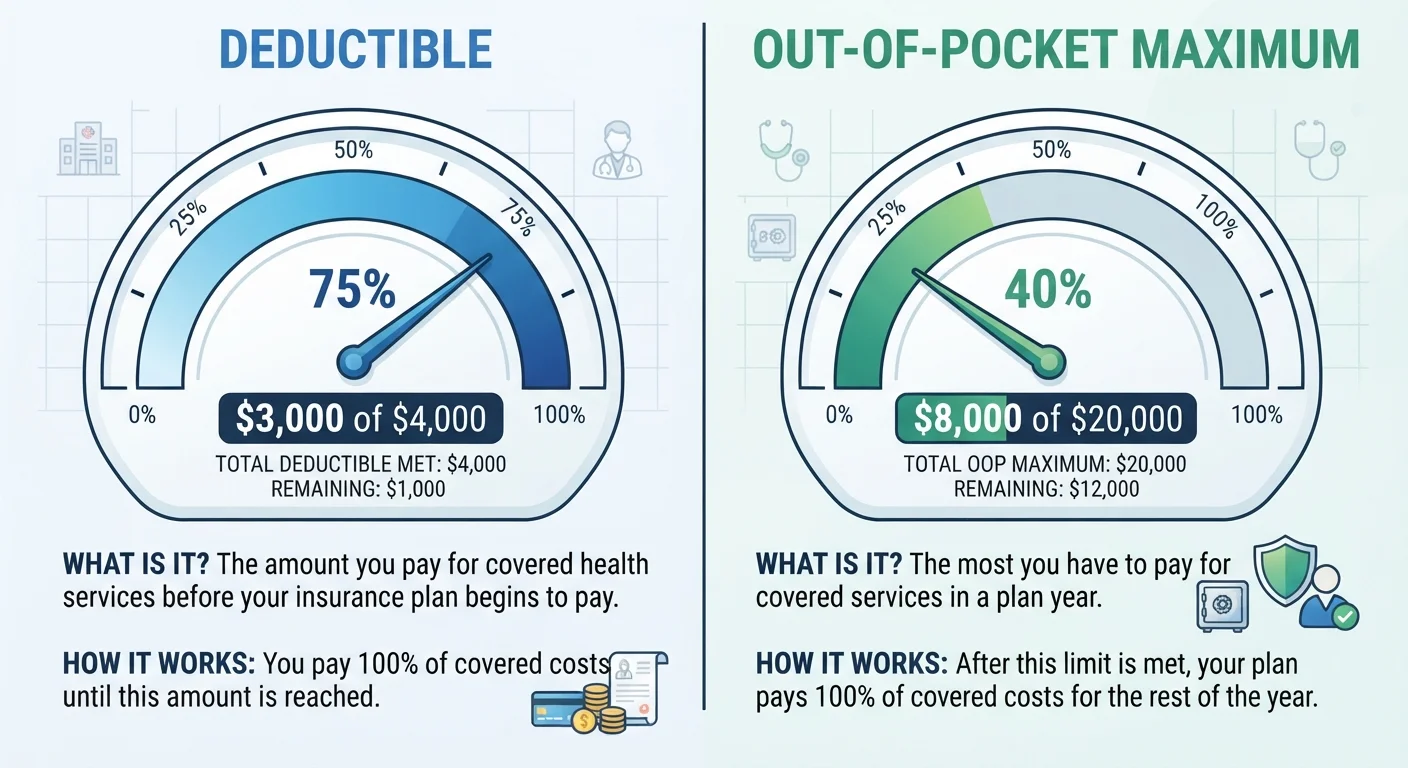
A deductible is the dollar amount you must pay out of your own pocket for covered health services before your insurance plan begins sharing the cost. For example, if your deductible is $1,500, you pay the first $1,500 of covered medical bills yourself. After that, your insurer typically starts covering a portion through cost-sharing arrangements like coinsurance (a percentage split) or flat-fee copays. Some plans cover certain services - like preventive care or primary care visits - before the deductible is met, so it's worth checking your plan documents.
An out-of-pocket maximum (also called an out-of-pocket limit) is the most you'll have to pay for covered in-network services in a single plan year. Once you reach that ceiling, your plan pays 100% of covered in-network costs for the remainder of the year. Think of it as a financial safety net against catastrophic medical bills. For context, the Affordable Care Act sets annual limits on out-of-pocket maximums for most marketplace and employer-sponsored plans; those limits are adjusted each year.
For a broader overview of how these terms fit together, see how premiums, deductibles, and copays all connect.
| Criterion | Deductible | Out-of-Pocket Maximum |
|---|---|---|
| What it represents | Amount you pay before insurer shares costs | Most you'll pay in a plan year for covered care |
| When it applies | At the start of the plan year, before cost-sharing begins | After deductible and coinsurance accumulate to the cap |
| What happens after you reach it | Insurer begins paying its share (coinsurance or copays) | Insurer typically pays 100% of covered in-network costs |
| Do premiums count toward it? | No | No |
| Typical dollar range (varies widely) | $500-$7,000+ depending on plan | $2,000-$9,450+ (ACA caps apply to most plans) |
| Resets each plan year? | Yes | Yes |
How They Work Together - and Where People Get Confused
The two limits are sequential, not interchangeable. You hit your deductible first. After that, you and your insurer share costs until your accumulated spending reaches the out-of-pocket maximum. At that point, the insurer absorbs the rest.
$1,763
Average individual deductible for employer-sponsored plans
According to KFF's 2023 Employer Health Benefits Survey, the average single-coverage deductible for workers with a deductible was approximately $1,763.
$9,450
ACA out-of-pocket maximum for individual plans (2024)
The federal government sets an annual ceiling on out-of-pocket maximums for ACA-compliant plans; for 2024, that limit is $9,450 for individual coverage.
Here's where confusion is common: not every dollar you spend counts toward both limits equally. Your monthly premium - the payment you make just to maintain coverage - does not count toward either your deductible or your out-of-pocket maximum. Out-of-network charges, non-covered services, and sometimes prescription costs (depending on plan design) may also be excluded from what counts toward your maximum. Always read your plan's Summary of Benefits and Coverage (SBC) to understand exactly which costs accumulate toward which limit.
It's also worth noting that your deductible is typically included within your out-of-pocket maximum. In other words, the money you spend meeting your deductible counts toward reaching your out-of-pocket cap. So if your deductible is $1,500 and your out-of-pocket maximum is $5,000, you need to spend $3,500 more after the deductible before hitting the ceiling - not $5,000 on top of it. This is a common source of miscalculation.
Family Plans Have Two Sets of Limits
If you're on a family plan, most insurers apply both an individual deductible and a family deductible, along with individual and family out-of-pocket maximums. One family member can hit their individual limit before the family cap is reached, triggering cost-sharing for that person alone. How these embedded limits interact varies by plan, so check your plan documents carefully.
Both limits reset at the start of each new plan year, which is why timing elective procedures or planned care near the end of a year - after you've already met your deductible - can make financial sense. Learn more about coverage gaps that catch policyholders off guard when claims are filed.
This article is for general informational purposes only and does not constitute personalized financial, insurance, or legal advice. Coverage terms, cost-sharing structures, and regulatory limits vary by plan and state. Always review your actual policy documents and consult a licensed insurance agent or adviser for guidance specific to your situation.