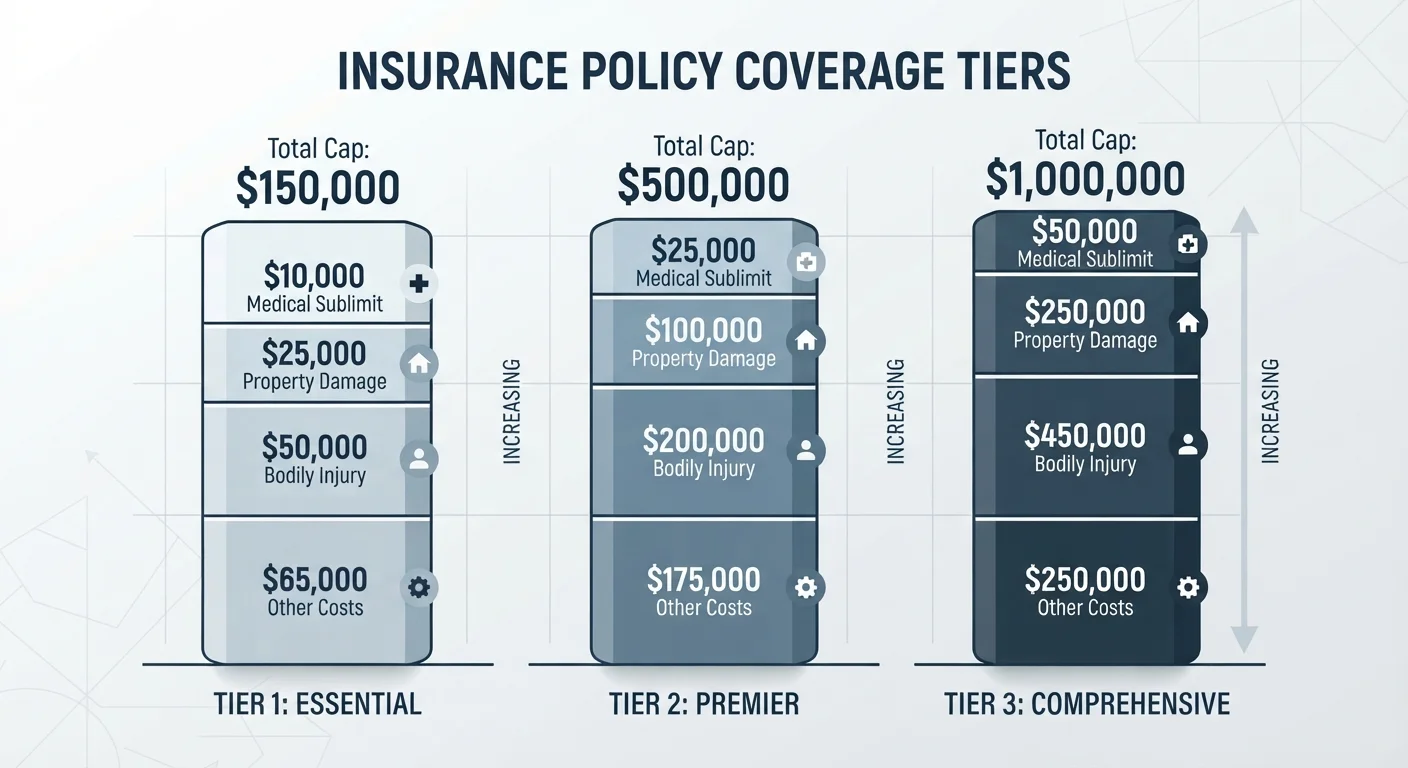
The Gap Between Your Policy Limit and Your Actual Payout
Most people assume that if their policy covers a type of loss, the insurer will pay whatever the damage costs - up to the stated limit. In practice, the path from a covered loss to a check involves several layers of caps that can each reduce the final amount independently.
The overall coverage limit is the figure most prominently displayed on a policy: $200,000 in dwelling coverage, or $100,000 in personal liability. But that number represents the ceiling for the broadest category. Narrower categories - specific types of property, specific causes of loss - often carry their own, much lower ceilings called sublimits. The overall limit doesn't override them.
This distinction is one of the most common sources of surprise after a claim, and it's explored in detail in common post-claim coverage gaps. Understanding why the gap exists is the first step toward closing it.
How Sublimits Work - and Where They Appear
A sublimit is a cap that applies to a specific category of loss within a broader coverage type. It doesn't replace the overall limit; it restricts what can be collected from it for that particular category.
Sublimits appear most often in these areas:
- Personal property: Jewelry, watches, firearms, cash, silverware, and collectibles frequently carry sublimits of $1,000-$2,500 under standard homeowners policies.
- Water and mold damage: Some policies cap water-backup claims separately from general property damage.
- Home-based business equipment: A standard homeowners policy may sublimit business property kept at home to $2,500 or less.
- Additional living expenses: The amount an insurer pays for temporary housing after a covered loss may be capped as a percentage of dwelling coverage or a flat dollar figure.
For a broader look at how policy terms shape what's covered, see what insurance actually covers - and what it doesn't.
Check Sublimits Before You Need to File
Review your policy's coverage schedule and endorsements annually - not just when you buy the policy. If you've acquired high-value items, started a home business, or made significant renovations, your base sublimits may no longer match your exposure. A licensed insurance agent can help you identify gaps and add endorsements where needed.
Aggregate Caps: When Multiple Claims Exhaust a Policy
An aggregate cap operates differently from a per-claim limit. It sets a ceiling on the insurer's total payout across all claims filed during the policy period - usually one year. Once that ceiling is reached, the policy pays nothing more for that period, regardless of how many additional covered events occur.
$1,500
Typical jewelry sublimit on standard homeowners policies
Insurance industry policy analyses commonly cite $1,000-$2,500 as the standard sublimit range for jewelry under base homeowners coverage.
2-in-1
Per-occurrence and aggregate caps often coexist in one policy
Commercial liability policies routinely include both a per-claim limit and a separate annual aggregate, meaning large policyholders can exhaust coverage within a single year.
Aggregate caps are most common in:
- Commercial general liability policies, where a single policy year might see multiple third-party injury or property-damage claims
- Professional liability (errors and omissions) policies
- Some health insurance plans, which may impose an annual or lifetime maximum on certain benefit categories
A per-occurrence limit and an aggregate cap can coexist in the same policy. For example, a liability policy might pay up to $500,000 per incident but cap total payouts at $1,000,000 for the year. Two maximum claims would exhaust the aggregate, leaving nothing for a third.
If you're weighing how much total coverage to carry, factors worth considering when choosing coverage levels offers a practical framework.
Reading Your Policy to Find the Numbers That Matter
The figures that govern your actual payout are scattered across several parts of a policy document. Knowing where to look saves time and prevents assumptions.
- Declarations page: Lists primary coverage limits by category. Think of this as the summary.
- Coverage schedules: Detail sublimits for specific property types or perils.
- Endorsements: Attached documents that modify base coverage - either adding it or restricting it.
- Conditions and definitions sections: Define what counts as an occurrence and how aggregate periods are measured.
Payout amounts are also affected by whether a policy settles on an actual cash value or replacement cost basis - a distinction that compounds the effect of sublimits. See actual cash value vs. replacement cost for how that works in practice.
Limits Vary by State and Insurer
There is no universal standard for how insurers set sublimits or aggregate caps. These figures differ across carriers, policy tiers, and states. The examples in this article reflect common industry patterns, not any specific policy. Always verify the exact limits in your own policy documents.
This article is for general informational purposes and does not constitute personalized insurance, financial, or legal advice. Coverage terms, limits, sublimits, and aggregate caps vary significantly by insurer, policy type, and state. Always read your policy documents carefully and consult a licensed insurance agent or adviser regarding your specific coverage needs.