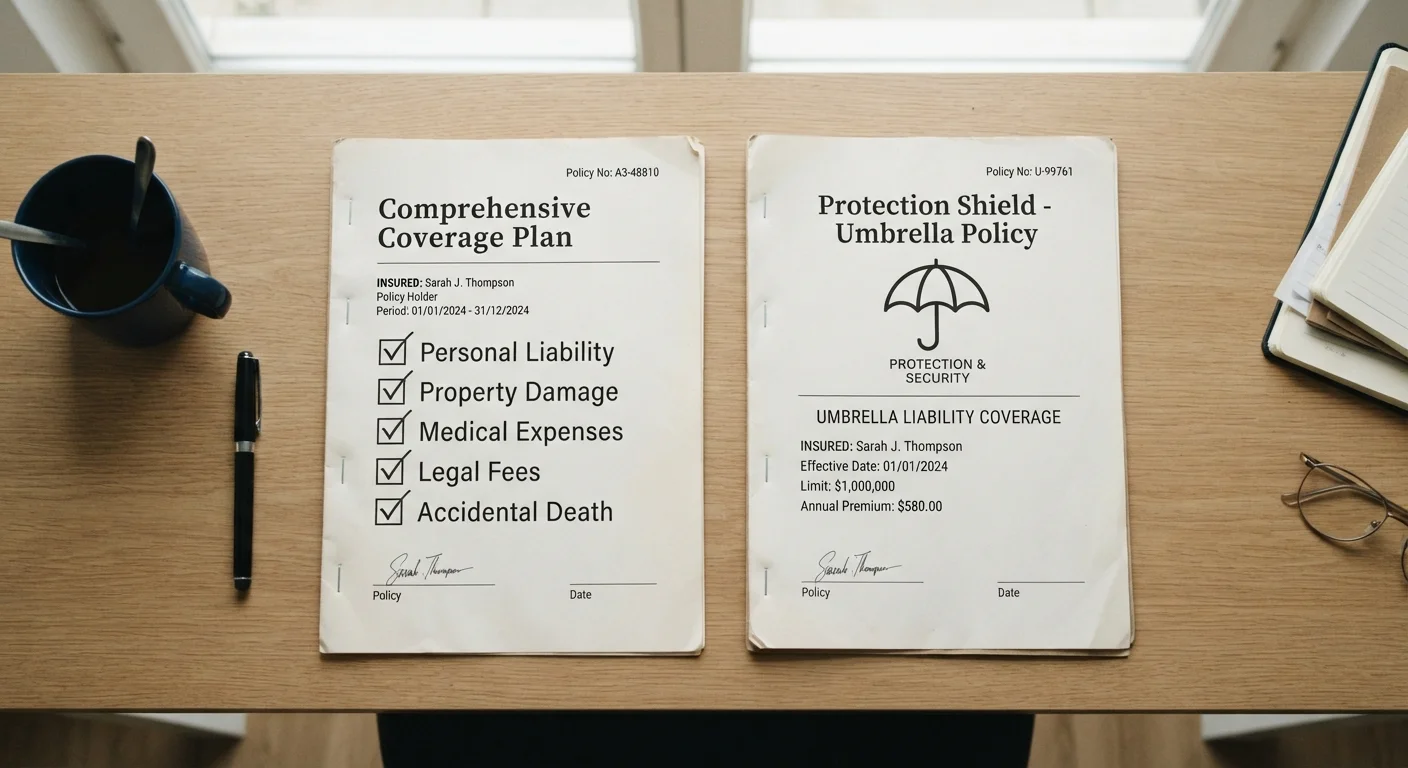
How Each Coverage Type Defines What's Covered
Insurance policies don't all define coverage the same way. The two main approaches - named perils and all-risk (sometimes called "open perils") - are essentially opposites in how they draw the line between covered and not covered.
Named perils policies list every cause of loss the insurer agrees to cover. If your loss results from something on that list - say, fire, lightning, windstorm, or theft - your claim is eligible. If the cause isn't on the list, it isn't covered, regardless of how severe the damage is. The burden falls on you, the policyholder, to show that your loss was caused by a listed peril.
All-risk policies work the opposite way. Instead of listing what's covered, they list what's excluded. Any loss not specifically excluded is covered. That shifts the burden: the insurer must point to a specific exclusion to deny your claim. This structure gives you broader protection by default, but it doesn't mean everything is covered - exclusions in all-risk policies can be lengthy and detailed.
See our guide to reading policy exclusions to understand how exclusion language is typically written and where to find it in a policy document.
| Criterion | Named Perils | All-Risk |
|---|---|---|
| Coverage trigger | Cause of loss must be listed | Any loss not excluded |
| Burden of proof | Policyholder proves listed peril | Insurer proves exclusion applies |
| Typical premium | Lower | Higher |
| Breadth of protection | Narrower - defined list | Broader - exclusions define limits |
| Common uses | Renters, older dwellings, budget plans | Standard homeowners, commercial property |
| Ambiguous cause of loss | Often leads to denial | Generally covered unless excluded |
What This Means at Claim Time
The difference between these two structures becomes most visible when you file a claim. With a named perils policy, the first question is always: what caused this loss? If you can't identify the cause, or the cause isn't on the list, your claim may be denied. This can create disputes when the origin of damage is ambiguous - water intrusion, for example, might be traced to several possible sources, only some of which are covered.
With an all-risk policy, the claim process often starts from a different premise: the loss is covered unless the insurer can show otherwise. That said, all-risk exclusions are written to be comprehensive. Common exclusions include flood, earthquake, wear and tear, intentional acts, and government action. Some exclusions can be added back through endorsements - additional policy provisions - for an extra premium.
"All-Risk" Does Not Mean All Losses Are Covered
The term "all-risk" is a coverage structure, not a promise of total protection. Exclusions in these policies can be extensive and may include flood, earthquake, mold, intentional damage, and normal wear and tear. Some excluded perils can be covered through separate policies or endorsements. Always review the exclusions section of any all-risk policy carefully - don't rely on the name alone.
Understanding how a payout is calculated after coverage is confirmed is a separate but equally important question. Our article on actual cash value vs. replacement cost explains how payment method affects what you actually receive after a loss.
Premiums, Trade-offs, and What to Weigh
All-risk coverage typically costs more than named perils coverage for the same property. The broader the protection, the higher the insurer's potential exposure - and that's reflected in the premium. For many standard homeowners policies, the base form is an all-risk structure, though the specific form varies by insurer and state.
~80%
U.S. homeowners insured under an all-risk-style form
Industry estimates suggest the majority of standard homeowners policies in the U.S. are written on an open-perils (all-risk) form, though this varies by state and insurer.
Top 3
Most common named perils: fire, theft, windstorm
Fire, theft, and windstorm are among the most frequently listed perils in basic named-perils residential policies, according to standard insurance form structures.
The right choice depends on factors like the value of what you're insuring, your financial ability to absorb an uncovered loss, and the specific risks in your area. Someone in a region with frequent, predictable storm risk may find that a named perils policy covering windstorm is sufficient. Someone with irregular or high-value property may find all-risk coverage worth the additional cost.
For a structured way to think through these trade-offs, see factors worth weighing when deciding how much coverage you need. And before committing to any policy, our checklist of questions to ask before choosing a policy can help you evaluate what you're actually getting.
This article is for general informational purposes only and does not constitute personalized insurance, financial, or legal advice. Coverage terms, exclusions, and availability vary by insurer, policy, and state. Always read the full policy document and consult a licensed insurance professional before making coverage decisions.