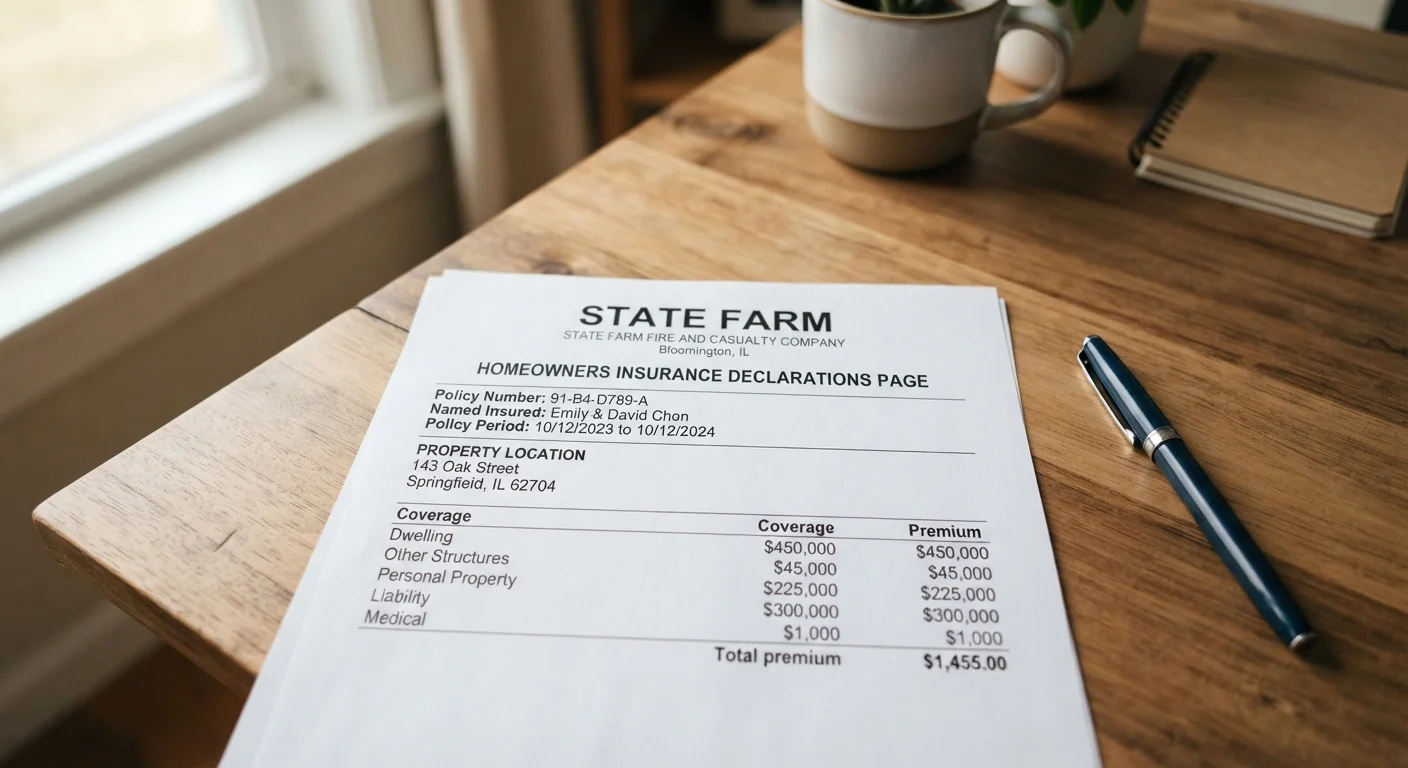
What You'll Find on a Declarations Page
Every declarations page is laid out a little differently depending on the insurer and the type of policy - auto, home, renters, life - but the core information is consistent. Here's what each section means:
- Named insured: The person (or business) who owns the policy. Additional insureds - a co-owner or a spouse, for example - may also be listed here.
- Policy number: Your unique identifier for all communication with the insurer. Keep it handy when filing a claim or asking questions.
- Policy period: The start and end dates of your coverage. Coverage typically lapses at 12:01 a.m. on the expiration date if not renewed.
- Description of covered property or risk: For a homeowners policy, this is your home's address. For an auto policy, it's your vehicle's year, make, model, and VIN.
- Coverage types and limits: Each coverage category - dwelling, liability, collision, etc. - is listed with a dollar limit. This cap is the most the insurer will pay per covered event.
- Deductible: The amount you pay out of pocket before the insurer's payment kicks in. Higher deductibles generally lower your premium.
- Premium: The total amount you owe for the policy period, often broken down by installment if you pay monthly.
- Endorsements or riders: Any changes or additions to the standard policy - such as scheduled jewelry or earthquake coverage - are noted here.
For a deeper look at how these terms work together, see our plain-English insurance glossary.
Why the Dec Page Deserves a Careful Read
Most policyholders glance at the premium and file the rest away. That's understandable - the document is brief by design - but a few minutes of careful review can prevent real problems later.
Verify your personal information. A misspelled name or outdated address seems minor until a claim is in dispute. Insurers use the named insured to confirm who is entitled to coverage, so errors matter.
Confirm coverage limits match your exposure. If your home has appreciated significantly since you bought the policy, the dwelling coverage limit on the dec page may no longer be enough to fully rebuild. The same logic applies to liability limits on an auto policy - make sure they reflect your actual financial situation, not just the minimum your state requires.
Check endorsements. If you requested additional coverage - a home business rider, for instance - it should appear on the dec page. If it doesn't, contact your agent before assuming you're covered.
Note the policy period carefully. A lapse between an old policy's expiration and a new one's start date leaves you uninsured. Gaps as short as a day can matter.
The dec page is a starting point, not the whole story. Exclusions, conditions, and definitions live in the main policy body - and those details often determine whether a claim is paid. See what exclusions and conditions to watch for before assuming you're fully covered.
Common Questions About the Dec Page
Does the dec page change when I make a policy change mid-term? Yes. When you add a vehicle, change a coverage limit, or add an endorsement, the insurer issues a revised declarations page - sometimes called an amended dec - reflecting the update. Keep all versions on file.
Is my dec page proof of insurance? In most cases, yes - especially for homeowners and renters policies. For auto insurance, some states accept the declarations page as proof; others require a separate insurance ID card. Check your state's rules.
Who else might appear on my dec page? Mortgage lenders are listed as mortgagees on homeowners policies. Lienholders appear on auto policies when the vehicle is financed. These parties receive notice if your policy is canceled, because they have a financial interest in the covered property.
Before you sign or renew, our checklist for reviewing a new policy walks you through the key questions to ask. And if you want to understand the full policy document - not just the summary - our guide to reading insurance policies without getting lost covers which sections matter most.
This article is for general informational purposes only and does not constitute insurance, legal, or financial advice. Coverage, terms, and requirements vary by insurer, policy type, and state. Always read your actual policy documents and consult a licensed insurance professional for guidance specific to your situation.