Why Dental Disease Flies Under the Radar
Pet owners are generally good at noticing limping, vomiting, or unusual lumps - visible problems that prompt a vet visit. Oral disease is different. It develops slowly, lives inside the mouth, and crucially, pets are biologically wired to mask pain. A dog or cat with significant gum disease will often eat, play, and behave normally, giving owners no obvious signal that anything is wrong.
The result is a wide gap between how common dental disease is and how rarely it gets addressed. Veterinary consensus holds that the majority of dogs and cats show measurable periodontal disease by age three. That figure is striking because three is still a relatively young animal - this is not a condition reserved for senior pets, though it does worsen with age. See our guide to senior pet care for how oral health shifts as animals age.
Breed and Size Affect Risk Level
Small and toy breeds are disproportionately affected by periodontal disease because their teeth are often crowded into a smaller jaw, creating more plaque-trapping surfaces. Brachycephalic breeds - those with flattened faces, like Bulldogs or Persian cats - also carry elevated risk due to dental misalignment. If your pet falls into these categories, discuss more frequent monitoring with your veterinarian.
From Plaque to Permanent Damage: How It Progresses
The disease follows a predictable path. Bacteria in the mouth form a soft film called plaque on tooth surfaces within hours of eating. If not removed, plaque mineralizes into tartar (also called calculus) - a hard, rough deposit that cannot be brushed away at home. Tartar irritates the gum tissue, leading to gingivitis, the earliest reversible stage of periodontal disease.
Without intervention, bacteria migrate below the gumline and attack the ligaments and bone holding teeth in place. This is the point where the disease becomes irreversible. Teeth loosen, the jawbone recedes, and the chronic infection opens a pathway for bacteria to enter the bloodstream - a process veterinary researchers have associated with elevated risk to the heart, kidneys, and liver.
~80%
Dogs showing dental disease signs by age three
Veterinary dental organizations broadly cite that most dogs show evidence of periodontal disease by their third year of life.
~70%
Cats affected by periodontal disease by age three
Feline periodontal disease is similarly prevalent, with estimates from veterinary dental literature placing the majority of cats in this category by early adulthood.
Stage PD1
Only stage where disease is fully reversible
Veterinary grading systems classify early gingivitis as reversible with professional care; all subsequent stages involve permanent structural damage.
Signs Owners Can Watch For
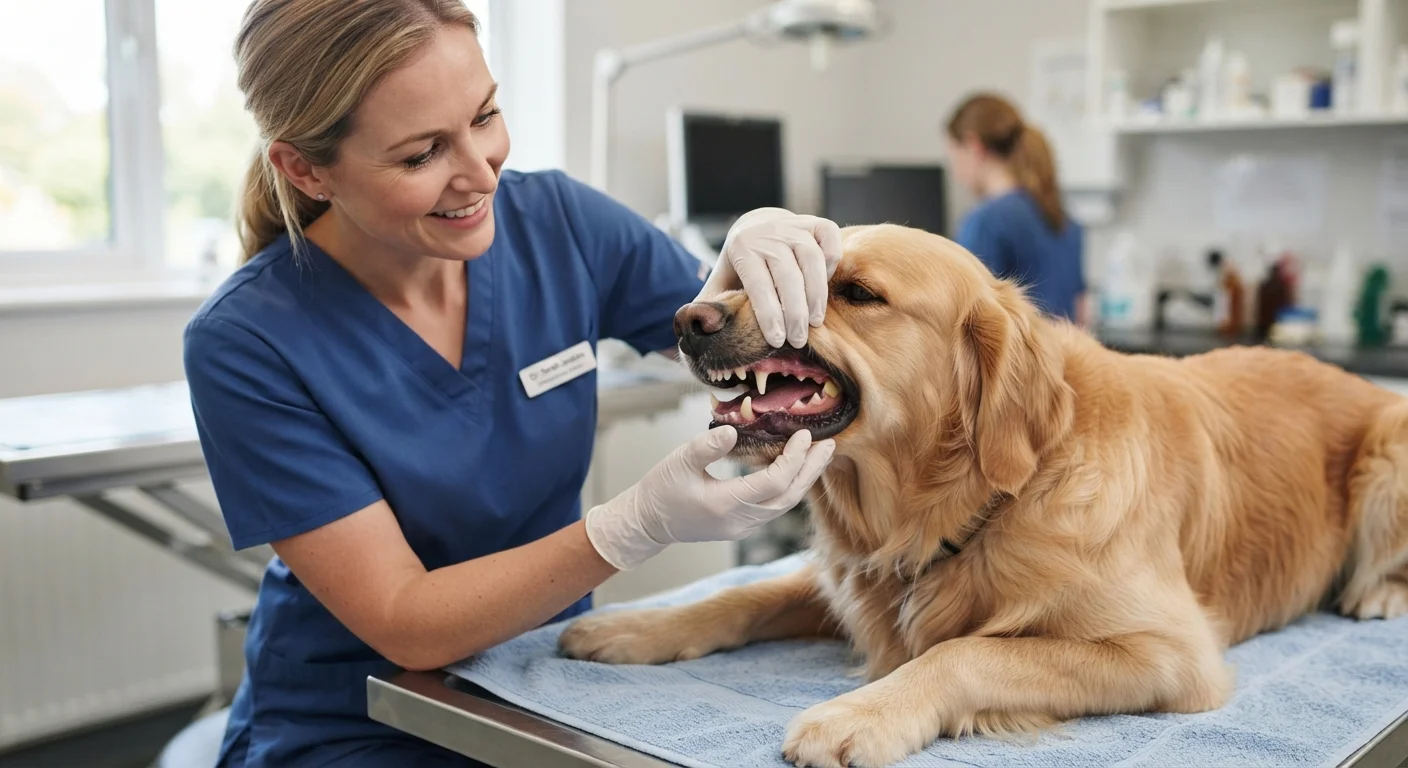
Because pets tolerate oral pain silently, owners need to look rather than wait for symptoms. The most practical habit is a brief weekly mouth check. Lift the lips and look at the gumline near the back upper teeth - that is where tartar accumulates earliest in most dogs and cats.
- Yellow or brown buildup along the gumline is tartar, not just discoloration.
- Red, puffy, or bleeding gums signal gingivitis that warrants a vet conversation.
- Persistent bad breath beyond mild food odor is the most commonly reported early symptom.
- Dropping food, chewing on one side, or reluctance to chew hard items may indicate tooth pain.
- Pawing at the mouth or face rubbing occasionally signals oral discomfort.
None of these signs definitively diagnose disease - that requires a professional exam - but they are reliable reasons to schedule one. You can incorporate mouth checks into the routine described in our monthly pet health checklist.
What Prevention Actually Looks Like
Two approaches have the strongest veterinary support: daily home brushing and annual professional cleanings under anesthesia.
Home brushing disrupts plaque before it hardens into tartar. Introduce it gradually - start by letting your pet sniff the toothbrush and taste pet-formulated toothpaste, then slowly work up to brushing the outer tooth surfaces. Consistency matters more than technique: even 30 seconds of brushing several times a week provides meaningful benefit over doing nothing.
Professional cleanings reach below the gumline where brushing cannot, and allow the veterinarian to probe, X-ray, and stage the disease accurately. Anesthesia is required for a safe and thorough cleaning; anesthesia-free dental procedures marketed for pets do not achieve the same clinical outcome and are not endorsed by major veterinary organizations.
Introduce Brushing Before Problems Start
The easiest time to establish a tooth-brushing habit is when your pet is young and before any oral sensitivity develops. Use a soft-bristled brush designed for pets and a toothpaste flavored for animals - poultry and malt flavors are commonly accepted. Even brief, positive sessions several times a week make a measurable difference over time.
Diet can also play a supporting role - some foods and treats are formulated to reduce plaque mechanically. Discuss options with your veterinarian, since not every product marketed for dental health has equivalent evidence behind it. For a broader look at how diet affects overall health, see our common feeding mistakes article.
Building these habits early is the most effective strategy. Our guide to building a preventive care routine walks through how to introduce tooth brushing alongside other maintenance tasks in a way most pets will accept over time.
This article provides general educational information about pet oral health and is not a substitute for professional veterinary advice. Consult your veterinarian for guidance tailored to your individual pet.