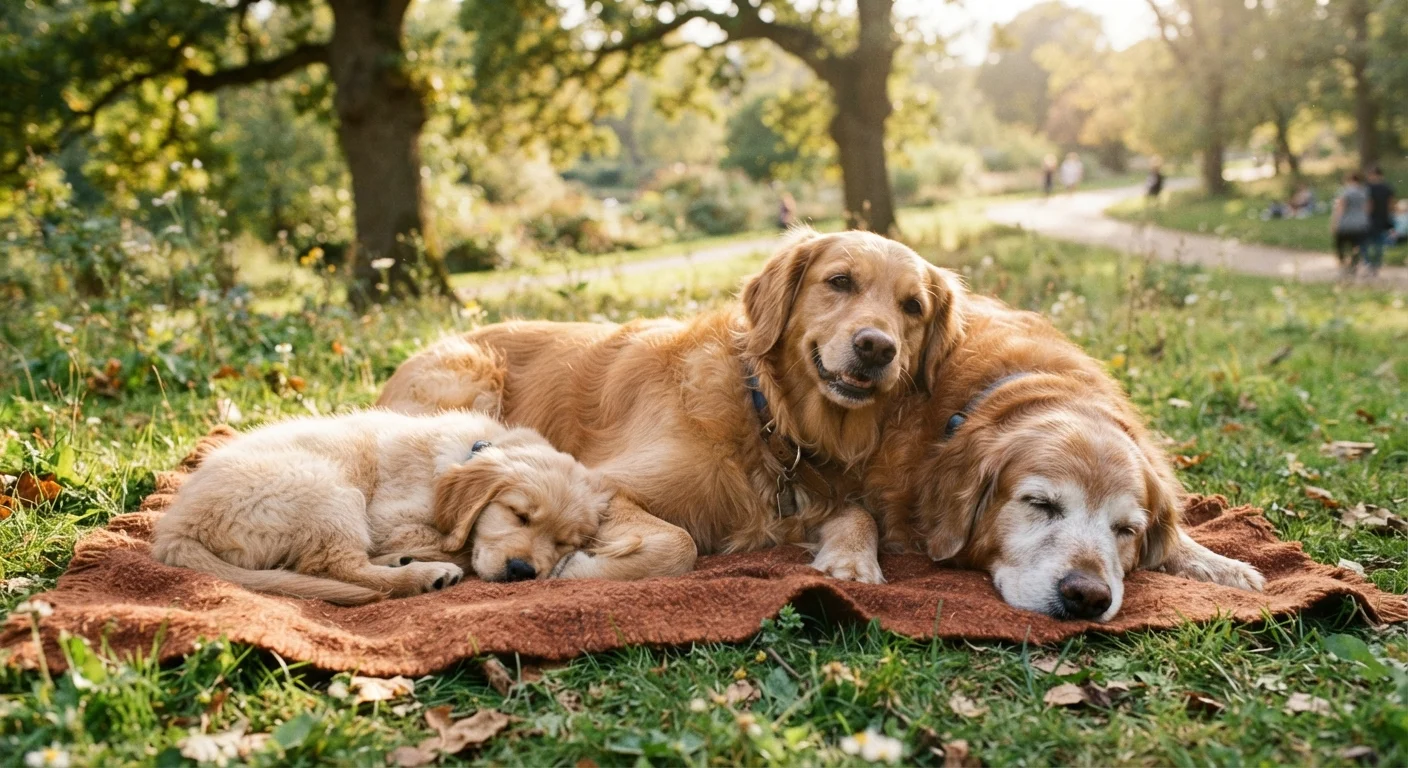
Why Life Stage Changes Everything
A one-year-old Labrador and a ten-year-old Labrador share the same breed, but almost nothing about their appropriate exercise routines should be the same. A dog's musculoskeletal system, cardiovascular capacity, and joint health all shift with age - and matching activity to life stage isn't just about comfort, it's about preventing real harm.
This reference guide breaks down what's generally appropriate at each stage and why. Use it as a starting framework, then refine it with your veterinarian based on your dog's individual health. For context on how exercise relates to caloric needs, see how to calculate your dog's daily caloric needs.
| Puppy exercise rule of thumb | 5 minutes per month of age, twice daily (Commonly cited veterinary guideline) |
| Adult dog daily walk minimum | 30-60 minutes, most breeds (General veterinary consensus) |
| Age considered "senior" (large breeds) | Around 6-7 years (American Veterinary Medical Association guidance) |
| Age considered "senior" (small breeds) | Around 10-12 years (General veterinary consensus) |
| Growth plate closure (large breeds) | Up to 18 months (Veterinary orthopedic consensus) |
| Recommended senior exercise type | Low-impact: short walks, gentle swimming (General veterinary consensus) |
Puppies: Protect the Growing Body
Puppies are energetic, but that energy can be deceptive. Their growth plates - soft cartilage zones near bone ends - are vulnerable to stress until they fully harden, which can take up to 18 months in larger breeds. Repetitive high-impact activity before closure can cause joint problems that persist for life.
A widely cited veterinary guideline is five minutes of structured exercise per month of age, twice per day. A three-month-old puppy, for example, would do roughly 15 minutes of leash walking per session. Free, self-directed play in a safe yard is generally lower risk because puppies naturally self-regulate and take breaks.
- Avoid: Forced running on hard surfaces, long hikes, jumping, or repetitive stair climbing.
- Encourage: Short leash walks, gentle off-leash play, and basic training sessions that provide mental enrichment alongside mild physical activity.
Puppy nutrition also plays a role in healthy development. See our guide on feeding a puppy for how portion sizes and meal frequency support growth alongside appropriate exercise.
Always Check With Your Veterinarian First
The guidelines here reflect general veterinary consensus, but every dog is an individual. Breed, body condition, pre-existing health issues, and spay/neuter status can all shift what's appropriate. Before significantly changing your dog's exercise routine - at any age - a brief conversation with your vet is the safest starting point.
Adult Dogs: Build a Consistent Routine
Once growth plates close and a dog reaches physical maturity - generally between 12 and 24 months depending on breed size - a more robust exercise routine becomes both safe and important. Most adult dogs benefit from 30 to 60 minutes of moderate activity daily, though working breeds, herding breeds, and high-drive dogs may need considerably more.
Consistency matters as much as duration. Dogs thrive on predictable routines, and regular moderate exercise supports healthy weight, cardiovascular function, and behavioral stability. Activity that also engages the mind - such as off-leash exploration in a safe area or nose-work games - tends to produce calmer, more settled dogs than physical exertion alone.
- Moderate-energy breeds (e.g., most hounds, bulldogs): 30-45 minutes daily.
- High-energy breeds (e.g., Border Collies, Vizslas, Huskies): 60-120+ minutes, ideally with varied activity types.
Activity level is one of the key inputs that determines how many calories your dog needs daily - a connection covered in depth in the daily caloric needs guide.
5 min/month
Puppy exercise per session guideline
Widely referenced by veterinary professionals to protect developing growth plates in young dogs.
~30-60 min
Recommended daily activity for most adult dogs
General veterinary consensus; higher-energy breeds may need significantly more.
1 in 5
Dogs affected by osteoarthritis
According to the Arthritis Foundation, arthritis is one of the most common conditions in senior dogs, underscoring the need for adjusted exercise.
Senior Dogs: Move Often, But More Gently
Senior dogs don't need to stop exercising - in fact, regular, gentle movement is one of the best tools for managing age-related joint stiffness and maintaining muscle mass. What changes is intensity, duration, and surface type.
Osteoarthritis is common in older dogs, and conditions like spondylosis can make sustained or jarring activity uncomfortable. Short, frequent walks on soft or even surfaces are often better tolerated than single long outings. Swimming and gentle hydrotherapy, when accessible, provide excellent low-impact conditioning.
- Shorten individual sessions; increase frequency if needed.
- Watch for signs of overexertion: lagging behind, limping after walks, reluctance to rise the next day.
- Prioritize mental enrichment on days when physical exercise is limited - sniff walks, puzzle feeders, and calm training games keep the mind engaged.
Senior dogs also have shifting nutritional needs that interact with their reduced activity level. Our guide on senior pet nutrition explains how diet should evolve alongside exercise changes, and senior pet care broadly covers the full picture of aging-dog wellness.
Growth plates
Soft areas of developing cartilage near the ends of a puppy's long bones. They harden into bone as the dog matures, typically between 12 and 18 months depending on breed size. High-impact exercise before closure can cause lasting joint damage.
Low-impact exercise
Physical activity that minimizes stress on joints and bones, such as leash walks, gentle swimming, or slow-paced play. Recommended for puppies and senior dogs to reduce injury risk.
Mental enrichment
Activities that stimulate a dog's mind rather than - or alongside - their body, including puzzle feeders, scent work, and training games. Particularly valuable when physical exercise must be limited.
Spondylosis
A degenerative spinal condition sometimes seen in older dogs, characterized by bony bridges forming between vertebrae. It can reduce flexibility and make certain movements uncomfortable, affecting appropriate exercise choices.
This article provides general educational information about dog exercise and is not a substitute for personalized veterinary advice. Always consult your veterinarian before making changes to your dog's exercise or care routine, especially if your dog has an existing health condition.