The Science Behind the Click
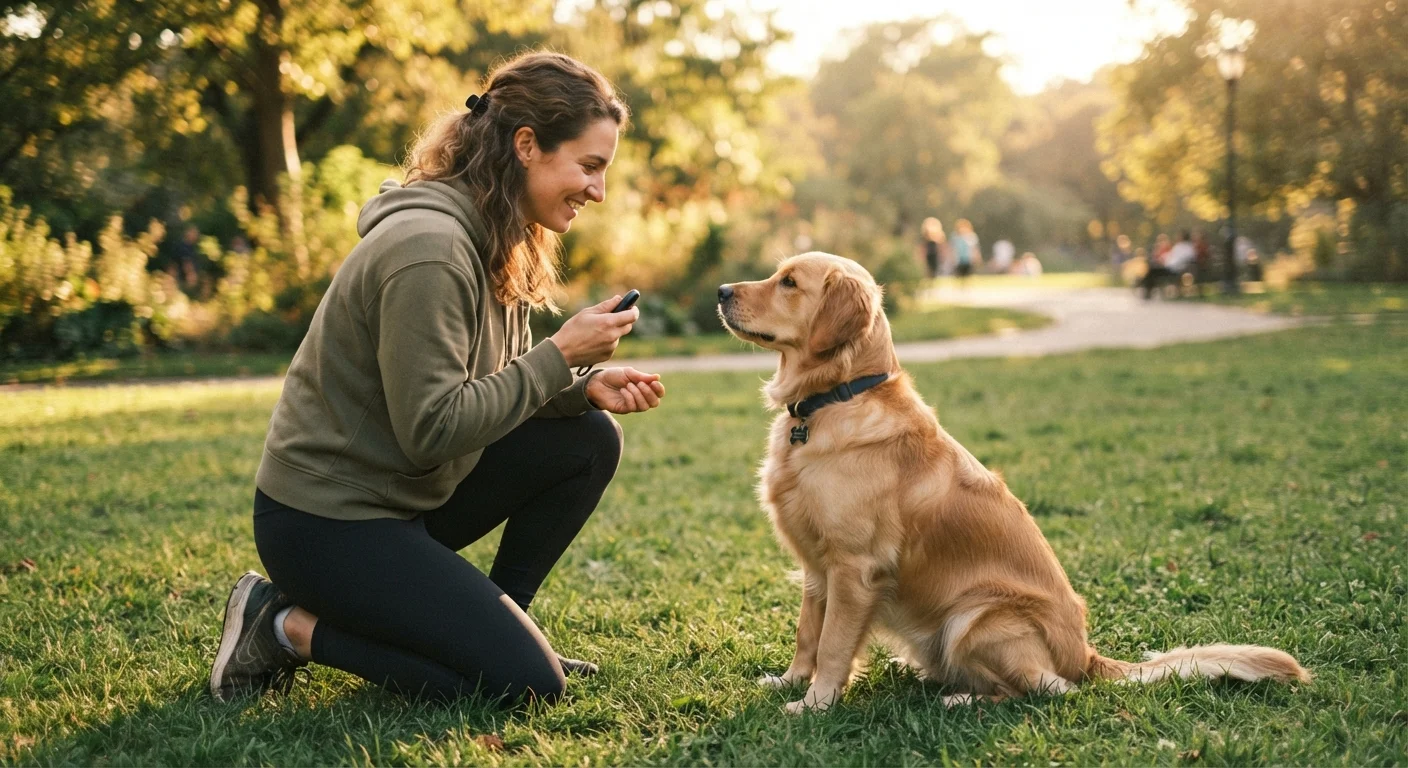
Two branches of learning theory explain why clicker training works so reliably. The first is classical conditioning - the same process Ivan Pavlov documented when dogs learned to associate a bell with food. Before any skill-building begins, owners pair the click sound with a reward dozens of times until the click alone predicts something good is coming. This phase is called charging the marker.
The second branch is operant conditioning, associated with psychologist B.F. Skinner. Here, behavior is shaped by its consequences. When a pet performs an action and that action is immediately marked with a click and followed by a reward, the animal's brain registers: "That specific thing I just did produced something good." The behavior becomes more likely to occur again.
Together, these two mechanisms give the click extraordinary power. The pet is not simply responding to random rewards - it is learning a precise cause-and-effect relationship between its own actions and outcomes. This is fundamentally different from punishment-based approaches, as the science behind reward vs. aversive methods explains in detail.
~1-2 sec
Optimal click-to-behavior timing window
Animal learning research consistently identifies this window as critical for the pet to connect the marker to the correct action.
10-20
Repetitions needed to charge a new marker
Most animals begin reliably associating a neutral sound with reward after this many consistent click-then-treat pairings in a single short session.
5-10 min
Recommended session length for skill-building
Behavioral research on animal learning supports short, frequent sessions as producing more durable results than extended single sessions.
How to Charge the Marker: Starting From Scratch
Before your pet can benefit from clicker training, the click must carry meaning. Follow these steps to build that association:
- Choose a high-value reward. Small, soft treats your pet consumes quickly work best. The reward should be something genuinely motivating, not just tolerated.
- Click, then treat - in that order, every time. Do not click and treat simultaneously. The click comes first; the treat follows within one to two seconds.
- Run 10 to 15 repetitions per session. Keep these charging sessions brief. Watch for signs the association is forming: your pet may orient toward you, show anticipation, or make eye contact after the click.
- Test the marker. Click when your pet is not expecting it. If they look toward you or move toward the treat area, the click has been charged successfully.
If you are starting with a new pet, consider reading our guide on building trust before training begins - a settled, comfortable animal learns far more efficiently than one still adjusting to its environment.
Keep Treats Tiny and Ready
Treats used for clicker training should be no larger than a pea for dogs or a grain of rice for cats. Larger treats slow the session while the animal chews and can quickly lead to overfeeding. Pre-portion rewards into a treat pouch or small bowl before each session so your hands stay free and your timing stays sharp.
Timing, Repetition, and Building Behaviors
Once the marker is charged, you can begin teaching specific behaviors using a process called shaping - reinforcing small steps that gradually approach the final goal. For example, teaching a dog to lie down might progress through: looking downward, lowering the head, bending the front legs, and finally reaching the full down position.
Timing is the single most important mechanical skill in clicker training. The click must fall within approximately one to two seconds of the desired behavior or the animal will struggle to identify what caused the reward. A delayed click can accidentally reinforce whatever the pet was doing when the sound occurred - sitting up again, glancing away - rather than the target behavior itself.
Session length matters too. Research in animal learning consistently shows that short, frequent sessions - five to ten minutes at most - produce faster, more durable learning than long, exhausting ones. Our companion article on structuring effective training sessions walks through the environmental and logistical factors that maximize results.
If your pet stops responding mid-session, it may signal fatigue, distraction, or that the steps are too large. Revisit an easier version of the behavior, end on a successful click, and return fresh the next day. Understanding what drives behavior repetition can also help you diagnose unexpected stalls.
Common Mistakes - and How to Avoid Them
Even motivated owners run into predictable pitfalls. Recognizing them early keeps progress on track.
- Clicking without rewarding. Every click must be followed by a reward, no exceptions. Skipping treats after the click erodes the marker's reliability and slows learning significantly.
- Using the clicker to get attention. The click is a reward marker, not a recall tool. Clicking to call your pet over teaches them the click means nothing specific.
- Raising criteria too fast. Shaping requires patience. If your pet is failing more than 20 percent of the time, the step you are asking for is likely too large. Break it down further.
- Inconsistent sessions. Irregular training creates irregular results. Short, daily sessions outperform occasional marathon efforts every time.
If progress plateaus despite consistent effort, that is a normal part of learning - not a sign the approach is failing. The article on restarting stalled training offers targeted strategies for working through plateaus.
This article provides general educational information about animal learning and training concepts. It is not a substitute for guidance from a qualified veterinary behaviorist or certified professional trainer, particularly for pets showing fear, aggression, or other complex behavioral concerns.