What Each Philosophy Actually Means
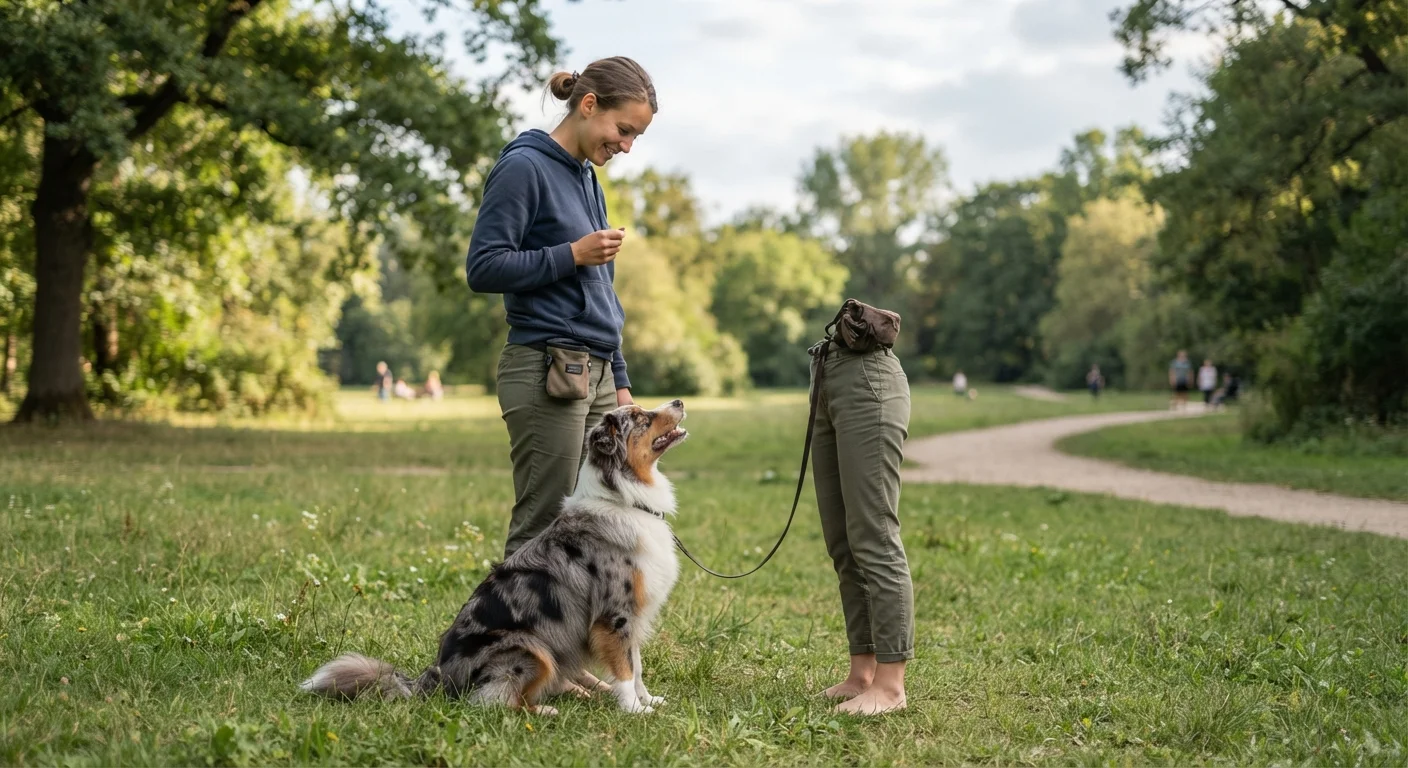
The term force-free training refers to a method that uses only rewards - food, play, praise, or other things the animal values - to increase desired behaviors. Trainers working in this framework never use physical corrections, leash jerks, or tools designed to cause discomfort. The approach draws heavily from applied behavior analysis and operant conditioning principles.
Balanced training, by contrast, uses all four quadrants of operant conditioning: positive reinforcement (adding something good), negative reinforcement (removing something unpleasant when the animal complies), positive punishment (adding something unpleasant to reduce behavior), and negative reinforcement applied proactively. In practice, balanced trainers typically use rewards alongside corrections or aversive tools such as prong collars or electronic collars.
It's worth noting that the word "balanced" is an industry term, not a regulated one. Two trainers calling themselves balanced may use very different tools and intensities. The same is true on the force-free side - quality and skill vary widely. For a deeper look at the research behind these methods, see our breakdown of what behavioral science says about reward-based and aversive approaches.
What the Evidence Shows
A meaningful body of peer-reviewed research has examined welfare outcomes related to training methods. Several studies published in veterinary and animal behavior journals have found associations between aversive training tools and increased stress indicators in dogs - including cortisol levels, stress-related body language, and in some cases increased aggression.
Professional organizations including the American Veterinary Society of Animal Behavior (AVSAB) have issued position statements recommending reward-based methods as the primary approach, citing both efficacy and welfare concerns around punishment-based tools.
Balanced training proponents often argue that these studies use poorly matched comparison groups or that aversive tools, when applied correctly by an experienced professional, do not produce the harms critics describe. This remains an area of genuine debate among practitioners, though the mainstream scientific and veterinary consensus leans toward minimizing aversive methods.
73%
Dogs showing stress signals with punishment-based methods
A study published in Applied Animal Behaviour Science found that dogs trained with aversive methods displayed significantly more stress-related behaviors than those trained with rewards.
4+
Major veterinary bodies recommending reward-based training
Organizations including the AVSAB and the American Animal Hospital Association have issued formal position statements supporting positive reinforcement as the primary training approach.
What the evidence does not show is that force-free methods are ineffective for serious or complex behaviors. Multiple studies and practitioner reports support their use across a wide range of behaviors in dogs, cats, horses, and other species.
Practical Tradeoffs to Consider
| Force-Free Training | Balanced Training | |
|---|---|---|
| Core tools used | Rewards only (food, play, praise) | Rewards plus corrections or aversive tools |
| Scientific/veterinary consensus support | Strongly supported by mainstream bodies | More contested; some practitioner support |
| Welfare risk if applied incorrectly | Generally low | Higher; corrections can escalate fear or aggression |
| Owner learning curve | Moderate; timing and reading cues required | Moderate to high; corrections require precision |
| Suitability for fearful or anxious pets | Well-suited | Riskier without expert oversight |
| Typical accessibility for DIY training | High - widely available resources | Lower - higher stakes without professional guidance |
Beyond the research, there are real-world factors that affect which approach works for a given owner and pet. Force-free training tends to have a steeper learning curve for the owner - timing, reward delivery, and reading animal body language all require practice. Sessions need to be structured thoughtfully; our guide to setting up effective training sessions covers exactly how to create conditions where learning sticks.
Balanced training, when done by a skilled professional, can sometimes produce rapid results that owners find appealing. However, the margin for error is higher: incorrectly timed or excessive corrections can worsen fear and aggression rather than reduce them. This risk is amplified when owners attempt to replicate correction-based techniques at home without proper instruction.
Start With Your Pet's Baseline
Before choosing a training philosophy, spend a week simply observing your pet - what motivates them, what makes them anxious, and how they respond to novelty. A high-drive dog motivated by toys may respond differently than a food-motivated, cautious rescue. This baseline knowledge helps you and any trainer you work with choose methods that fit the actual animal in front of you, rather than a generic profile.
Questions to Ask Before Committing to a Trainer
Regardless of which philosophy a trainer claims, their qualifications and transparency matter. Consider asking:
- What credentials do you hold? Look for certifications from bodies that require demonstrated knowledge, such as the Certification Council for Professional Dog Trainers (CCPDT) or the International Association of Animal Behavior Consultants (IAABC).
- Can I observe a session before committing? Reputable trainers typically welcome observation.
- What happens when my pet gets it wrong? The answer reveals their actual method more clearly than any label.
- How will you handle my pet's specific history? A dog adopted from a shelter, for example, may need a gentler approach than one raised in a stable home. Our guide to the first 30 days with a new pet explains why early relationship-building shapes all future training.
Avoid Copying Techniques From Online Videos
Correction-based techniques shown in training videos are often performed by experienced professionals working with specific animals under controlled conditions. Attempting to replicate leash corrections, collar pressure, or other aversive tools at home without hands-on instruction significantly increases the risk of unintended harm. If you're drawn to balanced methods, work directly with a credentialed professional rather than self-teaching from video content.
This article is for general informational and educational purposes only. For behavior concerns that involve aggression, fear, or significant distress, consult a certified veterinary behaviorist or credentialed applied animal behaviorist for guidance specific to your pet's situation.