Why Destructive Behavior Is Rarely About Defiance
When a dog shreds a couch cushion or a cat scratches walls relentlessly, the instinct is to label the behavior as stubborn or spiteful. Behavioral science tells a different story. Most destructive behaviors in companion animals trace back to unmet cognitive and instinctual needs - the animal is not acting out, it is coping with under-stimulation.
Pets are descended from animals that spent the majority of their waking hours engaged in complex tasks: hunting, foraging, exploring territory, and solving problems. Modern domestic life, for all its comforts, rarely provides that level of engagement. The result is a cognitive surplus that has nowhere productive to go - until it finds an outlet in your furniture, baseboards, or houseplants.
Understanding this reframes the entire challenge. Rather than asking how do I stop this behavior, the more productive question becomes what need is this behavior serving? Mental enrichment is designed to answer that second question directly. It is also worth noting that anxiety can look identical to boredom-driven destruction - see our guide to stress and anxiety in pets for help distinguishing between the two.
Enrichment Is Not a Substitute for Veterinary Care
Sudden changes in behavior - especially if accompanied by changes in appetite, elimination, or energy levels - should be evaluated by a veterinarian before assuming boredom is the cause. Pain, hormonal changes, and neurological conditions can all produce behaviors that resemble under-stimulation. Always rule out a medical explanation first.
What the Evidence Tells Us About Enrichment
Research in animal behavior and welfare consistently supports the connection between cognitive stimulation and reduced problem behaviors. Studies in dogs have shown that puzzle-based feeding and nose-work activities lower cortisol levels - a biological marker of stress - and decrease unwanted behaviors like excessive barking and destructive chewing. Similar findings exist for cats given environmental complexity through vertical space, hiding spots, and foraging opportunities.
The mechanism is fairly straightforward: a mentally engaged pet is a tired pet in the best possible sense. Cognitive effort depletes energy reserves and produces a calming effect that physical exercise alone does not always achieve. This is why a dog can return from an hour-long run and still pace anxiously, yet settle quietly after twenty minutes of scent work.
85%
Of destructive behaviors linked to boredom or frustration
Animal welfare researchers have estimated that the large majority of common companion animal behavioral problems have an environmental or under-stimulation component rather than a purely temperamental one.
5-10 min
Effective minimum for a single enrichment session
Behavioral consultants generally note that even brief, focused enrichment interactions - such as a short nose-work game - can meaningfully reduce restlessness when offered consistently throughout the day.
Enrichment also supports emotional resilience over time. Pets with consistent access to stimulating activities tend to show greater behavioral flexibility - they adapt more easily to routine changes, new environments, and novel stimuli. This aligns with training approaches grounded in reward-based methods; for a deeper look, explore what the science says about positive reinforcement.
Types of Enrichment and How to Apply Them
Effective enrichment is not one-size-fits-all. Matching the activity to your pet's species, breed tendencies, and individual personality is key to seeing results. Below are the five main categories recognized in animal welfare science:
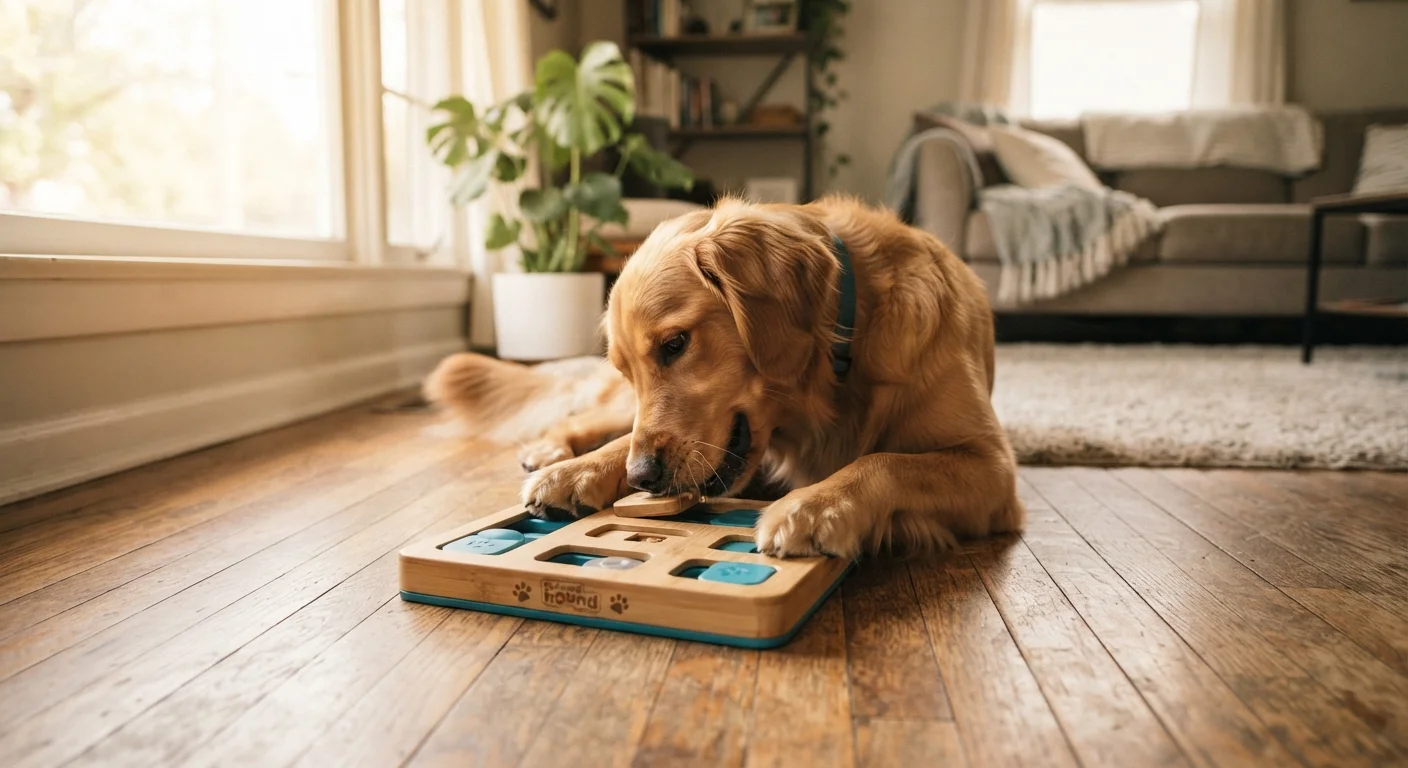
- Cognitive enrichment: Puzzle feeders, treat-dispensing toys, and training games that require the animal to solve a problem to earn a reward. These are among the most accessible forms and work well for dogs, cats, and many small animals.
- Sensory enrichment: Activities that engage smell, hearing, or sight - such as scent trails, nature sounds, and window perches for cats. For dogs, a structured sniff walk (allowing the dog to direct its nose rather than follow a brisk pace) can be as tiring as a much longer conventional walk.
- Feeding enrichment: Replacing the food bowl with lick mats, scatter feeding, or foraging puzzles. This extends mealtime from seconds to minutes and taps into natural foraging instincts.
- Social enrichment: Positive interactions with humans or compatible animals that involve play, communication, and bonding. Training sessions qualify here - well-structured short sessions are particularly effective, as outlined in our guide to effective training sessions.
- Physical-environmental enrichment: Structural changes to the pet's living space - climbing trees for cats, digging boxes for dogs, tunnels for rabbits - that encourage natural movement and exploration.
Start With What You Already Have
You do not need specialized equipment to begin enrichment. A muffin tin with kibble hidden under tennis balls, a crumpled paper bag with treats inside, or a cardboard box filled with packing paper all qualify as cognitive enrichment. Begin with simple, low-cost options to find what motivates your individual pet before investing in commercial puzzle toys.
Building an Enrichment Routine That Sticks
Consistency matters more than variety. Introducing enrichment sporadically produces modest results; building it into the daily rhythm of your household creates lasting behavioral change. A practical approach is to anchor enrichment to existing routines - replacing the morning food bowl with a puzzle feeder, adding a five-minute training game after an evening walk, or hiding a few treats in different rooms before you leave for work.
Rotate activities every few days to maintain novelty without overwhelming yourself. Pets adapt quickly to the same stimuli, so keeping a small rotation of three to five different activities helps sustain engagement over time. Pay attention to what your individual pet gravitates toward - some dogs are scent-obsessed and will respond strongly to nose work, while others are highly motivated by social play or fetch variations.
If your household includes multiple animals, enrichment dynamics become slightly more complex. Individual sessions prevent resource guarding and ensure every pet benefits equally - our multi-pet household behavioral guide covers how to manage this thoughtfully.
Finally, if enrichment and consistent routines do not produce improvement after several weeks, it is worth considering whether the behavior has a professional-level cause. Some behavioral issues require expert intervention - learn the signs that a professional trainer or veterinary behaviorist is needed.
This article is intended for general educational purposes and does not constitute veterinary advice. Always consult a licensed veterinarian for concerns about your pet's health or behavior.