Why So Many People Skip This Step - and Why That's a Problem
The patch test is one of those steps that feels unnecessary right up until the moment it isn't. Most people assume that if a product is sold at a mainstream retailer, it's safe for everyone. That assumption is wrong. Skin reactions are highly individual - an ingredient that causes no issue for one person can trigger contact dermatitis in another, regardless of the formula's price point or marketing claims.
As beauty marketing claims like "hypoallergenic" and "dermatologist tested" imply a level of safety they don't actually guarantee for every skin type. These phrases describe how a product performed in specific testing conditions, not how it will perform on your particular skin chemistry. Common sensitizers - fragrances, preservatives like methylisothiazolinone, essential oils, and certain botanical extracts - appear across price ranges, from drugstore to luxury.
Skipping the patch test when introducing a potent active like a retinoid, an AHA exfoliant, or a high-concentration vitamin C serum is particularly risky. These ingredients are effective precisely because they interact with skin biology - which means they also have a higher potential for irritation, especially in sensitive or compromised skin types.
Anaphylaxis Is a Medical Emergency
If you experience throat tightening, difficulty breathing, swelling of the lips or tongue, or feel faint after applying any product, call 911 immediately. A patch test on the forearm reduces but does not eliminate this risk. Readers with a known history of severe allergies should consult a dermatologist or allergist before testing new products.
What You'll Need Before You Start
What you will need
Cotton swabs
Apply a small, controlled amount of product to the test site without contaminating the bottle.
Medical tape or bandage
Keep the product in contact with skin overnight without rubbing off, useful for leave-on products.
Pen or marker
Mark the edges of the test area so you can accurately monitor the specific spot over 48 hours.
How to Do the Patch Test Correctly
Follow the steps below in order. The process takes only a few minutes to set up, but requires patience during the waiting period. Rushing or checking too early leads to unreliable readings.
Choose your test site
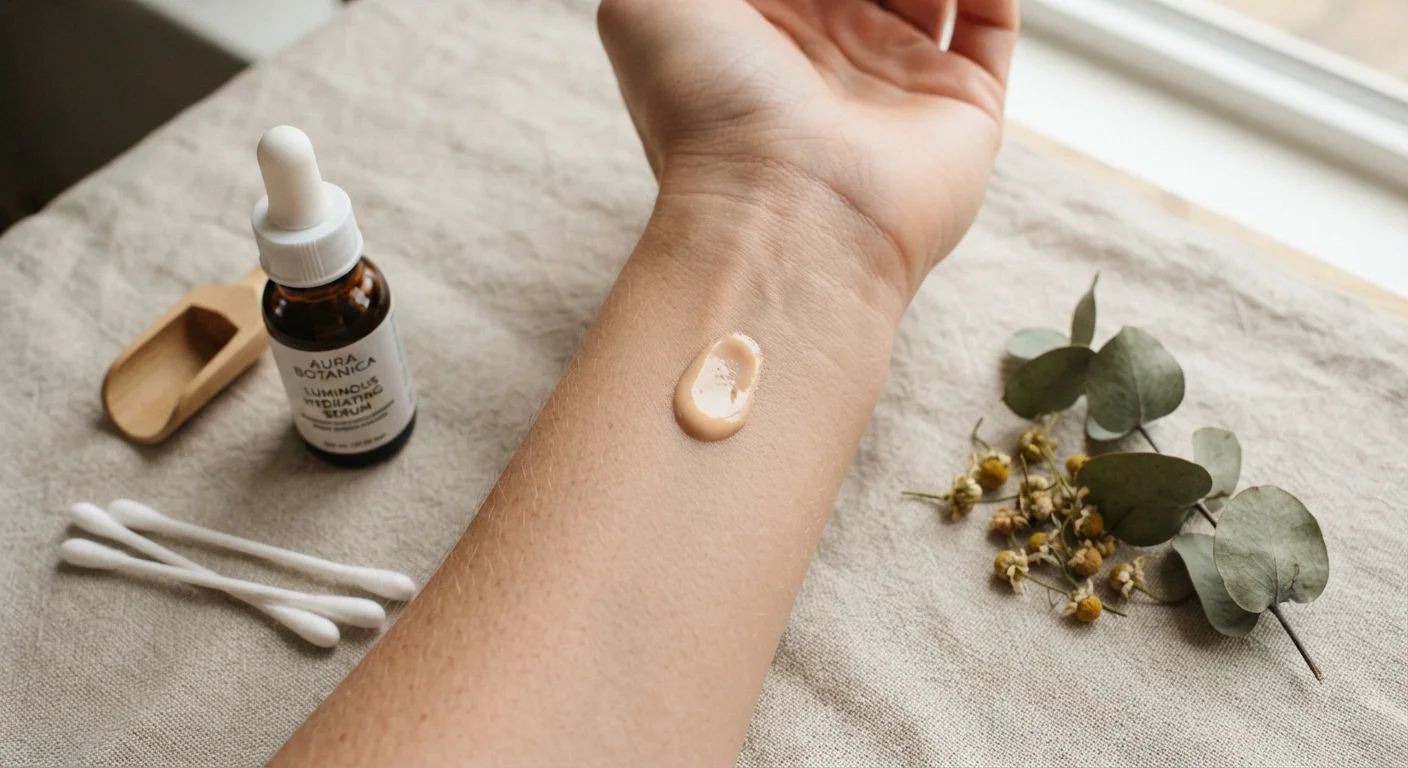
For most facial skincare products, the inner forearm - the soft skin on the underside of your wrist area - is the standard test location. It's sensitive enough to reveal a reaction but easy to observe and unlikely to affect your face if irritation occurs. For hair dye or scalp treatments, the area behind one ear is more representative of scalp skin. Avoid the back of the hand, which tends to be tougher and less reactive.
Cleanse and dry the area
Wash the test site with a gentle, fragrance-free soap and pat it completely dry. Residue from other products - moisturizers, sunscreen, body lotion - can interfere with results or cause a false positive. Let the skin air dry for a few minutes before proceeding.
Apply a small amount of the product
Use a cotton swab or clean fingertip to apply a pea-sized amount - roughly the size of a small coin - to the test site. Apply it as you would normally use the product: a rinse-off cleanser can be applied briefly then removed; a leave-on serum or cream should stay on the skin. Match the real-world usage as closely as possible for meaningful results.
Wait - and don't disturb the area
For leave-on products, keep the area dry and avoid rubbing it for at least 24 hours. 48 hours is a more reliable window, particularly for fragranced products, hair dyes, or formulas containing common sensitizers like essential oils or preservatives. If you're covering the spot with a bandage overnight, use a breathable medical tape rather than an airtight adhesive, which can cause occlusion-related irritation unrelated to the product itself.
Evaluate the results
Check the site at 24 hours and again at 48 hours. Note any of the following:
- Redness or flushing - a possible sign of irritation or allergy
- Itching or burning - suggests the product is disrupting your skin barrier
- Raised bumps, hives, or swelling - stronger allergic response signals; stop use
- Blistering or peeling - discontinue immediately and consult a dermatologist
If the skin looks and feels exactly like the surrounding untreated area, that's a passing result. Mild, temporary redness that fades within an hour of application is usually transient irritation rather than a true allergic reaction - but if you're unsure, consult a healthcare professional before proceeding.
Don't Test on Broken or Irritated Skin
Applying a product to compromised skin - whether sunburned, eczema-flared, or freshly shaved - can cause an exaggerated response that doesn't reflect how healthy skin would react. Choose a clean, unbroken patch of skin and wait until any active flare-up has resolved before testing.
Reading the Results and What to Do Next
A clean result at 48 hours means you can proceed - but introduce the product gradually. Start by using it every other day for the first week, especially with actives, to give your skin time to acclimate. A full-face application on day one, even after a clean patch test, can still cause temporary purging or adjustment reactions in reactive skin types.
If you did see a reaction, note the product's ingredient list. Cross-check it against any other products that have caused issues for you in the past to identify potential common culprits. A dermatologist can perform clinical patch testing (a more comprehensive diagnostic tool using standardized allergen panels) if you experience frequent unexplained reactions. This general patch test is a useful screening tool, not a substitute for professional evaluation.
Test Each New Product Separately
If you introduce two new products at the same time and a reaction occurs, you won't know which one is the culprit. Space new additions at least a week apart, and test each one individually. This is especially important if you're building a routine for sensitive skin.
This article is for general informational and educational purposes only. It is not a substitute for professional medical or dermatological advice. If you experience a severe reaction or have a history of allergies or skin conditions, consult a qualified healthcare professional before using new skincare products.