Why Preparation Matters Before Day One
Starting a new exercise routine is one of the most positive steps you can take for your long-term health. But jumping in without preparation is one of the most reliable ways to get hurt, burn out, or quit within weeks. Research consistently shows that people who plan their approach - setting clear goals, understanding their physical starting point, and organizing practical logistics - are significantly more likely to maintain the habit beyond the initial enthusiasm phase.
This checklist is designed for anyone at the beginning of that journey, regardless of current fitness level. Work through each item before your first session. Think of it less as a barrier and more as a foundation. The structure you build now is what keeps you going when motivation dips - and it will dip, for everyone.
This article is for general informational and educational purposes only. It is not a substitute for personalized medical advice. Always consult a qualified healthcare professional before beginning a new exercise program, particularly if you have any existing health conditions.
Consult a Professional First If You Have Health Conditions
If you have a diagnosed heart condition, diabetes, osteoporosis, or any condition affecting your joints or lungs, speak with your healthcare provider before beginning any new exercise program. This checklist provides general educational guidance only and cannot account for individual medical circumstances. A physician or physical therapist can help you identify safe starting points and any modifications you may need.
Your Pre-Exercise Preparation Checklist
The 18 items below are grouped into four practical categories. Work through them in order - the health and safety steps come first for good reason. If you're wondering what kind of exercise to start with, bodyweight training is an accessible, equipment-free option worth exploring once you've cleared these basics.
Health & Safety Screening
Goal-Setting & Planning
Gear & Environment
Injury Prevention & Recovery Basics
Don't Skip the 'Too Easy' Phase
One of the most common beginner mistakes is starting at an intensity that feels appropriately challenging - which is often too much for an unconditioned body. Soreness that limits daily movement, persistent fatigue, or dreading sessions after the first week are signs you may have started too hard. Beginning easier than necessary is not a failure; it is smart programming that protects you from the burnout and injury that derail most new routines.
Setting Yourself Up Beyond the Checklist
Once you've worked through the preparation steps, a few broader considerations can reinforce your foundation. Nutrition plays a direct role in energy, recovery, and performance - even at beginner levels. Explore the Nutrition & Diet hub for practical guidance on eating habits that support an active lifestyle without unnecessary complexity.
It's also worth understanding the behavioral side of starting out. Overcommitting in the first few weeks - too many sessions, too much intensity - is one of the most common reasons new exercisers stop altogether. Read more about why beginners burn out fast and how to avoid falling into that pattern. Preparation isn't just physical; it's mental and logistical too. The groundwork you lay now shapes every session that follows.
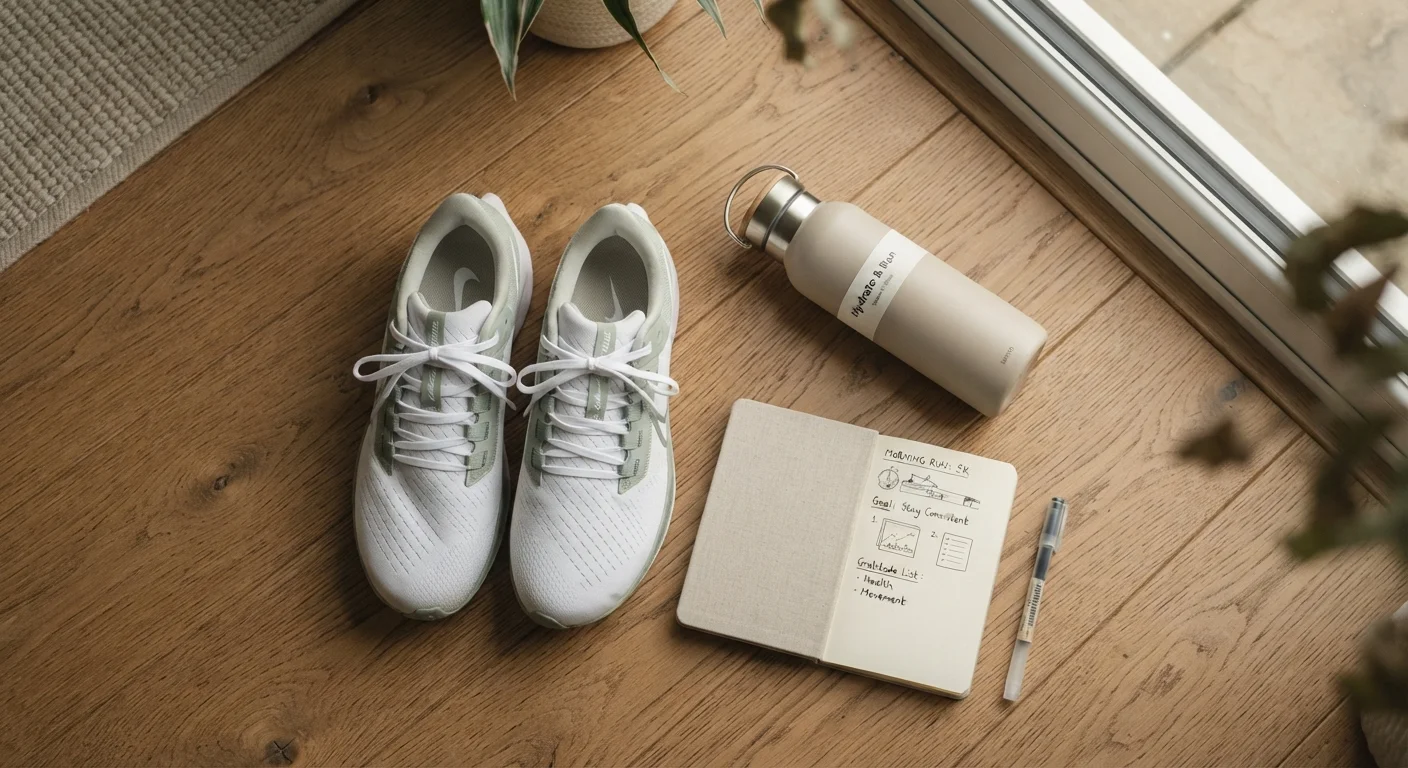
Exercise journal or notebook
Track your sessions, how you felt, and your progress week by week.
Properly fitted athletic footwear
Provides the support and cushioning appropriate to your chosen activity, reducing injury risk.
Reusable water bottle
Keeps hydration accessible before, during, and after every session.
Calendar or scheduling app
Used to block exercise sessions as recurring appointments so they don't get displaced by other commitments.
Heart rate monitor or fitness tracker
Provides real-time feedback on exercise intensity, helpful for staying within appropriate effort levels.
Foam roller
Supports muscle recovery and mobility between sessions when used after exercise.