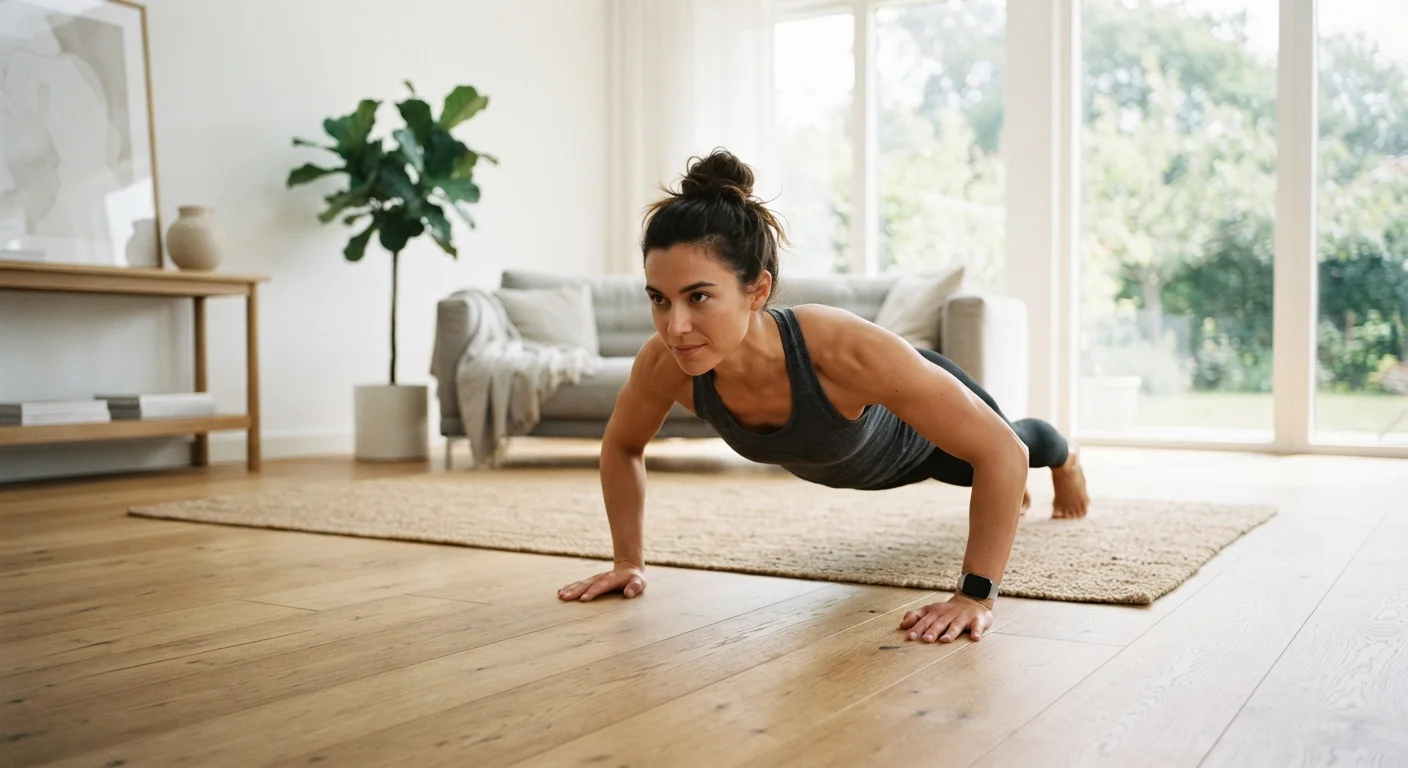
What Is Bodyweight Training?
Bodyweight training is a form of resistance exercise that uses your own body mass - rather than external weights or machines - to build muscular strength, endurance, and mobility. Movements like push-ups, squats, lunges, and planks are all classic examples. Because no equipment is required, it can be practiced virtually anywhere: a living room floor, a backyard, or a hotel room.
Unlike gym-based training, bodyweight exercise relies on controlling your limbs and torso against gravity. This demands coordination and body awareness alongside raw strength, which is part of why it translates so well to everyday movement. It is also one of the oldest forms of physical conditioning - military and athletic traditions worldwide have used it for centuries.
Bodyweight training is not a single, rigid program. It spans everything from gentle beginner circuits to advanced movements like handstands and single-leg squats (sometimes called pistol squats). The range makes it adaptable to almost every fitness level, provided you begin at an appropriate starting point. For a broader look at how home-based exercise compares with gym training, see our comparison of home workouts and gym workouts.
Why Bodyweight Training Works for Beginners
For someone new to exercise, bodyweight training offers a low-barrier entry point that reduces many common obstacles - cost, commute, intimidation, and scheduling conflicts. Research consistently shows that adherence is the single greatest predictor of fitness progress. A method you can actually do regularly beats a theoretically optimal method you abandon after two weeks.
73%
Adults who cite convenience as a top barrier to exercise
According to surveys by the American Heart Association, logistical friction - including gym access and cost - is among the most commonly reported barriers to regular physical activity.
2-3x
Weekly sessions recommended for beginners
The U.S. Department of Health and Human Services Physical Activity Guidelines recommend muscle-strengthening activities on two or more days per week for meaningful health benefits.
Bodyweight exercises also teach movement fundamentals that carry over to all other forms of exercise. Learning to hinge at the hips, brace your core, and control your descent in a squat builds a physical literacy that makes everything from hiking to lifting safer and more effective. Starting with bodyweight allows you to develop these patterns before adding load.
There is also a psychological benefit. Early wins - completing your first full push-up, holding a plank a few seconds longer - create momentum. Motivation research suggests that small, visible progress is one of the most reliable drivers of sustained behavior change. Bodyweight training is structured in a way that makes those milestones achievable and frequent, especially at the beginner stage.
Start each session by practicing the movement pattern without any intensity goal - just move through the range of motion slowly and notice how your body feels. This habit builds body awareness that prevents injury far better than any warm-up protocol.
Motor learning research shows that deliberate, low-stakes repetition early in skill acquisition leads to cleaner, more durable movement patterns - which is especially important for beginners whose compensatory habits have not yet formed.
Track your sessions with a simple notepad or phone note, logging what you did and how it felt - not just the numbers. Perceived effort is a meaningful data point for knowing when to progress or pull back.
Self-monitoring is consistently linked to better adherence in behavioral health research, and qualitative notes help beginners recognize subtle signs of overtraining or readiness to advance before those signals become problems.
Core Movements Every Beginner Should Know
You do not need a large exercise library to get started. A handful of foundational patterns covers most of the body and provides enough variety to build an effective routine.
- Push-up: Trains the chest, shoulders, and triceps. Beginners can start with hands elevated on a counter or wall to reduce load.
- Bodyweight squat: Develops the quadriceps, glutes, and hamstrings. Focus on sitting back and keeping your chest tall.
- Glute bridge: Activates the posterior chain (glutes and hamstrings) while being gentle on the lower back and knees.
- Plank: Builds core stability. A 10-20 second hold with good form is a reasonable starting point.
- Reverse lunge: A more knee-friendly alternative to forward lunges that builds single-leg strength and balance.
- Dead bug: A floor-based core exercise that teaches the spine-stabilizing coordination needed for almost all other movements.
Each of these can be made easier or harder by adjusting your body position, range of motion, or tempo. This scalability is what makes them genuinely beginner-friendly rather than just simplified versions of harder exercises.
Prioritize Form Before Repetitions
Performing an exercise incorrectly - even a simple one like a squat - can place undue stress on joints and soft tissue over time. If a movement feels unstable or painful, regress to an easier variation rather than pushing through. A well-executed easier exercise is always more valuable than a poorly executed harder one.
How to Structure Your First Routine
A practical beginner routine does not need to be long. Three sessions per week of 20-30 minutes is a widely supported starting point for building fitness without overwhelming the body's recovery capacity. Rest days between sessions allow muscles and connective tissues to adapt.
A simple session structure might look like this:
- Warm-up (5 minutes): Light movement like marching in place, hip circles, and arm swings to raise body temperature and prepare joints.
- Main circuit (15-20 minutes): Rotate through 4-5 of the foundational movements above, performing each for a set duration or number of repetitions with brief rest between them.
- Cool-down (5 minutes): Gentle stretching targeting the areas you worked - hips, chest, and hamstrings are commonly tight in beginners.
Progression is the key principle over time. As a movement becomes easier, you can increase the number of repetitions, slow the tempo, reduce rest periods, or advance to a harder variation. This gradual overload is what drives continued adaptation. For guidance on turning these sessions into a habit that lasts, our article on building an exercise routine you'll actually stick to covers the behavioral principles behind sustainable fitness habits.
Progress Slowly and Deliberately
A common beginner mistake is increasing difficulty too quickly out of enthusiasm. A good rule of thumb is to feel comfortable completing all sets and repetitions with solid form for at least two consecutive sessions before advancing to a harder variation. This patient approach builds a stronger foundation and significantly reduces the risk of overuse injuries in the first weeks.
Safety, Recovery, and Common Mistakes
Beginners are often most at risk of injury not because exercises are inherently dangerous, but because enthusiasm outpaces preparation. The most common mistakes include advancing too quickly, neglecting warm-ups, and prioritizing quantity over form quality.
Stop If You Experience Pain
Muscle fatigue and mild discomfort are normal during exercise; sharp, stabbing, or joint-focused pain is not. If you experience chest pain, dizziness, shortness of breath disproportionate to exertion, or joint pain during any movement, stop immediately. Seek guidance from a qualified healthcare professional before resuming exercise. Do not attempt to work through pain in the hope it resolves on its own.
Recovery is an active part of training, not an afterthought. Adequate sleep - generally seven to nine hours for most adults, per widely cited public health guidance - is when muscle repair and adaptation primarily occur. Staying well-hydrated and managing stress also play supporting roles in how well your body responds to exercise.
Some muscle soreness 24-48 hours after a new workout is normal and is referred to as DOMS. It typically resolves on its own. Sharp, joint-specific, or persistent pain is different and warrants stopping the activity and consulting a qualified healthcare professional before continuing. If you have any pre-existing conditions, injuries, or health concerns, speak with your doctor before beginning a new exercise program.
Pairing Movement with Nutrition
Exercise and nutrition work as a system. You do not need to overhaul your diet to benefit from starting a movement practice, but understanding the basics of fueling your body supports better energy, recovery, and long-term results. Protein, in particular, plays a central role in muscle repair - most major nutrition bodies recommend adequate protein distribution across meals rather than large single doses.
Carbohydrates are the body's preferred fuel for physical activity, and healthy fats support hormonal function and joint health. Staying well-hydrated before, during, and after exercise helps maintain performance and reduces the risk of cramping and fatigue.
If you are new to thinking about nutrition alongside your new movement habit, our guide to building a balanced plate offers a practical, non-overwhelming starting point. You can also explore our broader Nutrition & Diet hub for additional guidance on everyday healthy eating.
This article is for general informational and educational purposes only and does not constitute medical advice. Always consult a qualified healthcare professional before beginning a new exercise program, especially if you have any existing health conditions or concerns.