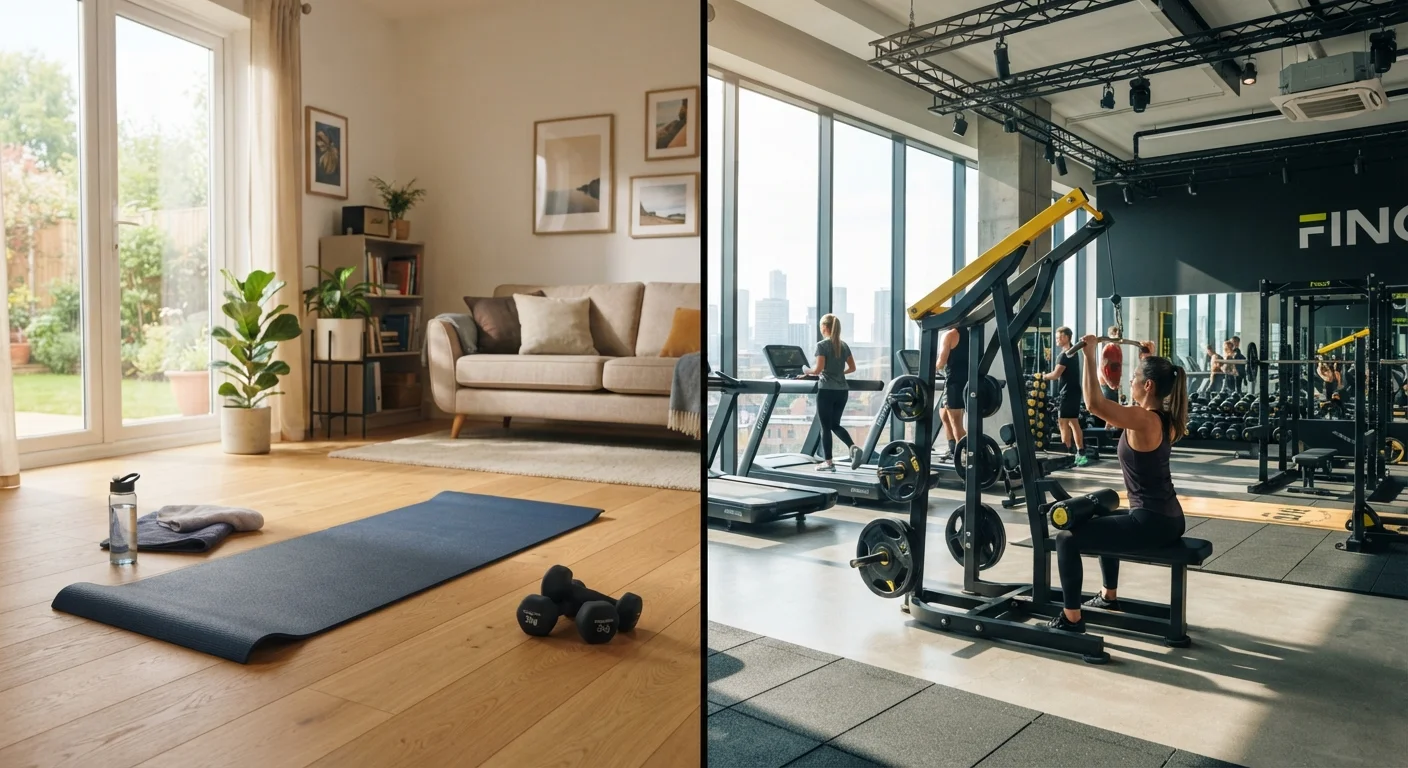
Why Where You Work Out Matters - and Why It Doesn't
The fitness industry has long debated whether home or gym training produces better results. In reality, exercise science is clear that the most effective workout is the one you actually do. Location is a practical variable, not a physiological one.
That said, your environment profoundly shapes your habits. A setting that feels inconvenient, uncomfortable, or financially stressful creates friction that erodes consistency over time. Understanding the real trade-offs between home and gym training can help you choose - or combine - environments that reduce those barriers. See our guide on why consistency beats intensity for more on why habit-building outweighs any specific training method.
The Case for Working Out at Home
Home workouts have grown significantly in popularity, and for good reason. For many people, eliminating travel time alone removes the most common reason for skipping exercise.
No commute means fewer skipped sessions
Removing travel time is one of the most powerful ways to reduce workout barriers. Studies on exercise adherence identify convenience as a top predictor of long-term consistency.
Lower ongoing financial cost
Once basic equipment is purchased, home workouts carry no monthly fees. This makes fitness accessible regardless of budget fluctuations.
Complete flexibility in timing and environment
You can train at any hour, wear anything, play any music, and pause mid-session - a level of control that suits irregular schedules or those who prefer privacy.
Lower intimidation threshold for beginners
For those new to exercise, starting at home removes the social anxiety that can make a commercial gym feel unwelcoming, allowing habits to form in a lower-pressure setting.
Bodyweight movements, resistance bands, and a single set of adjustable dumbbells can address a wide range of fitness goals. If you're new to exercise, our introduction to bodyweight training explains how to get started safely with no equipment at all.
Home training does have real limitations. Without structured programming or external feedback, it's easy to plateau, skip progressive overload, or reinforce poor movement patterns without realizing it.
The Case for Going to the Gym
A well-equipped gym provides resources that are genuinely difficult to replicate at home - particularly for those with intermediate or advanced fitness goals, or for people recovering from injury under professional guidance.
Equipment limitations can restrict progression
Without access to a full range of weights, machines, or cable systems, it becomes harder to progressively overload muscles - a key driver of strength and muscle development.
Home environment creates distractions
Family members, household chores, phones, and pets all compete for attention. Many people find it harder to maintain workout focus at home than in a dedicated fitness space.
Less access to professional guidance
Gyms often employ certified trainers available for form checks or programming help. Without that resource, home exercisers are more likely to develop inefficient or potentially injurious movement habits.
Reduced social accountability
The social dimension of shared training spaces - classes, training partners, gym culture - motivates many people to show up consistently in ways that solo home training does not replicate.
~$58/mo
Average U.S. gym membership cost
According to industry data from the International Health, Racquet & Sportsclub Association (IHRSA), the average American pays roughly $58 per month for a gym membership, though costs vary widely by facility type.
67%
Members who rarely use their gym
Research has consistently shown that a large share of gym members use their membership infrequently - underscoring that access to equipment does not automatically translate to consistent exercise.
The social dimension of gyms is often underestimated. Research on exercise adherence consistently identifies social support as a meaningful predictor of long-term participation. Group classes, training partners, and even the ambient energy of a shared space can provide motivation that's hard to manufacture alone at home.
Understanding how different exercise types serve your body can also inform your environment choice. Our breakdown of cardio vs. strength training helps clarify which modalities align with your goals.
Factors to Weigh When Making Your Decision
Rather than choosing based on what seems more serious or committed, consider these practical dimensions:
- Schedule: If your available workout window is early morning or late evening, home training may be the only realistic option on many days.
- Budget: Gym memberships range widely in cost. Home equipment requires upfront investment but no recurring fees.
- Goals: Building significant muscle mass or training for specific athletic performance generally benefits from gym-level equipment. General fitness, mobility, and cardiovascular health are achievable either way.
- Accountability style: Some people thrive in solitude; others need external structure. Neither preference is a character trait - it's just useful self-knowledge.
- Space and noise: Home workouts require adequate space and tolerance for sound, both yours and your household's.
A Hybrid Approach Is a Legitimate Strategy
Choosing between home and gym doesn't have to be all-or-nothing. Many fitness professionals recommend treating both environments as complementary tools. For example, gym visits for heavy resistance training and home sessions for mobility work, low-impact exercise, or active recovery can together form a well-rounded weekly routine. There's no rule that requires you to commit exclusively to one setting.
Many people find the most sustainable answer is a hybrid: gym sessions for heavier lifting or classes, home sessions for shorter or low-intensity days. Our guide to building a routine you'll actually stick to offers a practical framework for structuring either approach.
This article is for general informational and educational purposes only and is not a substitute for advice from a qualified healthcare or fitness professional. Consult a professional before beginning any new exercise program, particularly if you have an existing health condition or injury.