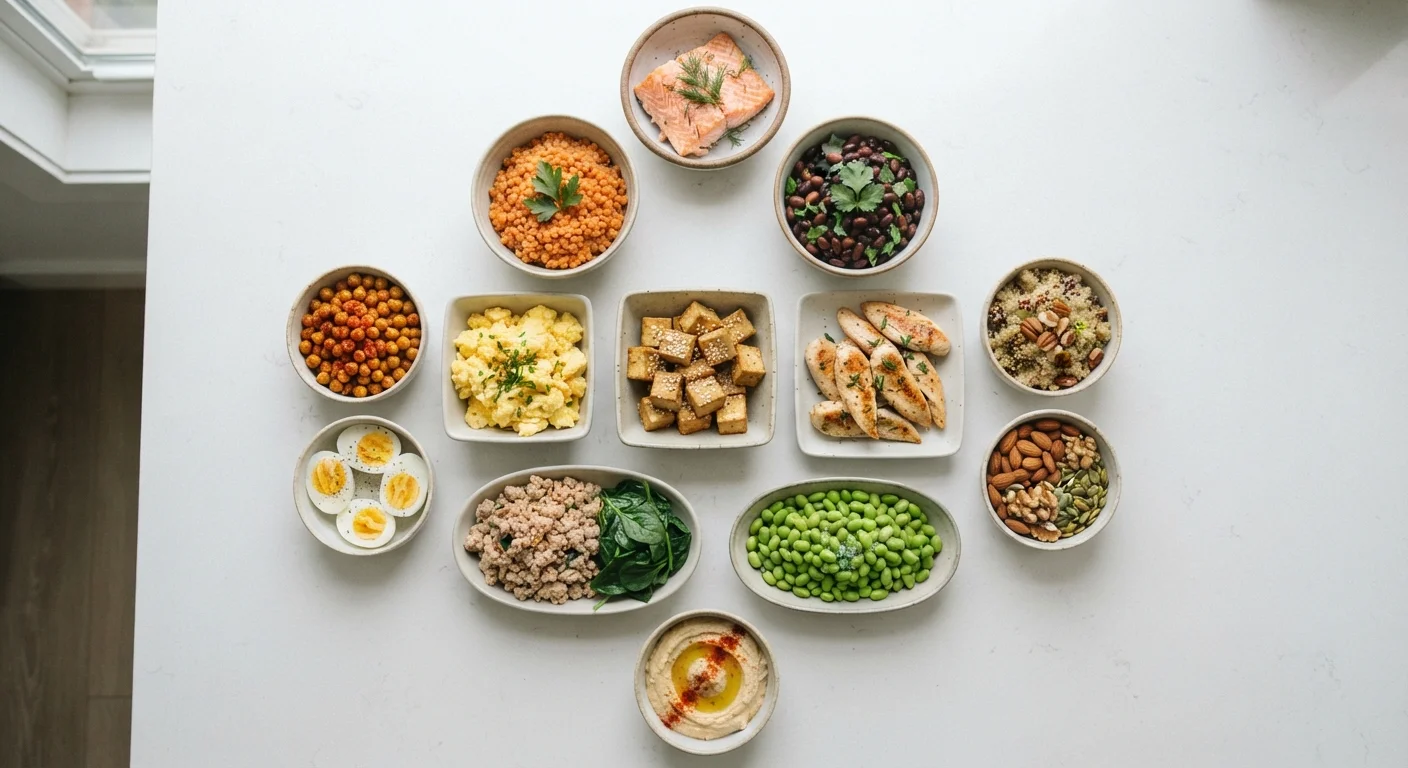
Why Protein Source Matters
Protein is essential for muscle repair, immune function, enzyme production, and dozens of other biological processes. But not all protein sources are nutritionally identical - they differ in amino acid completeness, digestibility, fat content, and micronutrient density.
The body requires 20 amino acids to function, nine of which are classified as essential because they cannot be synthesized internally and must come from food. Animal proteins generally supply all nine in proportions the body uses efficiently. Most plant proteins are lower in one or more essential amino acids - though this gap is easily addressed through food variety, not through rigid food-combining rules at every meal.
Understanding these differences helps consumers navigate any eating pattern - omnivore, flexitarian, vegetarian, or vegan - and make choices that consistently meet their needs. For a broader view of how protein fits into daily meals, see Building a Balanced Plate.
| Daily protein reference intake (adults) | 0.8 g per kg of body weight (general minimum) (Dietary Reference Intakes, National Academies of Sciences) |
| Essential amino acids required from food | 9 of 20 total amino acids (National Institutes of Health, Office of Dietary Supplements) |
| Protein in cooked lentils (1 cup) | ~18 grams (USDA FoodData Central) |
| Protein in one large egg | ~6 grams (USDA FoodData Central) |
| Protein in cooked salmon (3 oz) | ~22 grams (USDA FoodData Central) |
| Complete plant protein examples | Soy (tofu, tempeh, edamame), quinoa, amaranth, hemp seeds (Academy of Nutrition and Dietetics) |
Animal Protein Sources at a Glance
Animal-based proteins - including meat, poultry, seafood, eggs, and dairy - are considered complete proteins because they contain all nine essential amino acids. They also deliver concentrated amounts of nutrients like vitamin B12, heme iron, zinc, and omega-3 fatty acids (particularly in fatty fish), which are harder to obtain in meaningful quantities from plants alone.
Essential amino acids
The nine amino acids the body cannot produce on its own and must obtain from food: histidine, isoleucine, leucine, lysine, methionine, phenylalanine, threonine, tryptophan, and valine.
Complete protein
A protein source that contains all nine essential amino acids in sufficient quantities. Most animal proteins and soy are considered complete proteins.
DIAAS
Digestible Indispensable Amino Acid Score - a scoring method adopted by the FAO to measure protein quality based on how well a food's amino acids are absorbed and used by the body.
Bioavailability
The proportion of a nutrient that is absorbed from food and used for normal body functions. Protein bioavailability can be influenced by food preparation, fiber content, and antinutrients.
Heme iron
A form of iron found only in animal foods that is absorbed more efficiently by the body than non-heme iron found in plant foods.
Antinutrients
Naturally occurring compounds in some plant foods (e.g., phytates, oxalates) that can reduce the absorption of certain nutrients. Cooking, soaking, or fermenting often reduces their effect.
- Eggs - Often cited in nutrition research as a high-quality reference protein; one large egg provides roughly 6 grams of protein.
- Poultry (chicken, turkey) - Lean cuts are relatively low in saturated fat and versatile across cooking methods.
- Fatty fish (salmon, sardines, mackerel) - Provide protein alongside omega-3 fatty acids EPA and DHA, which support cardiovascular and cognitive health.
- Dairy (Greek yogurt, cottage cheese, milk) - Contain both whey and casein protein, which digest at different rates; also supply calcium and B vitamins.
- Red meat (beef, pork, lamb) - High in complete protein and heme iron, though dietary guidelines in the U.S. generally recommend limiting processed and high-fat red meat varieties.
Animal proteins tend to have higher PDCAAS (Protein Digestibility-Corrected Amino Acid Score) and DIAAS values, meaning more of the protein is absorbed and used relative to what is consumed.
Plant Protein Sources at a Glance
Plant proteins have attracted growing research interest, with evidence suggesting that diverse plant-based diets can meet protein needs across most life stages when thoughtfully planned. Each source has a distinct amino acid profile and nutrient payload.
~32%
U.S. adults identifying as flexitarian or plant-curious
According to the International Food Information Council's Food and Health Survey, a growing share of American adults report reducing animal protein without eliminating it.
1 cup
Serving of cooked edamame matching many meat portions in protein
One cup of cooked edamame delivers roughly 17 grams of protein, comparable to several common animal-protein servings of similar size, per USDA FoodData Central.
~74%
DIAAS score for cooked chickpeas
Research published in nutrition journals places cooked legumes like chickpeas meaningfully below animal proteins in DIAAS scoring, reinforcing the value of dietary variety.
- Legumes (lentils, black beans, chickpeas, edamame) - Among the most protein-dense plant foods; lentils provide roughly 18 grams of protein per cooked cup and also deliver fiber, folate, and iron.
- Tofu, tempeh, and edamame - Derived from soybeans, which are one of the few plant foods considered a complete protein. Tempeh undergoes fermentation, which may improve digestibility.
- Whole grains (quinoa, amaranth, farro) - Quinoa is another complete plant protein; most grains are lower in lysine but still contribute meaningfully to overall protein intake.
- Nuts and seeds (hemp seeds, pumpkin seeds, almonds) - Hemp seeds contain all nine essential amino acids; nuts add healthy fats alongside protein.
- Seitan - Made from vital wheat gluten, it is one of the highest-protein plant foods by weight, though it is not appropriate for those with celiac disease or gluten sensitivity.
Variety across meals and days - rather than precise pairing at each sitting - is the practical strategy most registered dietitians recommend for meeting amino acid needs on a plant-forward diet. For ideas on stocking a nutritionally varied kitchen, weekly grocery planning can serve as a helpful framework.
This article is for general informational and educational purposes only and is not a substitute for personalized advice from a registered dietitian or qualified healthcare professional.