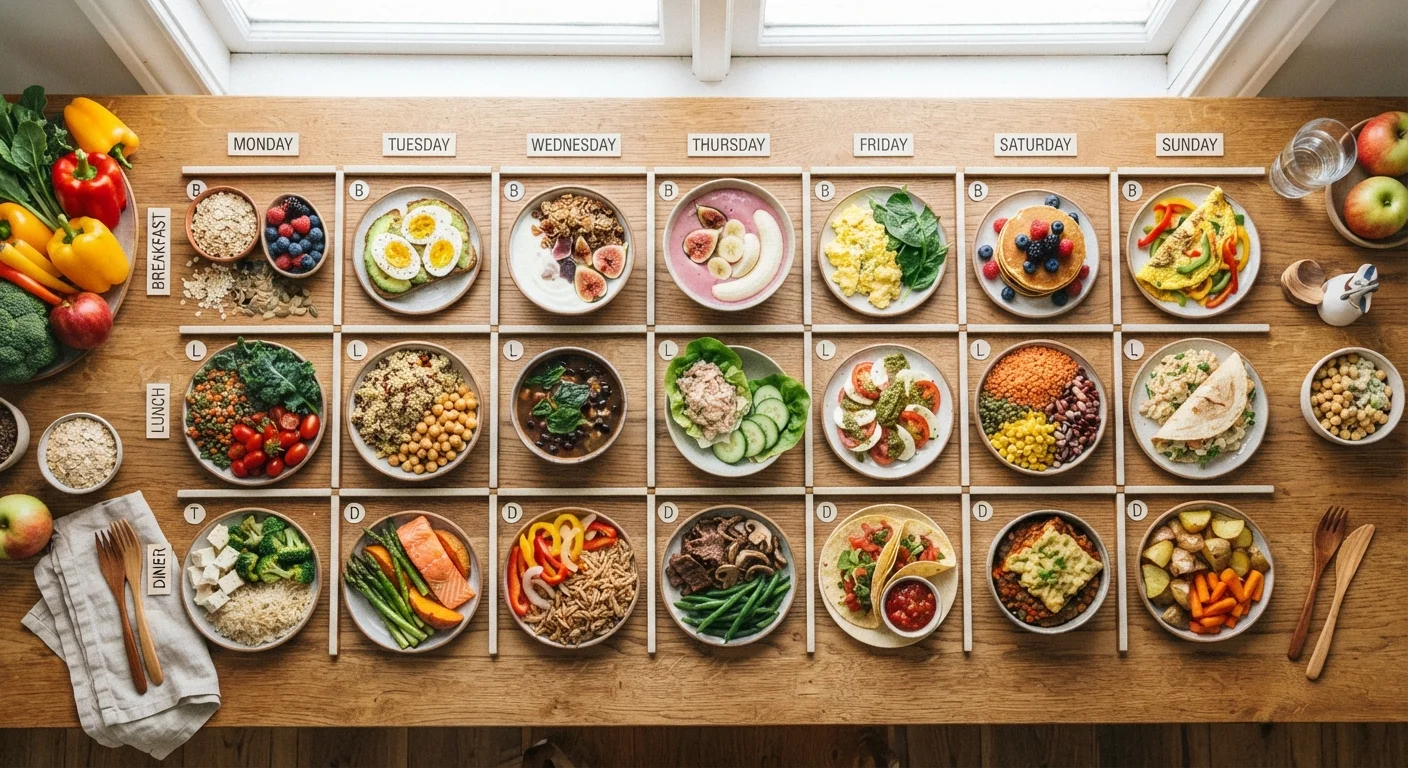
Why a Weekly Grocery Plan Supports Better Nutrition
Research consistently suggests that people who plan their meals in advance tend to eat more varied, nutrient-dense diets and waste less food. A structured grocery list isn't about rigid rules - it's a practical scaffold that helps you cover the major food groups without having to make dozens of individual decisions each day.
If you're new to thinking about what a nutritionally complete meal actually looks like, our guide to building a balanced plate is a useful starting point before working through this checklist. And if budget is a concern, eating well on a budget outlines practical strategies for stretching your grocery dollars without sacrificing nutritional quality.
This checklist walks you through the key planning and shopping steps to give your week a nutritional foundation - covering produce, protein sources, whole grains, dairy or alternatives, healthy fats, and pantry staples. It is general nutrition education, not personalized medical or dietary advice. Always consult a qualified healthcare provider or registered dietitian for guidance specific to your health situation.
Before You Shop: Planning Steps
Produce: Fruits and Vegetables
Protein Sources
Whole Grains and Starchy Vegetables
Dairy, Alternatives, and Healthy Fats
Pantry Staples and Flavor Builders
Post-Shop: Setup for the Week
Tools That Make Weekly Planning Easier
You don't need expensive apps or equipment to plan a nutritious week of groceries. The tools below are simple, widely available, and help reduce the friction between intention and follow-through.
Pen-and-paper meal plan template
A simple grid mapping each day of the week to breakfast, lunch, and dinner helps visualize nutritional coverage before you shop.
Smartphone notes app or grocery list app
Keeps your shopping list accessible and editable as you move through the store, reducing forgotten items.
Kitchen scale
Useful for portioning proteins and grains consistently, which helps with batch cooking and reducing over-purchasing.
Reusable storage containers
Essential for batch-cooked items - having containers ready encourages you to prep ingredients in advance and store them safely.
USDA MyPlate reference
A free, publicly available visual guide to food group proportions that can inform how you balance your grocery list across categories.
Keeping your grocery planning connected to your broader household budget is also worthwhile. Our monthly budget health check and budgeting basics hub offer practical frameworks for aligning food spending with your financial goals without over-restricting yourself.
Common Pitfalls to Watch For
Even well-intentioned grocery plans can fall short in predictable ways. Being aware of these patterns helps you course-correct before the week unravels.
Don't Over-Plan and Under-Flex
Planning every single meal rigidly can backfire - schedules change, and overly strict plans often lead to food waste when life intervenes. Build in one or two "flexible" nights where a quick meal using pantry staples is the plan. This reduces stress and makes the overall habit more sustainable.
Watch for Produce Overbuying
Buying more fresh produce than you can realistically use is one of the most common sources of household food waste and budget drain. Be realistic about how many home-cooked meals you'll actually make, and supplement with frozen vegetables to extend your nutritional options without spoilage risk.
Protein variety is one area where many people's grocery plans become repetitive without them realizing it. Our reference on protein sources across eating patterns explains how different dietary approaches - plant-based, omnivore, or somewhere between - can all meet daily protein needs with thoughtful variety.
It's also worth noting that nutrition affects more than physical health. Diet quality has been associated with mood and cognitive function in several research areas. For strategies that address the broader picture of daily well-being, explore the mental well-being hub.
Individual Nutritional Needs Vary Significantly
This checklist reflects general nutrition education based on widely accepted dietary guidance. It is not a substitute for personalized advice. Factors such as age, activity level, medical history, pregnancy, and food allergies meaningfully affect what a nutritionally appropriate grocery plan looks like for a given individual. Please consult a registered dietitian or your healthcare provider for guidance tailored to your specific circumstances.
This article is for general informational and educational purposes only and does not constitute medical or dietary advice. Nutritional needs vary by individual. Please consult a registered dietitian or qualified healthcare professional before making significant changes to your diet, especially if you have a medical condition, are pregnant, or are managing a chronic health concern.