Why the Nutrition Facts Label Exists - and What It Can Actually Tell You
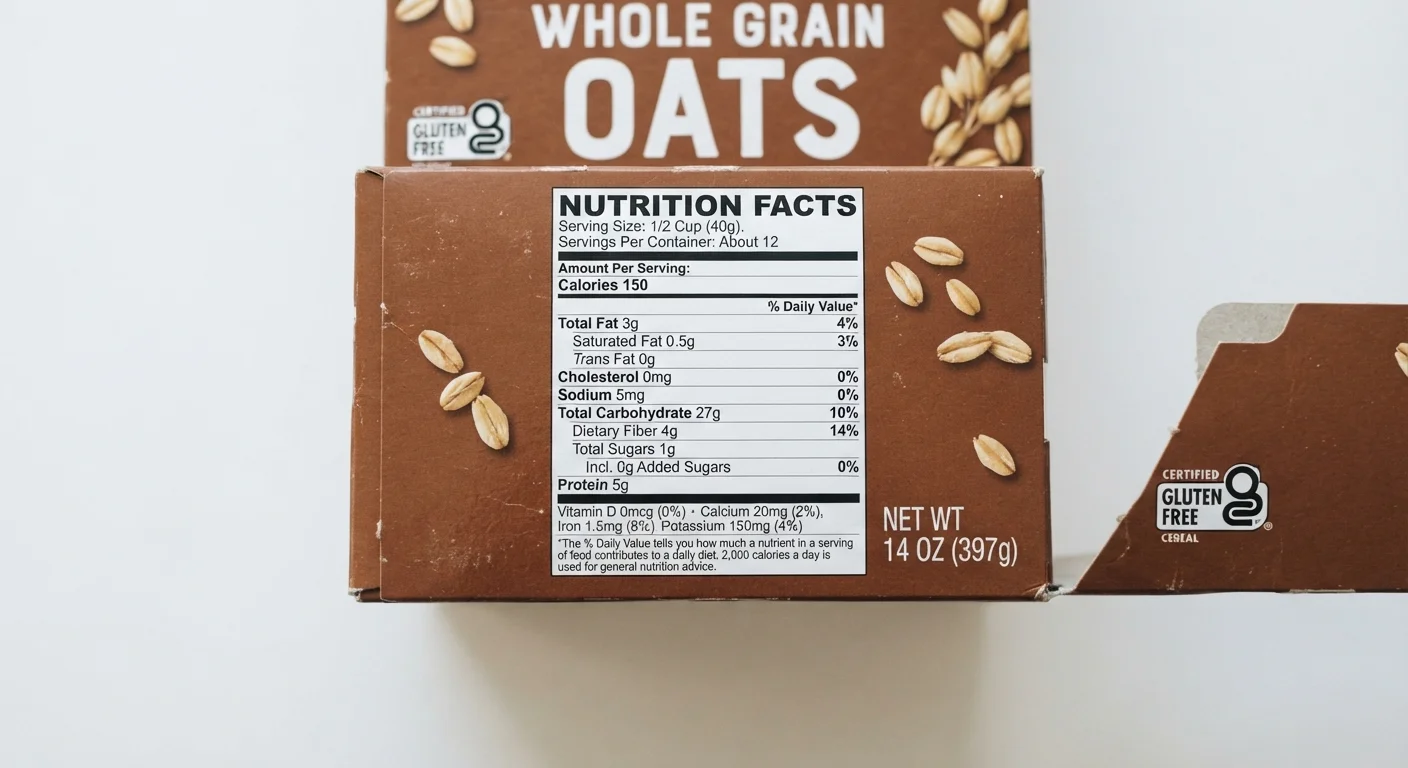
The Nutrition Facts label is a federally standardized disclosure required by the U.S. Food and Drug Administration (FDA) on most packaged foods. Its purpose is straightforward: give consumers consistent, comparable information to support informed food choices. The current label format, updated in 2016 with full compliance required by 2020, reflects decades of nutrition science and public health research.
What the label can do is tell you the nutrient composition of a food per serving. What it cannot do is tell you whether a food is inherently "good" or "bad" - that determination depends on your overall eating pattern, health goals, and individual needs. Common nutrition thinking traps like labeling entire foods as off-limits often stem from reading labels in isolation rather than context.
Just as you would use a systematic approach to interpret any complex document - whether a detailed insurance policy or a product spec sheet - working through a Nutrition Facts panel line by line removes the guesswork.
Nutrition Facts Label
The FDA-standardized panel found on virtually all packaged foods - the primary source of data in this walkthrough.
Calculator or smartphone
Useful for scaling nutrients when you consume a different portion than the listed serving size.
How to Read the Label: Step-by-Step
Follow these steps each time you pick up a new packaged food. With practice, the entire process takes under a minute and becomes second nature.
What you will need
Start with the serving size
The serving size appears at the very top of the panel and is the foundation for every number that follows. It is listed in common household units (such as cups or pieces) alongside the metric weight in grams. Critically, serving size reflects how much people typically eat - not necessarily how much you should eat. If you eat two servings, double every number on the label.
Note the calories per serving
Calories measure the total energy one serving provides. The FDA's updated label format displays calories in large, bold type so they are easy to spot. Keep in mind that calorie needs vary widely by age, sex, activity level, and health status - the label's reference point of 2,000 calories per day is a general benchmark, not a personal prescription. Use calories as context, not as the sole measure of a food's nutritional quality.
Review nutrients to limit
The label groups certain nutrients because most Americans consume too much of them. These include saturated fat, sodium, and added sugars. Saturated fat and sodium are associated with increased risk of cardiovascular disease when consumed in excess, according to longstanding dietary guidance. Added sugars - a distinct line item since the FDA's 2016 label update - reflect sugars incorporated during processing, separate from naturally occurring sugars in fruit or dairy.
Identify nutrients to get enough of
Dietary fiber, vitamin D, calcium, iron, and potassium are nutrients many Americans fall short on. Choosing foods with higher % Daily Values for these nutrients can support bone health, blood pressure regulation, and digestive function. Fiber is particularly worth prioritizing - most American adults consume significantly less than the recommended amount, according to federal dietary data.
Decode the % Daily Value column
The % Daily Value (% DV) column is one of the label's most practical tools. It shows how much of a nutrient one serving contributes to a general daily diet based on a 2,000-calorie reference. The FDA's quick guide: 5% DV or less is low; 20% DV or more is high. Use this scale to compare similar products side by side - a lower % DV for sodium and a higher % DV for fiber generally indicates a more favorable nutritional profile, all else being equal.
Check the ingredients list alongside the panel
The Nutrition Facts panel and the ingredients list work together. Ingredients are listed in descending order by weight, so items appearing first make up the largest proportion of the product. If added sugar appears under several different names (e.g., corn syrup, dextrose, cane juice) in the top few ingredients, the total sugar content is likely significant even if no single name stands out. The ingredients list is where you verify what is actually in the food - the panel tells you how much.
Use % DV to Compare Products Quickly
When choosing between two versions of the same product, scan the % DV column rather than trying to evaluate raw grams. A food with 15% DV of sodium versus 6% DV is meaningfully different - no math required. This approach works for any nutrient and makes grocery aisle comparisons fast and reliable.
Serving Size Can Be Misleading
Manufacturers set serving sizes based on typical consumption patterns, which can be smaller than what most people eat in practice. A container labeled "about 2.5 servings" may realistically be consumed in one sitting, multiplying the calorie and sodium totals by 2.5. Always check how many servings a package contains before drawing conclusions from the panel.
This Is General Information, Not Medical Advice
Nutrition Facts labels are educational tools for general awareness. Individual nutrient needs vary significantly based on health conditions, medications, age, and other factors. If you are managing a chronic condition such as diabetes, kidney disease, or hypertension, consult a registered dietitian or your healthcare provider before making significant dietary changes based on label reading.
This article provides general nutritional education only and is not a substitute for advice from a qualified healthcare professional or registered dietitian.