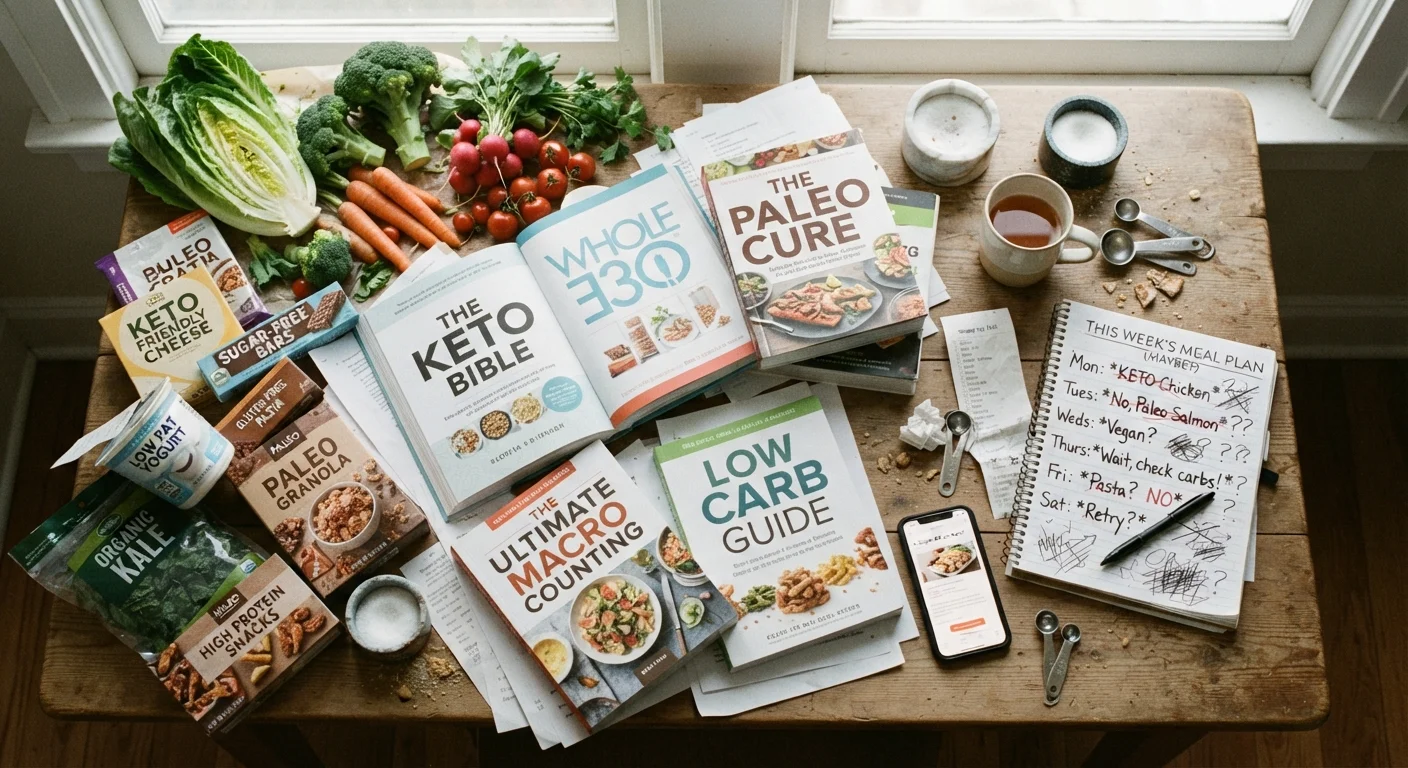
Why Nutrition Thinking Often Goes Sideways
Nutrition science is genuinely complex - and the gap between emerging research and public understanding is wide. Into that gap rush viral trends, elimination protocols, and simplified rules that feel actionable but frequently diverge from established evidence. The result is that many people pursuing better health inadvertently adopt mental frameworks that make sustainable eating harder, not easier.
Most faulty nutrition thinking isn't born from laziness or indifference. It stems from good intentions filtered through misleading information environments. Recognizing these patterns - rather than doubling down on rigid rules - is where lasting progress usually begins. For a grounded starting point, see what a balanced plate actually looks like.
This Is Education, Not Medical Advice
The information in this article is intended for general nutritional education only. It is not a substitute for guidance from a registered dietitian, physician, or other qualified healthcare professional. If you have specific health conditions, food allergies, or concerns about your diet, please consult a licensed professional before making changes.
Common Patterns That Undermine Healthy Eating
The mistakes below aren't character flaws - they're predictable responses to confusing, contradictory nutrition messaging. Understanding why each pattern forms is as useful as knowing how to correct it.
Treating foods as morally 'good' or 'bad' rather than evaluating overall dietary patterns.
Why it happens: Diet culture language is pervasive in media and social platforms, framing individual foods as virtuous or sinful. This binary thinking feels intuitive but ignores the role of context, portion size, and overall eating habits.
Eliminating entire food groups based on trends rather than diagnosed medical need.
Why it happens: High-profile elimination diets generate attention and often report dramatic short-term results, making them easy to mistake for universally sound advice. Most people don't have clinical reasons - such as celiac disease or verified allergies - to cut broad categories entirely.
Chasing nutrition trends without evaluating the quality of the evidence behind them.
Why it happens: Social media and wellness marketing amplify early, preliminary studies as though they represent settled science. Readers rarely encounter the full research context - sample size, methodology, funding source, or whether findings have been replicated.
All-or-nothing thinking - treating any deviation from a dietary plan as total failure.
Why it happens: Perfectionism is common when people feel strongly motivated to change. One 'off' meal can trigger the 'what's the point?' response, often leading to abandoning an otherwise sound approach entirely.
Misreading nutrition labels by focusing on a single nutrient while ignoring the full picture.
Why it happens: Marketing places front-of-package claims front-and-center ('low fat,' 'high protein,' 'no sugar added'), steering attention away from the Nutrition Facts panel where real context lives - including serving size, added sugars, and sodium levels.
Ignoring hunger and fullness cues in favor of rigid external eating rules.
Why it happens: Structured diets often override internal signals with external rules - eat at these times, stop at this amount. Over time, this can erode the ability to recognize genuine hunger and satiety, making self-regulation harder.
49%
Americans trying to lose weight at any given time
According to CDC National Health and Nutrition Examination Survey data, roughly half of U.S. adults report attempting weight loss - many through self-directed dietary changes with limited professional guidance.
~$72B
U.S. diet industry annual revenue estimate
Market research firms have estimated the U.S. weight loss and diet market at tens of billions annually, reflecting the commercial scale of an industry that profits from repeated cycling through new approaches.
One dimension that receives surprisingly little attention in popular nutrition discourse is hydration. Fluid intake affects digestion, appetite regulation, and energy levels in ways that interact directly with eating habits. Learn more in our overview of hydration and nutrition.
Moving Toward a More Flexible, Evidence-Based Approach
The antidote to rigid nutrition thinking isn't abandoning all structure - it's grounding decisions in patterns rather than perfection. Established dietary frameworks like the Mediterranean and DASH approaches have accumulated meaningful research support not because they're strict, but because they're flexible enough to sustain over years. Our comparison of major dietary patterns explains what the evidence actually shows.
Similarly, persistent nutrition myths - from fat-phobia to detox cleanses - continue circulating because they feel intuitive even when research says otherwise. Regularly revisiting the evidence base, rather than treating early-adopted beliefs as fixed, is one of the most useful habits a health-conscious person can build.
Nutrition also doesn't exist in isolation. Physical activity, sleep, stress, and emotional well-being all interact with how and why we eat. The Fitness & Movement hub offers accessible guidance for building a lifestyle context that supports - rather than contradicts - thoughtful eating.
This article is for general informational and educational purposes only and does not constitute medical or dietary advice. Individual nutritional needs vary. Consult a registered dietitian or qualified healthcare provider before making significant changes to your diet, especially if you have an existing health condition.