Why the Right Product Matters
Air leaks around windows and doors are among the most common sources of energy loss in American homes. The U.S. Department of Energy notes that drafts can account for a significant portion of heating and cooling costs, yet the fix is often straightforward. The key is matching your sealing method to the type of gap you're addressing.
Both caulk and weatherstripping block air and moisture, but they're engineered for fundamentally different situations. Applying caulk where weatherstripping is needed - or vice versa - typically means the seal cracks, peels, or tears within a season. Understanding why each product exists helps you solve the problem once rather than repeatedly.
For a broader look at how sealing fits into a whole-home strategy, see our guide to insulation types - air sealing and insulation work together to reduce heat transfer.
| Criterion | Caulk | Weatherstripping |
|---|---|---|
| Best application | Stationary gaps and joints | Moving door and window edges |
| Flexibility after curing | Rigid to semi-flexible | Highly compressible, recovers shape |
| Common materials | Silicone, latex-silicone, acrylic | Foam, V-strip, rubber bulb, felt |
| Typical lifespan | 5-10+ years (exterior silicone) | 2-5 years (varies by type) |
| DIY difficulty | Low - caulk gun, steady hand | Low - cut-to-fit, peel-and-stick |
| Handles movement | No - cracks under repeated flex | Yes - engineered for it |
Where Each Product Belongs
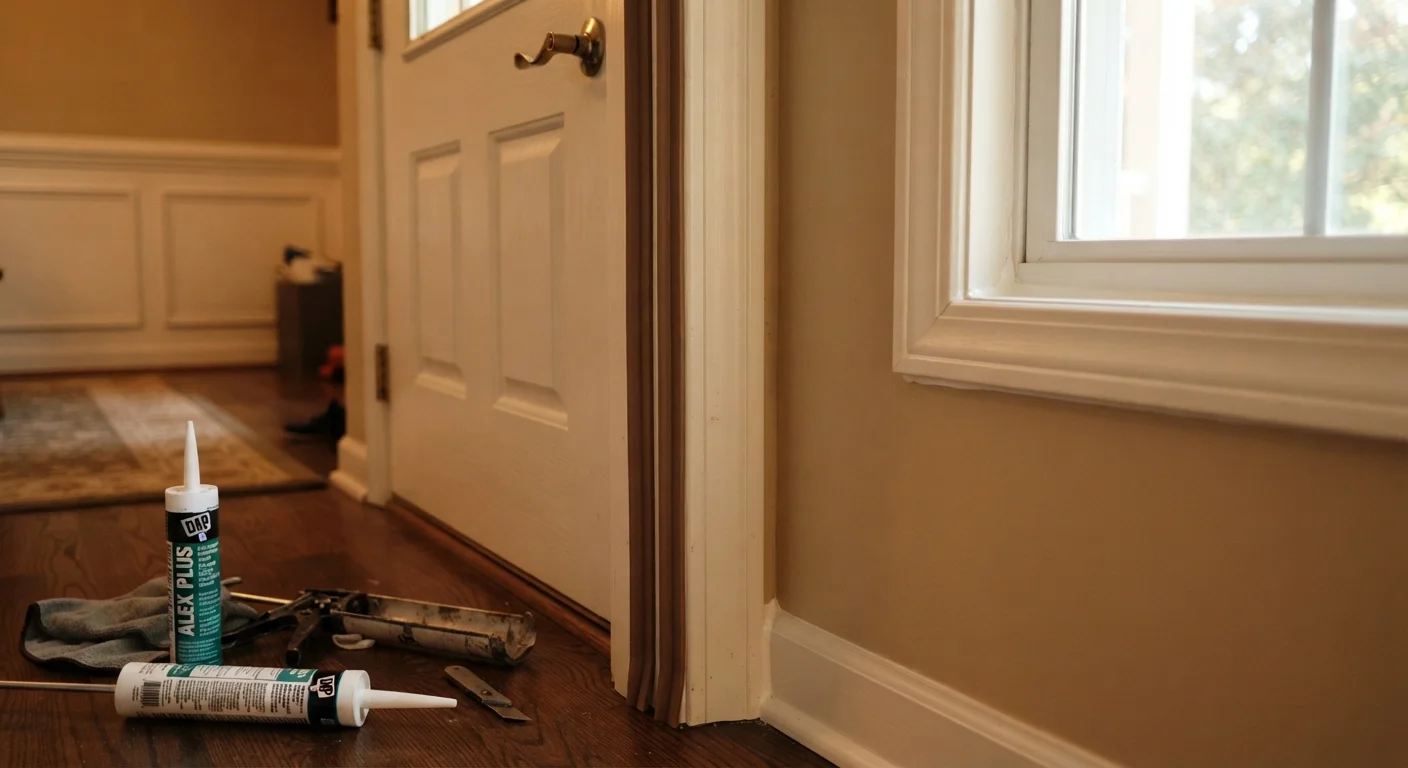
Use caulk on stationary joints. Any place two fixed building materials meet - window frame to exterior wall, door casing to interior drywall, or where a sill plate meets a foundation - is a candidate for caulk. These surfaces don't shift relative to each other during normal use, so a rigid, cured seal won't crack from movement. Silicone and latex-silicone blend caulks are common choices for exterior applications because they resist moisture and UV exposure without becoming brittle quickly.
Use weatherstripping on moving joints. The gap between a door slab and its frame compresses and releases thousands of times over the door's life. Foam tape, V-strip (tension seal), door sweeps, and reinforced bulb seals are all forms of weatherstripping shaped for this dynamic role. Each type suits slightly different gap sizes and door constructions, but all share the ability to recover their shape after compression.
When to Call a Professional
Large or irregular gaps - especially around structural elements like sill plates, rim joists, or areas with visible moisture damage - may indicate issues beyond a surface seal. If you find soft wood, visible mold, or gaps wider than about half an inch in structural locations, consult a licensed contractor or building professional before sealing. Trapping moisture behind a new seal can worsen underlying damage.
Don't overlook the door threshold. The bottom edge of an exterior door is a high-traffic air-leak zone. A door sweep attached to the bottom of the door slab, or an adjustable threshold seal, addresses this gap separately from the side and top weatherstripping.
Inspection, Application, and Maintenance
Before buying either product, inspect the gaps you're targeting. A lit incense stick or a thin piece of tissue held near edges on a windy day can reveal airflow. For caulk locations, scrape out any old, cracked caulk completely before applying a fresh bead - layering new caulk over deteriorated material shortens the lifespan of the repair. Smooth the bead with a dampened finger or tool before it skins over.
For weatherstripping, clean the door stop and frame surfaces with rubbing alcohol before applying adhesive-backed products. Measure carefully and cut cleanly at corners to avoid gaps at the joints. After installation, test the door: you should feel slight resistance when closing, and the seal should be even around the perimeter.
Up to 30%
Heating/cooling energy lost to air leaks
The U.S. Department of Energy estimates that air infiltration through gaps and cracks can account for up to 30% of a home's heating and cooling energy use.
$0.05-$0.50
Cost per linear foot of weatherstripping
General retail pricing for common weatherstripping materials ranges widely by type and quality; foam tape sits at the lower end, reinforced bulb seals at the higher end.
Weatherstripping has a finite service life. Foam tape typically lasts two to five years; higher-quality V-strip and bulb seals can last considerably longer. Make it a habit to check compression and adhesion each fall before heating season. Caulk on exterior joints should be inspected annually for cracks, especially after temperature extremes, which cause building materials to expand and contract.