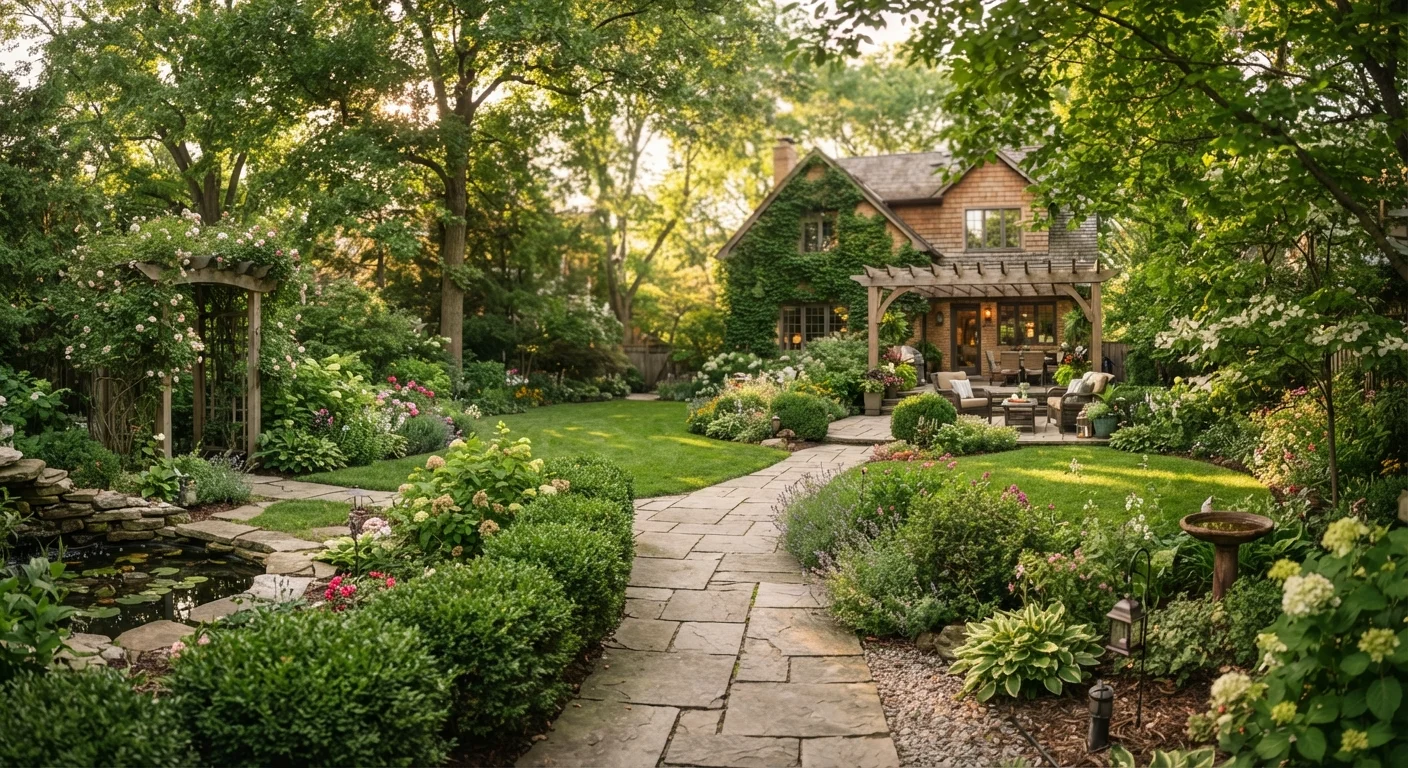
Choosing the Right Tree or Shrub for Your Property
Every successful planting decision starts before a shovel hits the ground. The wrong plant in the wrong place will cost you years of frustration, money, and water. Before selecting any tree or shrub, assess four factors: your USDA Plant Hardiness Zone, available sunlight, soil drainage, and mature plant size relative to overhead lines, structures, and underground utilities.
Native species adapted to your region generally require less supplemental water and are more resistant to local pests. They also tend to support local wildlife. That said, cultivated varieties of non-native plants can perform reliably when properly matched to site conditions - the key is honest site assessment, not reflexive plant selection.
Consider mature spread and height carefully. A shrub listed at six feet can easily reach eight or ten under good conditions. Trees planted too close to a foundation, driveway, or sewer line become expensive problems over time. Call 811 before any digging to have underground utilities marked - this is free and required by law in most states.
When buying a container-grown tree or shrub, tip the pot and inspect the roots before purchasing. Circling or kinked roots that aren't corrected at planting will continue to grow in that pattern and may eventually girdle the trunk.
Root defects are invisible once a plant is in the ground and are a leading cause of delayed tree failure - catching them at purchase costs nothing.
Use the 'drip line irrigation' rule: place soaker hoses or emitters at the outer edge of the canopy rather than at the trunk. That's where the active feeder roots are actually absorbing water.
Feeder roots concentrate at and beyond the canopy drip line; watering at the base of the trunk largely bypasses where uptake occurs.
Planting Fundamentals That Set the Stage for Long-Term Health
Depth is the most commonly misunderstood planting variable. The root flare - the visible widening where trunk meets roots - should sit at or just above grade after planting and settling. Burying the flare, even by a few inches, promotes crown rot and slow decline. This is one of the most widespread and preventable causes of premature tree death.
Dig the hole two to three times wider than the root ball but no deeper. Backfill with the native soil you removed rather than amended fill; research consistently shows that roots grow more vigorously into native soil than into an amended pocket surrounded by hard native soil. Remove all burlap, wire baskets, and container material before backfilling.
Water thoroughly at planting, then stake only if the tree is tall enough to be wind-rocked. Remove stakes within six to twelve months - staking left too long weakens trunk taper. For more seasonal timing guidance, see the seasonal lawn care calendar covering what tasks to prioritize each time of year.
Watering: How Much, How Often, and When to Stop
Newly planted trees and shrubs need consistent moisture through the first one to two growing seasons - this is when establishment happens and when drought stress is most damaging. A general starting point is ten gallons of water per inch of trunk diameter, once or twice per week, depending on heat and rainfall. Established trees in most U.S. climates rarely need supplemental irrigation unless drought is prolonged.
1-2 seasons
Establishment window for newly planted trees
University extension research consistently identifies the first one to two growing seasons as the critical period when supplemental watering determines long-term survival.
~10 gal
Water per inch of trunk diameter per week
This is a widely cited baseline from arboricultural guidelines for newly planted trees during establishment; actual needs vary by species, soil, and weather.
Overwatering is as harmful as drought. Chronically wet soil starves roots of oxygen, promotes root rot pathogens, and weakens structural root systems. Check soil moisture a few inches below the surface before watering - if it's still damp, wait. Soaker hoses or drip emitters placed at the drip line (the outer edge of the canopy) deliver water where feeder roots concentrate, making each gallon more effective.
In late fall, water deeply before the ground freezes in cold climates - this reduces winter desiccation stress, particularly in evergreens. Then stop routine irrigation until spring growth resumes.
Pruning Basics Every Homeowner Should Know
Pruning serves several purposes: removing dead or diseased wood, improving structure, managing size, and promoting flowering. The timing and technique, however, differ significantly between plant types.
- Deciduous trees: Late winter, just before bud break, is generally ideal. The structure is visible, wounds callus quickly as growth resumes, and many fungal pathogens are less active.
- Spring-flowering shrubs (lilac, forsythia, azalea): Prune immediately after bloom. These shrubs set next year's flower buds in summer - pruning in fall or late winter removes them.
- Summer-flowering shrubs (crape myrtle, butterfly bush): Prune in late winter or early spring before new growth begins.
- Evergreens: Light shaping is best done in late spring after new growth has extended. Avoid heavy cuts into old wood on most conifers - they don't regenerate from bare wood.
Always cut to a lateral branch, bud, or the trunk's branch collar - never leave stubs. Skip wound sealants; research from university extension programs consistently shows they don't improve healing and can trap moisture. For more on what conventional gardening wisdom gets wrong, see common garden myths that quietly hurt plants.
Avoid Topping Trees
Topping - cutting a tree's main stems back to stubs - is one of the most harmful practices in residential tree care. It creates large wounds that trees struggle to compartmentalize, generates weak, fast-growing sprouts, and dramatically shortens a tree's lifespan. If size reduction is the goal, consult a certified arborist about proper crown reduction techniques instead.
Mulching, Fertilizing, and Soil Health
A three- to four-inch layer of coarse organic mulch - shredded bark, wood chips, or leaf litter - is one of the most beneficial things you can apply around trees and shrubs. Mulch moderates soil temperature, retains moisture, suppresses weeds, and slowly feeds soil biology as it decomposes. Keep mulch pulled two to three inches away from the trunk or stem; mulch piled against bark traps moisture and invites rot and rodent damage (the so-called "mulch volcano" is a common sight but a bad practice).
Most established trees and shrubs in reasonably healthy soil don't need annual fertilization. Excess nitrogen, in particular, pushes soft, rapid growth that is more susceptible to pests and winter damage. If growth or foliage color suggests a deficiency, a soil test is a worthwhile investment - it tells you what's actually missing rather than prompting you to guess. County extension offices often offer low-cost testing.
Get a Soil Test Before You Fertilize
A basic soil test from your county cooperative extension office costs a few dollars and takes the guesswork out of fertilization. It identifies actual pH and nutrient levels, so you apply only what's needed. Over-fertilizing - especially with nitrogen - can do more harm than under-fertilizing in most established landscape settings.
Recognizing and Managing Common Problems
Early identification is the difference between a manageable problem and a lost plant. Common issues fall into three categories:
- Insect pests
- Scale insects, borers, aphids, and spider mites are widespread. Look for sticky residue (honeydew from aphids), entry holes with sawdust-like frass (borers), or stippled, pale foliage (mites). Many can be managed with targeted, least-toxic approaches - consult your local cooperative extension service for regionally appropriate recommendations.
- Fungal and bacterial diseases
- Powdery mildew, fire blight, cankers, and root rots often follow stress events: drought, waterlogging, or mechanical damage. Improve airflow, avoid overhead watering, and remove infected material promptly. Disinfect pruning tools between cuts when working on diseased wood.
- Environmental and mechanical damage
- Lawn mower and string trimmer strikes at the base of trees cause more damage than most people realize. A single severe wound can girdle a trunk over time. Protect tree bases with mulch and physical guards where equipment operates nearby.
When to Call an Arborist - and What Homeowner Insurance Covers
Certified arborists - credentialed by the International Society of Arboriculture (ISA) - are the appropriate professionals for hazard tree assessment, large-scale pruning, cabling, and removal. Work requiring a chainsaw above shoulder height or on a ladder in a tree should generally not be a DIY project. The risk of serious injury is significant, and poorly executed cuts can leave trees structurally worse than before.
From an insurance standpoint, trees occupy a nuanced position. Most standard homeowners policies cover damage caused by a fallen tree to an insured structure - but typically do not cover tree removal unless the tree has actually damaged a covered structure. A healthy tree that simply falls into your yard may not be a covered event. Policies vary considerably, so review yours carefully. For a thorough introduction to what homeowners insurance covers and excludes, see homeowners insurance from the ground up.
Dead Trees Near Structures Are a Liability Risk
A dead or structurally compromised tree that falls and damages your home or a neighbor's property may trigger a liability question - particularly if the tree's condition was visibly deteriorating beforehand. Document tree inspections and address hazardous trees promptly. Consult a licensed insurance agent to understand exactly what your policy covers and excludes in these scenarios.
Routine tree care - pruning, fertilizing, treating disease - is considered standard maintenance and is generally not covered by homeowners insurance. Keeping trees healthy is both a landscaping and a risk-management responsibility. For more on year-round property upkeep, the seasonal home maintenance reference is a practical year-round resource.