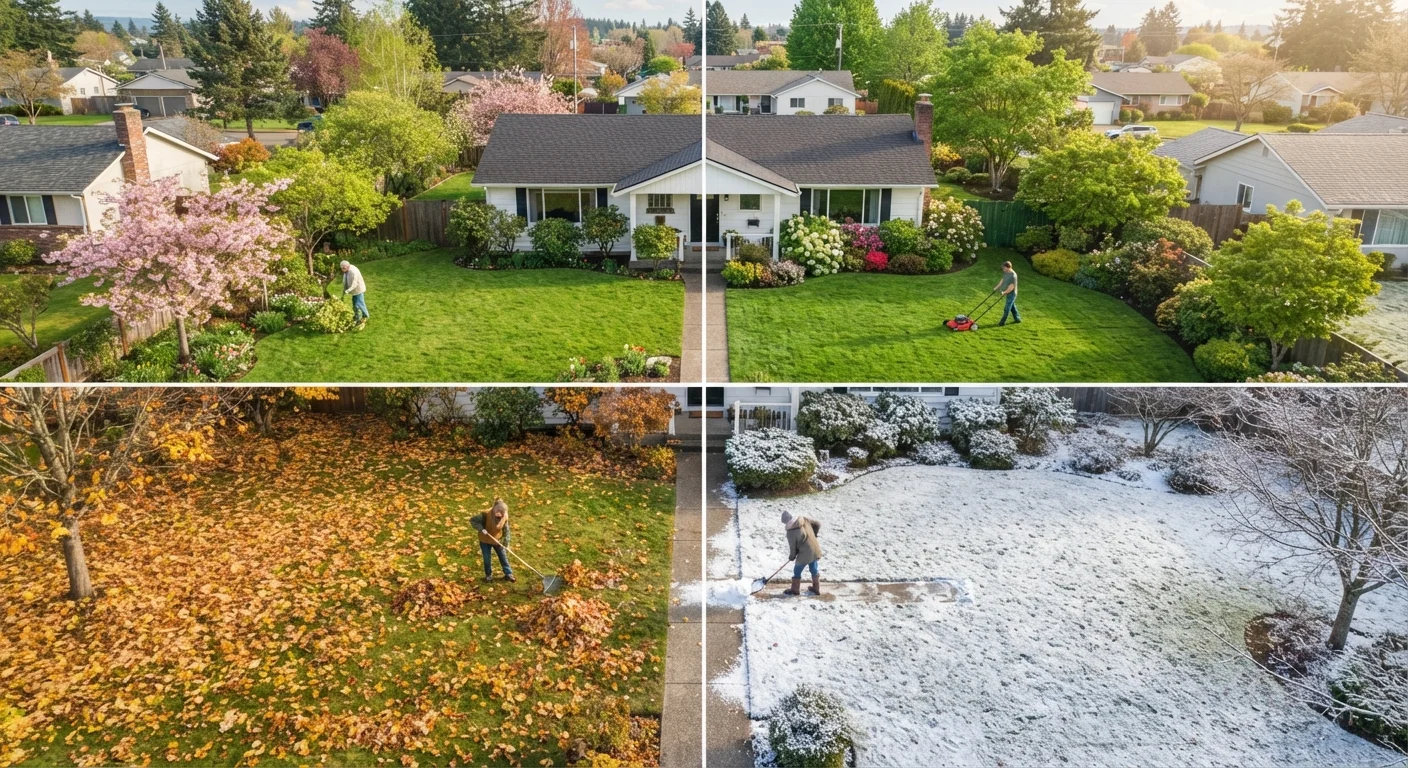
Why Seasonal Timing Matters More Than Products
Most lawn problems - thin turf, bare patches, persistent weeds - trace back to tasks done at the wrong time of year, not the wrong product. Grass grows, recovers, and absorbs nutrients in tight seasonal windows. Work with those windows and results come far more easily. Work against them and you can set your lawn back months.
The right schedule starts with knowing your grass type. Cool- and warm-season grasses have nearly opposite peak growth periods, so a task that's ideal in April for a Kentucky bluegrass lawn could stress a Bermuda grass lawn in the same month. Identify your grass first, then map tasks to the calendar below.
This checklist covers the four-season cycle. Use it as an annual reference - not a rigid schedule - since your specific climate zone will shift some timing by several weeks in either direction.
Soil test kit or cooperative extension service
Determines soil pH and nutrient deficiencies so fertilizer and lime applications are based on actual need rather than guesswork.
Lawn mower with adjustable deck height
Allows you to raise or lower cutting height seasonally, which is essential for managing heat stress in summer and winter prep in fall.
Core aerator (rented or hired)
Removes small plugs of soil to reduce compaction and improve air, water, and nutrient penetration to grass roots.
Broadcast or drop spreader
Ensures even distribution of grass seed, fertilizer, and pre-emergent herbicide across the lawn.
Rain gauge or soil moisture meter
Takes the guesswork out of watering by measuring actual rainfall and soil moisture levels rather than watering on a fixed timer.
Spring Checklist: Restart and Repair
Spring is your most important window. Grass is breaking dormancy and receptive to the inputs that set the tone for the entire growing season. Avoid the urge to rush - working on waterlogged soil causes compaction and root damage.
Spring (March-May)
Summer (June-August)
Fall (September-November)
Winter (December-February)
Pre-Emergent Timing Cannot Be Undone
If you miss the pre-emergent herbicide window in spring - before soil hits 55°F - crabgrass and other annual weeds will already be germinating and a pre-emergent will have no effect. There's no catch-up option; you'll need to manage weeds post-emergence or wait until the following year. A soil thermometer or your local cooperative extension forecast can help you nail the right window for your region.
Summer, Fall, and Winter: Maintaining Momentum
Summer is a maintenance season, not a renovation season. High heat and drought stress make grass vulnerable; heavy interventions like aeration or overseeding during peak summer typically fail. Focus on protecting what you built in spring.
Fall is the second-most important window - arguably the most important for cool-season lawns. It's the right time for aeration, overseeding thin areas, and a final fertilizer application that fuels root development through winter. If you're dealing with patchy or bare spots, fall overseeding gives seed the best chance to establish before cold sets in.
Winter tasks are minimal but meaningful. Protecting soil structure and avoiding damage now prevents larger fixes come spring. Pair your lawn prep with the broader seasonal home maintenance calendar to stay on top of the full property.
Overseeding and Pre-Emergent Don't Mix
If you plan to overseed in fall, do not apply a pre-emergent herbicide at the same time - pre-emergents prevent all seed germination, including your new grass seed. Schedule these tasks separately, or choose one priority for the season. Most turf specialists recommend skipping pre-emergent in fall if overseeding is the bigger need.