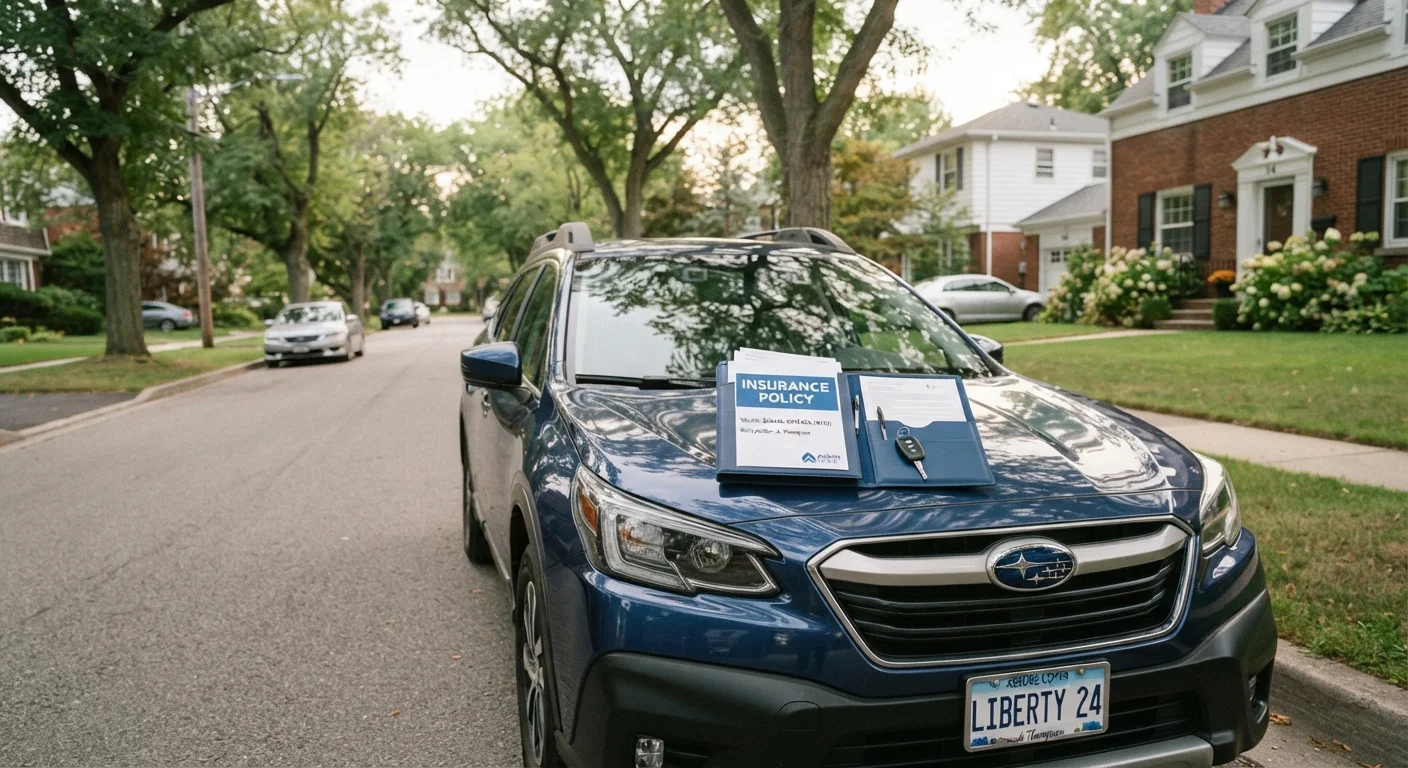
Why Auto Insurance Exists
Auto insurance is a contract between you and an insurance company. You pay a premium on a regular schedule; in return, the insurer agrees to absorb certain financial losses defined in your policy. The core purpose is to protect you-and others on the road-from costs that could otherwise be financially devastating.
Accidents happen to careful drivers. A single collision can generate tens of thousands of dollars in medical bills, vehicle repairs, and legal costs. Insurance spreads that risk across a large pool of policyholders so no single person bears the full weight alone. For a broader introduction to how insurance works in general, see our beginner's roadmap to insurance.
Premium
The regular payment you make to keep your insurance policy active, typically billed monthly, semi-annually, or annually.
Deductible
The fixed dollar amount you pay out of pocket on a covered claim before your insurer pays the rest.
Policy limit
The maximum amount your insurer will pay for a covered claim or during a policy period. Costs above this amount are your responsibility.
Liability coverage
Insurance that pays for injuries or property damage you cause to other people in an accident you're at fault for.
Comprehensive coverage
Coverage for vehicle damage caused by events other than collisions, such as theft, weather damage, or fire.
No-fault insurance
A system used in some states where each driver's own insurance covers their medical expenses after an accident, regardless of who caused it.
The Core Coverage Types Explained
Auto insurance isn't one thing-it's a bundle of individual coverages. Understanding what each one does is the foundation of making smart policy decisions.
- Liability coverage - Pays for bodily injury and property damage you cause to others. It does not cover your own vehicle or your own injuries.
- Collision coverage - Pays to repair or replace your vehicle after a crash with another car or a fixed object, regardless of fault.
- Comprehensive coverage - Covers damage to your vehicle from events other than collisions: theft, weather, fire, falling objects, or animal strikes.
- Uninsured/Underinsured motorist coverage (UM/UIM) - Protects you when the at-fault driver has no insurance or insufficient insurance to cover your losses.
- Medical payments / Personal injury protection (PIP) - Covers medical expenses for you and your passengers after an accident, regardless of who was at fault. PIP is required in some states.
For a deeper breakdown of each type, our field guide to auto coverage types walks through real-world scenarios where each applies.
Don't Confuse Coverage Types
Many drivers assume they have 'full coverage' when they actually only carry liability-or vice versa. Take ten minutes to read your declarations page, which lists every coverage type and limit on your policy. It's the clearest single-page summary of what you're actually paying for.
Deductibles, Premiums, and Policy Limits
Three numbers define how your policy performs financially:
- Premium
- The amount you pay-monthly, semi-annually, or annually-to keep the policy active. Paying on time is what keeps your coverage in force.
- Deductible
- The portion of a covered claim you pay out of pocket before your insurer contributes. Higher deductibles generally mean lower premiums, but more exposure when something goes wrong.
- Policy limit
- The maximum dollar amount your insurer will pay per claim or per policy period. If damages exceed your limit, you're responsible for the difference.
Liability limits are often expressed as three numbers-for example, 25/50/25-meaning $25,000 per injured person, $50,000 total per accident for injuries, and $25,000 for property damage. These numbers directly shape your financial risk.
Liability Limits and the 25/50/25 Format
When you see liability limits written as three numbers like 25/50/25, each number represents thousands of dollars. The first is the per-person bodily injury limit, the second is the per-accident total bodily injury limit, and the third is the property damage limit. These numbers cap what your insurer will pay-not what the accident could cost.
State Requirements vs. What You Actually Need
Every state sets its own minimum coverage requirements, and nearly all require at least liability insurance. A few states operate under no-fault rules, which changes how medical claims are handled after an accident.
Meeting the legal minimum keeps you street-legal, but those floors are often set low. A serious accident can easily exceed minimum limits, leaving you personally liable for the gap. Drivers who own significant assets or have ongoing income to protect often carry higher limits to reduce that exposure.
If your vehicle is financed or leased, your lender will almost certainly require collision and comprehensive coverage until the loan is paid off. Once you own the car outright, those coverages become your choice-weigh the vehicle's value against the added premium cost.
It's also worth reading common insurance myths that lead to financial harm before finalizing your coverage decisions-misunderstandings about what policies actually cover are widespread and costly.
What Affects Your Premium
Insurers use a range of factors to calculate your premium. Understanding them helps you see why quotes vary and what you can-and can't-control.
- Driving record - Accidents and violations typically raise your rate; a clean history generally lowers it.
- Vehicle type - Repair costs, theft rates, and safety ratings all factor into what a specific vehicle costs to insure.
- Location - Urban areas with higher traffic density and vehicle theft rates tend to carry higher premiums than rural areas.
- Coverage levels and deductibles - Higher limits and lower deductibles increase your premium; adjusting either can shift your cost.
- Credit history - Most states allow insurers to use credit-based insurance scores as a rating factor, though a few states restrict this practice.
- Annual mileage - Drivers who put more miles on their vehicles are statistically at greater risk of an accident.
Auto insurance fits within the broader context of vehicle ownership responsibilities. If you want a complete picture of what owning a car in America involves, our guide to vehicle ownership from title to trade-in covers the full lifecycle.
This article is for general informational purposes only and does not constitute personalized insurance, financial, or legal advice. Coverage terms, state requirements, and policy details vary. Consult a licensed insurance professional and review your actual policy documents before making coverage decisions.