What a Car Title Actually Is
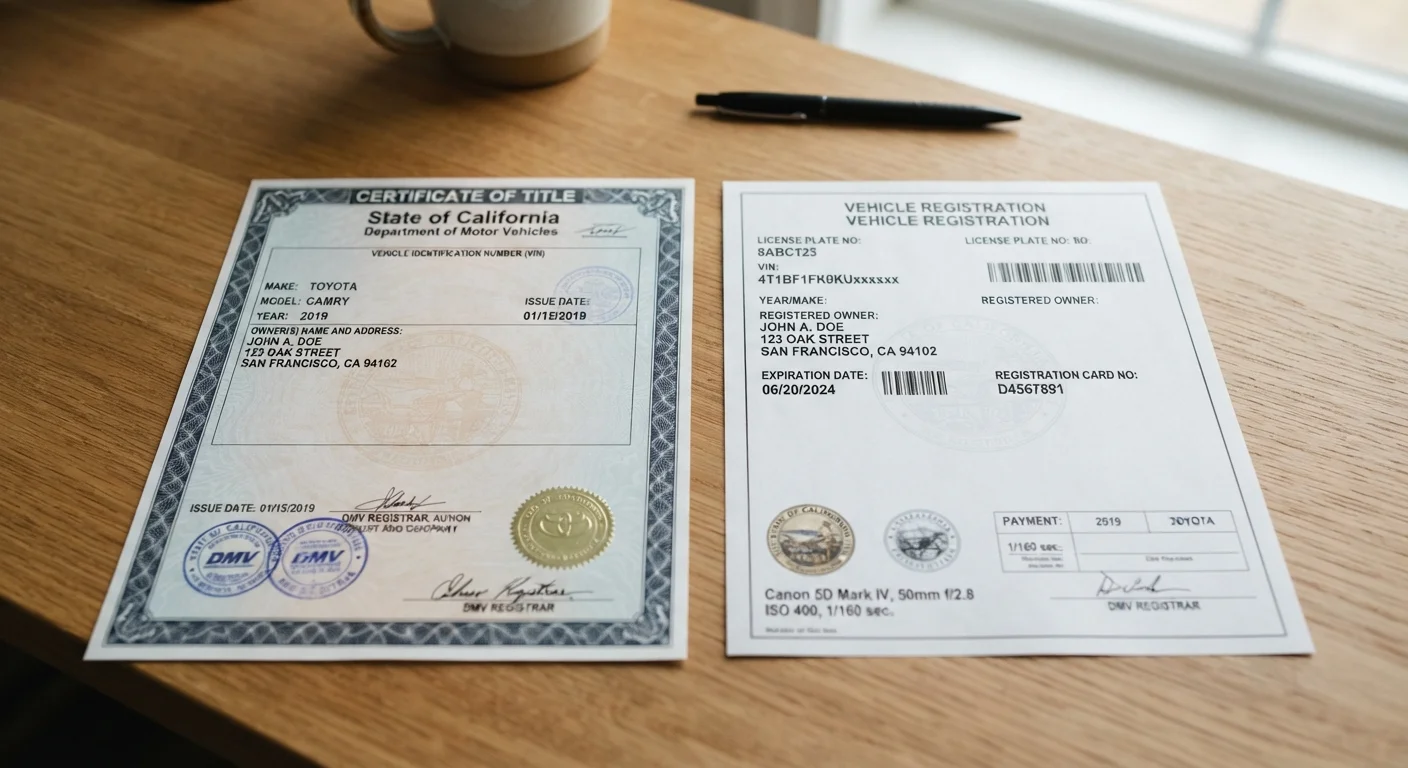
A vehicle title - sometimes called a certificate of title - is the official legal record of who owns a specific vehicle. It is issued by your state's DMV or equivalent agency and identifies the vehicle by its VIN, make, model, year, and odometer reading at the time of transfer.
The title also shows whether anyone else has a financial claim on the vehicle. If you financed the purchase, your lender is listed as a lienholder, meaning they have a legal interest in the car until the loan balance reaches zero. Once the loan is paid in full, the lienholder releases their interest, and you hold what's called a clear or clean title.
Titles can carry brand designations that follow a vehicle permanently. Common brands include salvage (total loss declared by an insurer), rebuilt (salvage vehicle restored and inspected), and flood. These brands affect insureability, resale value, and registration eligibility. For a deeper look at how title brands appear in a vehicle's history, see our guide to reading a vehicle history report.
Electronic Titles Are Increasingly Common
Many states now maintain vehicle titles electronically rather than issuing a paper document directly to the owner. If your state uses an electronic title system, you may need to request a paper title specifically - for example, when selling to a private party. Check with your state DMV to understand how titles are stored and how to obtain a printable copy.
What Vehicle Registration Is - and Why It Expires
Registration is the state's permission slip for a specific vehicle to be driven on public roads. It is tied to a license plate and must be renewed on a schedule - typically every one or two years - along with payment of registration fees, which vary considerably by state and sometimes by vehicle weight or value.
When you register a vehicle, your state confirms several things: the vehicle exists, it is insured (in states with mandatory insurance verification), and the owner has paid any applicable taxes or fees. In return, you receive a registration card to keep in the vehicle and a renewal sticker for the license plate.
Registration is not proof of ownership. Someone could theoretically register a vehicle they do not own if the title paperwork were mishandled - which is one reason both documents matter in a transaction.
Keep Your Registration Card in the Vehicle
Store your current registration card in your glove compartment alongside your insurance card. Law enforcement can request both at any traffic stop. If your state provides a digital registration option, confirm it is accepted by local authorities before relying on it exclusively.
Key Differences at a Glance
Confusing these two documents is common, but the distinction is straightforward:
| Feature | Title | Registration |
|---|---|---|
| Purpose | Proves legal ownership | Authorizes road use |
| Issued by | State DMV | State DMV |
| Expires | No (until ownership changes) | Yes - annually or biennially |
| Required in the vehicle | No | Yes |
| Needed to sell | Yes | No |
For a broader overview of what vehicle ownership involves beyond these two documents, the comprehensive guide to vehicle ownership in America covers insurance, maintenance, and eventually selling or trading in.
50
States each with their own title and registration rules
Requirements for fees, renewal periods, and title branding vary by state, making it essential to verify rules with your local DMV.
1-2 years
Typical vehicle registration renewal cycle
Most states require annual or biennial renewal, with fees that can range from under $50 to several hundred dollars depending on location and vehicle type.
What Happens When Either Document Has a Problem
Title defects are serious. A clouded title - one with unresolved liens, ownership disputes, or a missing signature - can prevent a sale from being completed or a new owner from registering the vehicle. Before buying a used vehicle privately, always verify that the seller's name matches the name on the title, and that there are no active liens unless the sale price accounts for paying them off.
Expired registration, while less legally complex, is a daily practical problem. Law enforcement can stop and cite a driver for it, and some states can boot or impound vehicles with significantly overdue registration. Renewal reminders are typically mailed to the address on file, so keeping your DMV records current is worth the few minutes it takes.
If you lose either document, replacement is straightforward through your state DMV. Duplicate title requests require identity verification and, if a lien exists, coordination with the lender. Replacement registration cards are generally simpler to obtain.
This article is for general informational purposes only. Vehicle title and registration requirements vary by state. Consult your state's DMV or a qualified legal professional for guidance specific to your situation.