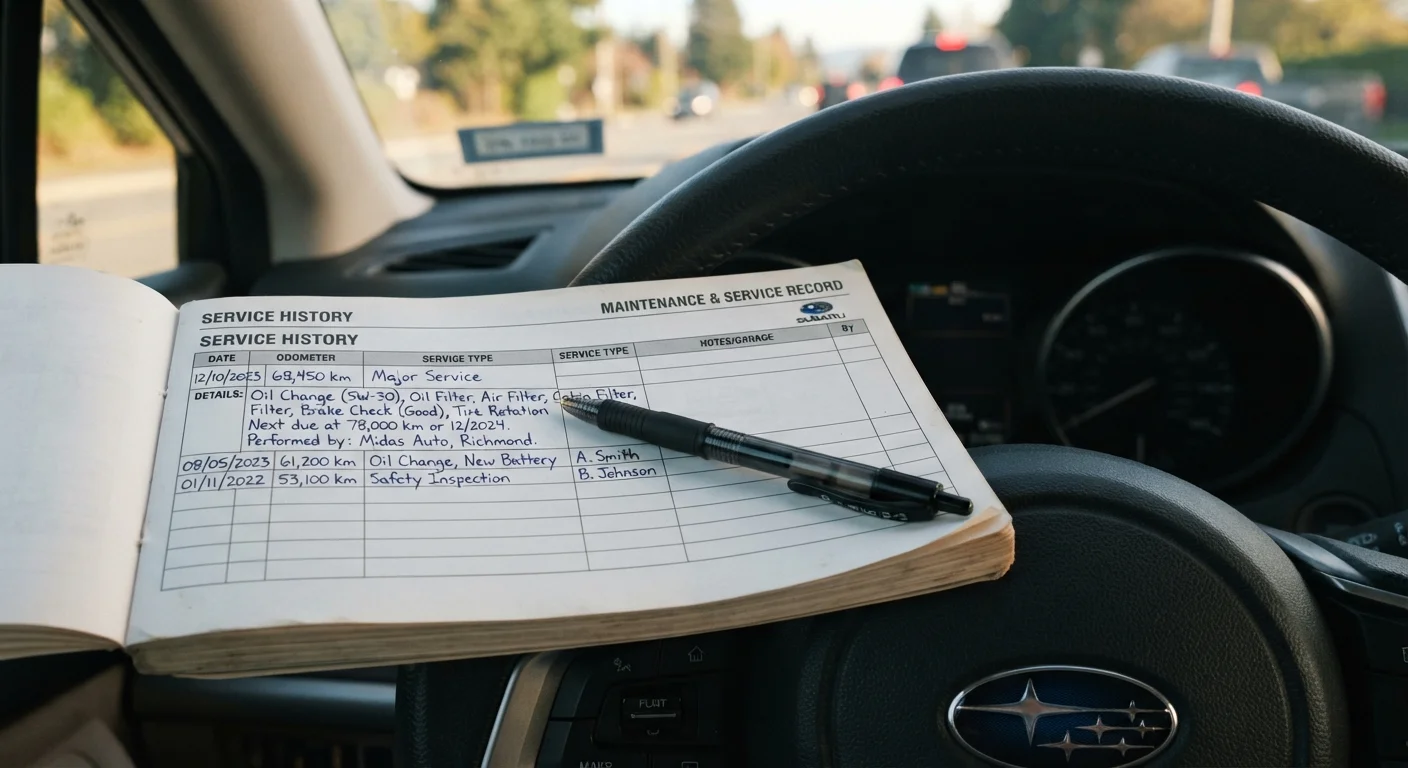
Why Keeping a Log Is Worth the Effort
Most drivers rely on memory or sticker reminders to track maintenance - and most drivers miss things. A personal vehicle maintenance log closes that gap. It gives you a running, verifiable record of what's been done to your car, when it was done, and what it cost.
Unlike a third-party vehicle history report - which only captures events reported to data aggregators - your personal log captures everything: the oil change at a small independent shop, the tire rotation you did alongside a brake job, the fluid top-off before a long trip. See our guide to reading a vehicle history report to understand what commercial reports include and where they fall short.
The payoff is practical: you spend less time guessing, catch patterns you'd otherwise miss, and have documentation ready when you sell.
Best Practices for Building and Maintaining Your Log
A log is only as useful as it is consistent. These practices will help you build a habit that actually sticks.
Record every service event promptly - not just major repairs.
Minor entries like fluid top-offs, filter replacements, and tire rotations form the context that makes your log genuinely useful. Waiting too long means details slip away, and gaps in the record undermine its credibility when you need it most.
Always log the odometer reading alongside the date.
Many maintenance intervals are mileage-based, not calendar-based. Without odometer entries, you can't accurately forecast when the next service is due or confirm that an interval was followed correctly.
Note any symptoms, warning lights, or unusual behavior - even if unresolved.
Mechanics benefit from a timeline of symptoms. Recurring entries about the same noise or warning light help distinguish an intermittent issue from a developing failure, which can shorten diagnostic time and reduce unnecessary repairs.
Keep receipts, invoices, and work orders attached or linked to your log.
A log entry is a summary; the paper trail is the proof. Buyers, insurers, and mechanics may want to see original documentation, and receipts confirm the work was actually performed rather than just recorded.
Review your log before every scheduled service appointment.
Walking into a shop with a clear record of what's been done - and what's overdue - helps you have a more informed conversation with your mechanic and reduces the chance of paying for work that's already been completed.
Quick Actions to Get Started Today
You don't need a perfect system to begin. Start simple and refine as you go.
Digital or Paper - Pick What You'll Actually Use
Dedicated vehicle maintenance apps can auto-calculate service intervals and send reminders, which is genuinely useful. But a simple spiral notebook kept in the glove box works just as well if you'll actually write in it. The format that gets used consistently is the right format for you. Whichever you choose, make sure it's accessible at the point of service - not buried at home.
What Your Log Reveals Over Time
~30%
Used vehicles lack verifiable service history
Industry estimates suggest a significant share of used vehicles are sold without any documented maintenance records, limiting buyer confidence and negotiating leverage.
12+ months
Time before log patterns become actionable
Most recurring issues - slow fluid loss, seasonal pressure changes, escalating repair frequency - only become visible after a year or more of consistent log entries.
After six to twelve months of consistent entries, patterns emerge that a single-visit mechanic will never see. Maybe your tire pressure drops every winter faster than expected. Maybe a coolant top-off keeps appearing between flushes. These signals matter - they're the early warning system that a log provides that memory simply cannot.
A log also prepares you for related planning tasks. Before a long drive, cross-referencing your log with our pre-road-trip vehicle checklist takes minutes instead of guesswork. And when service intervals like transmission fluid or brake fluid come due, your log tells you exactly when the clock started - something our article on overlooked car maintenance intervals breaks down in detail.
This article provides general vehicle ownership information for educational purposes. Always consult a qualified mechanic for diagnosis, repair decisions, and safety-critical maintenance guidance specific to your vehicle.