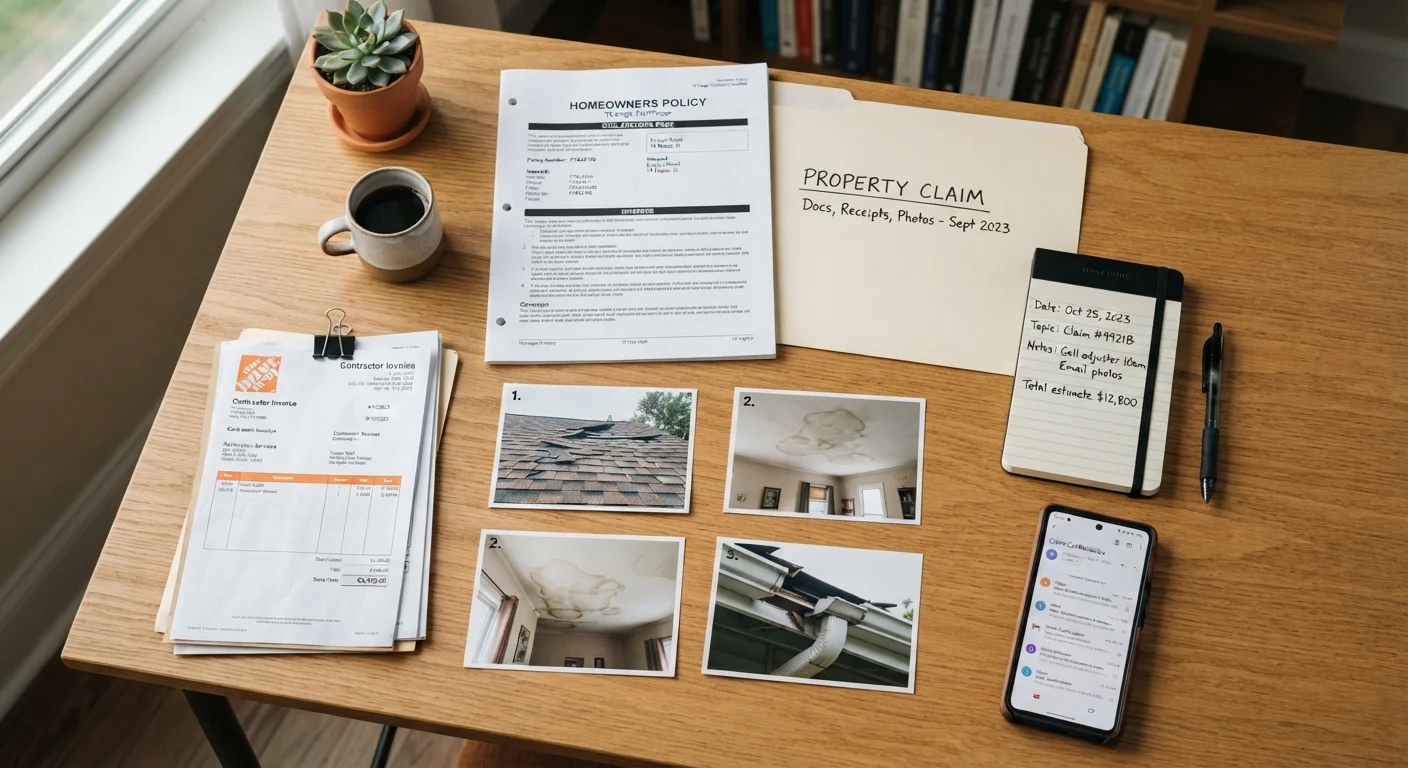
Why Document Preparation Matters Before You File
Filing an insurance claim without the right documents is like presenting a case in court without evidence. Adjusters are trained to evaluate what you can prove - not just what you say happened. Gaps in your records can lead to delays, disputes over value, or a lower settlement than you're entitled to receive.
The good news is that most of the preparation happens before anything goes wrong. Maintaining a basic home inventory, keeping policy paperwork accessible, and knowing what to photograph after an incident can dramatically smooth the claims process. This checklist walks you through the records most insurers expect, regardless of whether you're filing a home, auto, renters, or personal property claim.
For a broader view of how the process unfolds once you file, see our full walkthrough of the insurance claims process.
Know Your Filing Deadline
Most insurance policies include a clause requiring you to report a loss and file a claim within a specific timeframe - often called a 'prompt notice' or 'timely filing' requirement. Missing this window can give your insurer grounds to deny the claim entirely, regardless of how well-documented it is. Check your policy's reporting requirements immediately after an incident and contact your insurer as soon as it's safe to do so.
What to Gather: Your Pre-Filing Checklist
Use the categories below to systematically collect everything an adjuster is likely to request. Not every item applies to every claim type, but working through the full list ensures nothing critical gets overlooked.
Policy and Coverage Documents
Evidence of the Incident
Proof of Ownership and Value
Repair and Expense Records
Communications and Correspondence
If you're unsure whether a specific document strengthens or complicates your claim, consult a licensed insurance agent or a public adjuster before submitting. Coverage, exclusions, and documentation requirements vary by policy and insurer - always read your own policy language. This article provides general educational guidance and is not personalized insurance advice.
Tips for Organizing What You've Collected
Raw documents are only useful if you can find and present them quickly. Consider organizing your claim file into clearly labeled sections: policy information, proof of loss, evidence of damage, and correspondence. Digital copies stored in a secure cloud folder give you a backup if originals are lost in the same incident that triggered the claim.
Keep a running log of every phone call, email, or letter exchanged with your insurer - dates, names, and a brief summary of what was discussed. This habit costs almost nothing upfront but can be invaluable if a dispute develops. Our article on keeping a claims journal explains why a detailed record often determines the outcome of contested claims.
Don't Discard or Repair Before Documenting
One of the most common documentation mistakes is cleaning up or making permanent repairs before the adjuster has had a chance to inspect the damage. Most policies require the insurer to view the loss before substantive repairs begin - doing otherwise can complicate or reduce your claim. Emergency temporary measures to prevent further damage are generally acceptable, but keep all receipts and photograph everything before and after.
Also be aware of common missteps that undermine claims even when documentation is solid - accepting an initial settlement too quickly is one of the most frequent. See our guide on what policyholders get wrong when filing a first claim for a fuller picture.
Finally, know that you have legal protections throughout this process. Insurers are required to acknowledge claims promptly and investigate in good faith in most states. Our overview of policyholder rights during the claims process outlines what to expect and what you can push back on.
This article is for general informational and educational purposes only and does not constitute personalized insurance, legal, or financial advice. Coverage terms, documentation requirements, and claim procedures vary by insurer, policy type, and state. Always review your specific policy and consult a licensed insurance professional for guidance suited to your situation.