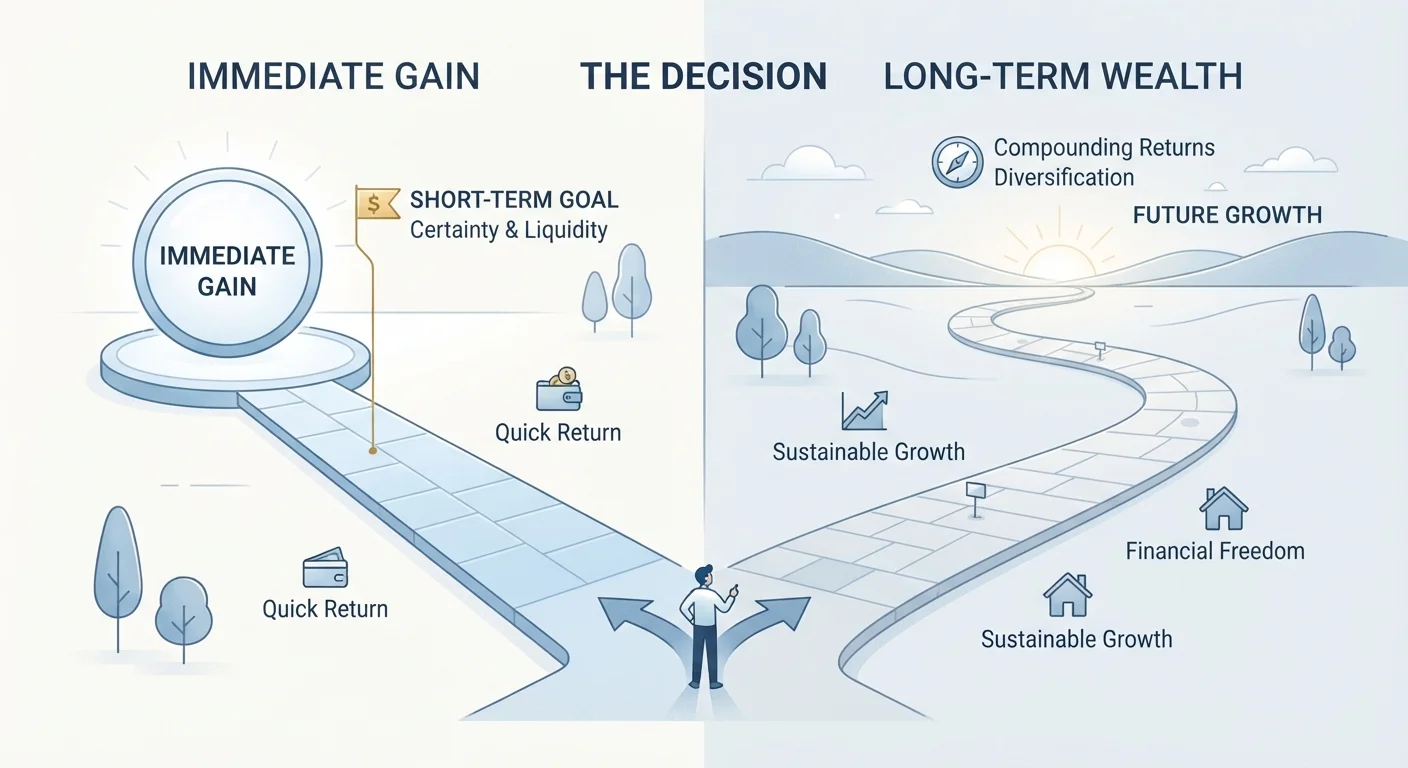
What Each Structure Actually Means
Life insurance comes in two fundamental forms: term and permanent. Understanding how each is built helps clarify why they behave so differently in practice.
Term life insurance provides a death benefit - the amount paid to your beneficiaries if you die - for a specific period, typically 10, 20, or 30 years. If you die during the term, the insurer pays the benefit. If the term ends and you're still living, coverage simply stops (though many policies offer a renewal or conversion option). There is no savings element and no payout at the end of the term.
Permanent life insurance is designed to last your entire life. The most common types are whole life, universal life, and variable life. Beyond the death benefit, permanent policies include a cash value account - a portion of each premium is set aside and grows over time on a tax-deferred basis. This cash value can generally be borrowed against or withdrawn, subject to policy terms.
For a broader look at how life insurance fits alongside other coverage categories, see the major insurance types and what each one is designed to protect.
| Criterion | Term Life Insurance | Permanent Life Insurance |
|---|---|---|
| Coverage duration | Fixed term (e.g., 10-30 years) | Lifetime, if premiums are paid |
| Typical monthly premium | Lower for same death benefit | Significantly higher |
| Cash value component | None | Yes, grows tax-deferred |
| Death benefit | Paid only if death occurs in term | Paid whenever death occurs |
| Borrowing against policy | Not available | Available against cash value |
| Policy complexity | Straightforward | More complex; varies by type |
| Conversion option | Often available to permanent | Not applicable |
Cost, Cash Value, and Coverage Duration
The most immediate difference most people notice is price. Because term policies carry a defined expiration and no cash value, insurers can price them much lower. A healthy 35-year-old might pay a fraction per month for a 20-year term policy compared to an equivalent permanent policy. Permanent premiums are higher partly because they fund the cash value component and partly because the insurer knows the benefit will eventually be paid out.
~80%
Share of individual life policies that are term
According to LIMRA, term life has historically represented the majority of individual life insurance policies sold by count in the United States.
5-15x
Approximate premium cost difference
Industry guides commonly illustrate that permanent life premiums can run several times higher than term premiums for an equivalent death benefit amount, depending on age and health.
Cash value is worth understanding clearly. It is not the same as the death benefit. If a policyholder dies, beneficiaries typically receive the death benefit - not the death benefit plus accumulated cash value (the specifics depend on policy type). The cash value is most useful while the insured is still living, as a source of borrowing or supplemental retirement income. Withdrawals and unpaid loans, however, reduce the death benefit.
If you're comparing life insurance types in more depth, our article on term life vs. whole life insurance explores those two structures specifically.
Which Structure Fits Which Situation
Neither structure is inherently superior - they solve different problems.
Term insurance works well when your need for coverage is tied to a finite obligation: a 30-year mortgage, the years before your children are adults, or a business loan. Once the obligation ends, so does the need, and term coverage reflects that cleanly.
Permanent insurance tends to make more sense when the need for a death benefit won't disappear - for example, to cover estate taxes, leave a guaranteed inheritance, or support a dependent with a lifelong disability. It can also play a role in certain retirement income strategies, though that use involves complexity and cost that warrants consultation with a licensed financial adviser.
Some people use a layered approach: a term policy for large near-term obligations and a smaller permanent policy for lifelong needs. This is a planning decision that depends on individual circumstances, not a one-size answer.
Conversion Provisions Are Worth Checking
Many term policies include a conversion option that lets you shift to a permanent policy before the term ends, without new medical underwriting. The window and terms for conversion vary by insurer and policy. If you think your needs might change, confirming whether a conversion provision exists before purchasing a term policy is a sensible step.
For those thinking about aging-related coverage beyond life insurance, it's worth understanding how long-term care insurance works alongside - or separately from - a life insurance plan.
This article is for general informational purposes only and is not personalized financial, insurance, or legal advice. Coverage terms, premiums, and eligibility vary by insurer and individual circumstances. Consult a licensed insurance agent or financial adviser before making decisions about your own coverage.