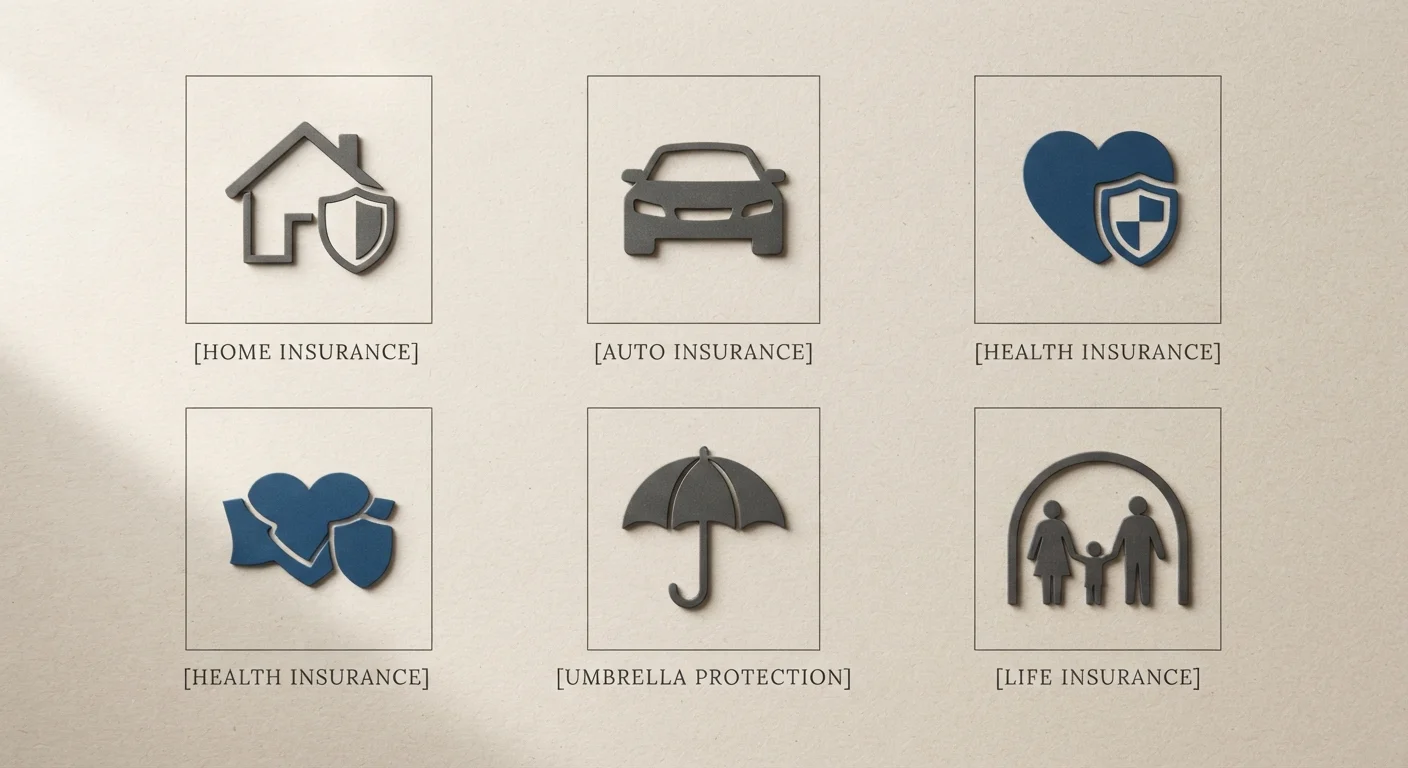
Why Insurance Is Organized by Risk Category
Insurance exists to transfer financial risk from an individual to a larger pool. Because different life events produce very different kinds of financial loss - a hospital bill looks nothing like a totaled car - the industry developed distinct policy types, each calibrated to a specific category of risk.
Understanding how those categories are defined helps you see which gaps in your own coverage might exist. For a broader foundation on how policies, premiums, and claims work together, see our beginner's roadmap to insurance.
91%
Americans with some form of health insurance
According to the U.S. Census Bureau's most recent health insurance coverage report, the vast majority of Americans carry some form of health coverage.
~1 in 4
Workers who become disabled before retirement
The Social Security Administration estimates roughly one in four of today's 20-year-olds will experience a disability before reaching retirement age.
49%
Renters with renters insurance
Industry survey data consistently shows fewer than half of US renters carry renters insurance, leaving many exposed to significant out-of-pocket losses.
Health Insurance
What it protects against: The cost of medical care - doctor visits, hospital stays, surgeries, prescriptions, and preventive services.
Health insurance is structured around two main cost-sharing concepts: the premium (your monthly payment to keep the policy active) and the deductible (the amount you pay out of pocket before the insurer begins sharing costs). After the deductible is met, most plans cover a percentage of costs through coinsurance until you reach an out-of-pocket maximum, at which point the insurer covers 100% for the rest of the plan year.
In the US, health coverage may come through an employer, a federal or state marketplace, Medicaid, or Medicare. Coverage terms, networks, and costs vary significantly by plan. This article is general educational information - not medical or personalized insurance advice. Consult a licensed insurance agent for guidance suited to your circumstances.
Health Coverage Gaps Are a Leading Financial Risk
An unexpected hospitalization or serious diagnosis can generate bills that far exceed what most households can absorb out of pocket. Understanding your plan's deductible, out-of-pocket maximum, and in-network requirements before you need care is essential - not something to sort out during a crisis. Review your Summary of Benefits and Coverage document, which all ACA-compliant plans are required to provide.
Auto Insurance
What it protects against: Financial liability from accidents, vehicle damage, and injuries involving your car.
Auto insurance is legally required in nearly every US state, though minimum required coverage levels differ. A standard policy typically bundles several coverage types:
- Liability: Pays for injury or property damage you cause to others.
- Collision: Covers damage to your own vehicle from an accident, regardless of fault.
- Comprehensive: Covers non-collision losses such as theft, hail, or fire.
- Uninsured/underinsured motorist: Protects you when the at-fault driver has insufficient coverage.
For a plain-language breakdown of each component, our auto insurance basics guide walks through what you're actually paying for.
When reviewing an auto policy, pay close attention to your liability limits - not just whether you have coverage. State minimums are often far too low to cover a serious accident, leaving you personally on the hook for the difference.
Medical and legal costs from a multi-vehicle accident can easily exceed $100,000, and state-mandated minimums in many states are a fraction of that.
For homeowners, document your personal belongings with a home inventory - photos, serial numbers, and estimated values stored somewhere outside the home - before you ever need to file a claim.
Claims adjusters require proof of ownership and value; without documentation, policyholders frequently receive less than the actual replacement cost of lost items.
Homeowners and Renters Insurance
What it protects against: Loss or damage to your home, personal property, and liability for injuries that occur on your property.
A standard homeowners policy (commonly called an HO-3) typically covers the structure of the home, detached structures like garages, personal belongings, and personal liability. It does not automatically cover floods or earthquakes - those require separate policies.
Renters insurance covers a tenant's personal belongings and personal liability, but not the building itself - that's the landlord's responsibility. Many renters assume they're covered under their landlord's policy; they are not.
Renters: Don't Assume You're Covered
If you rent your home, your landlord's insurance covers the building - not your furniture, electronics, clothing, or other personal items. Renters insurance is typically one of the most affordable policies available and also includes personal liability protection. It's worth reviewing even if you think you own little of value.
Life Insurance
What it protects against: The financial impact your death would have on people who depend on your income.
Life insurance pays a death benefit - a lump sum - to your named beneficiaries when you die. It isn't about protecting your assets while you're alive; it's about replacing income or covering obligations (mortgage, childcare, education) for those you leave behind.
The two primary structures are term life, which covers a set period (commonly 10, 20, or 30 years), and permanent life (including whole and universal life), which stays active as long as premiums are paid and often builds a cash value component. Term is generally simpler and less expensive; permanent policies add complexity and cost in exchange for lifelong coverage and accumulation features.
“The real purpose of life insurance is income replacement. It answers one question: if you weren't here tomorrow, could the people who depend on you maintain their financial footing?”
— Insurance Educational Association, Non-profit insurance consumer education organization
Liability and Umbrella Insurance
What it protects against: Legal and financial responsibility if you're found liable for injuring someone or damaging their property.
Liability coverage is already embedded in auto and homeowners policies, but those built-in limits can be exhausted quickly in a serious lawsuit. A personal umbrella policy kicks in once those underlying limits are reached, providing an additional layer - often $1 million or more - of liability protection at relatively low cost.
Umbrella coverage is particularly relevant for people with significant assets, a higher public profile, or activities that increase exposure (hosting frequent gatherings, teenage drivers in the household, owning a trampoline or pool).
Disability and Long-Term Care Insurance
What they protect against: Loss of income due to illness or injury (disability), and the cost of extended personal or nursing care (long-term care).
Disability insurance replaces a portion of your income - typically 60-70% - if you become unable to work due to a covered illness or injury. Short-term policies cover weeks to months; long-term policies can cover years or through retirement age.
Long-term care insurance addresses a separate but related risk: the cost of assisted living, home health aides, or nursing home care, which standard health insurance and Medicare generally do not cover adequately.
Don't Wait Until You Need It to Get It
Disability and long-term care insurance are significantly harder to obtain - and more expensive - once a health condition develops. Many insurers can deny coverage or exclude pre-existing conditions during underwriting. Evaluating these coverages while you're still in good health generally gives you more options and better rates.
Choosing the Right Mix for Your Situation
No single insurance portfolio fits every household. Your age, income, dependents, assets, employment, and health all affect which coverages make sense and at what coverage levels. The goal is to ensure that a serious but foreseeable event - an accident, illness, lawsuit, or death - doesn't devastate your finances.
Before committing to any policy, it pays to ask the right questions about limits, exclusions, and claims processes. Our policy evaluation checklist can help you compare options systematically.
If you experience a loss and need to file a claim, our claims and disputes hub covers the process step by step.
This article provides general insurance information for educational purposes only and is not personalized insurance, financial, or legal advice. Coverage terms, exclusions, and regulations vary by provider and state. Always read your policy documents carefully and consult a licensed insurance professional before making coverage decisions.
NAIC Consumer Insurance Search
The National Association of Insurance Commissioners provides a free tool to look up insurer complaint ratios and license status by state - useful when evaluating carriers.
HealthCare.gov Plan Comparison
The federal marketplace lets you compare ACA health plans available in your area side by side, including premiums, deductibles, and out-of-pocket maximums.
Coverage Basics Hub
Our coverage basics hub explains core insurance concepts - premiums, deductibles, limits, and exclusions - in plain language.