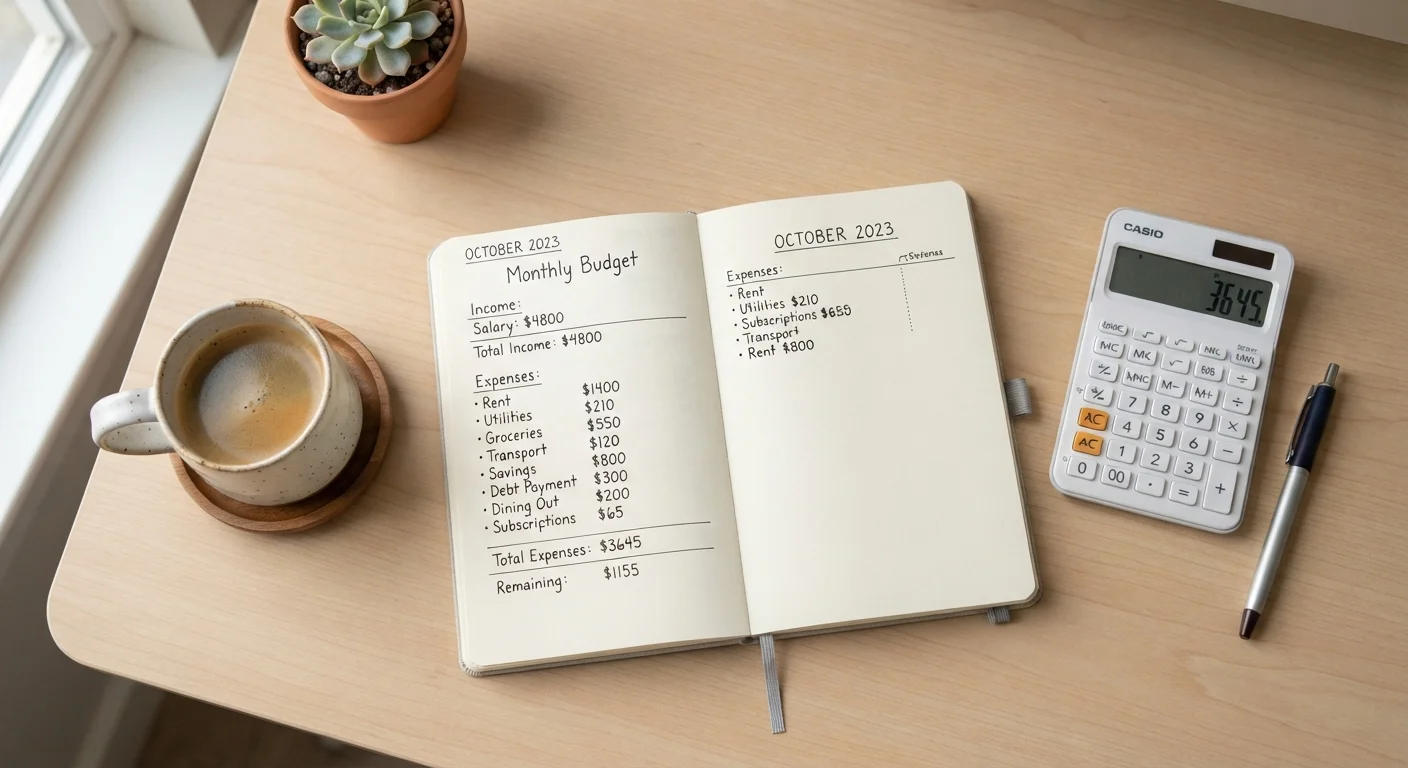
The Most Common Misunderstanding About Budgets
When most people hear the word "budget," they picture a rigid list of spending limits designed to take the joy out of life. That framing is exactly why so many people avoid building one - or abandon it after a few weeks. The truth is simpler and far less punishing.
A monthly budget is a plan for your money. It tells your dollars where to go before the month starts, which is fundamentally different from looking back at your bank statements and wincing. Without a plan, spending decisions happen by default. With one, they happen by design.
This distinction matters more than any app, spreadsheet, or financial method. If you think of budgeting as restriction, you'll resent it. If you think of it as direction - a way to make your money match your actual priorities - it becomes genuinely useful. See our overview of budgeting myths for more on beliefs that stop people from starting.
Budgeting Isn't Only for People in Debt
A common misconception is that budgeting is a crisis tool - something you only need when money is tight. In practice, people across all income levels use budgets to make intentional decisions about saving, giving, and spending. A budget is just as useful for someone planning a home purchase as for someone paying down debt.
The Three Things Every Budget Must Account For
A functional monthly budget has three building blocks. Miss any one of them, and the plan will break down in real life.
1. Your Actual Take-Home Income
Start with what actually hits your bank account each month - after taxes, benefits deductions, and any automatic contributions. This is your real starting number. Many people accidentally budget against gross income and wonder why the math never works out.
2. All Three Types of Expenses
Fixed expenses are the same every month: rent, mortgage payments, car payments, insurance premiums. Variable expenses change month to month but are regular: groceries, gas, utilities. Irregular expenses are the budget-busters most people forget entirely - annual subscriptions, car registration, medical copays, holiday gifts. Spreading these across twelve months prevents surprise shortfalls. Our article on expense categories that derail budgets covers this in depth.
3. A Savings and Goal Line
A budget that only accounts for bills and spending isn't complete. Savings - for emergencies, retirement, or a specific goal - must be treated as a non-negotiable monthly expense, not an afterthought funded by whatever is left over.
~33%
Americans with a detailed household budget
According to Gallup polling data, roughly one in three U.S. adults reports maintaining a detailed monthly budget, suggesting most households operate without a formal spending plan.
$1,000+
Typical cost of irregular annual expenses
Consumer financial educators commonly cite irregular expenses - vehicle registration, medical costs, subscriptions, and seasonal spending - as adding over $1,000 annually for most households when totaled.
Why the 'Set It and Forget It' Approach Fails
Building a budget once and never looking at it again is one of the most common reasons people feel like budgeting doesn't work. Life doesn't hold still. Income changes. Expenses shift. A budget built in January for a different job, apartment, or family situation won't serve you well by June.
The habit that separates people who benefit from budgeting from those who don't is the monthly review. At the start or end of each month, spend 15-20 minutes comparing what you planned against what actually happened. Where did you overspend? What changed? Adjust next month's plan accordingly. Our monthly budget health check walks through exactly what to look for.
If your first budget doesn't survive contact with real life, that's not failure - that's feedback. Why budgets fail in month two often comes down to unrealistic first drafts, not lack of willpower.
Start With Last Month's Bank Statement
If you're not sure where to begin, pull your last month's bank or credit card statement and categorize every transaction. This gives you a realistic baseline for your first budget rather than guessing. Actual spending data is almost always more accurate - and sometimes more surprising - than estimates.
Getting Started Without Overthinking It
You don't need a perfect budget. You need a starting budget - one that's honest, simple, and actually written down. Here's a workable sequence:
- Write down your take-home income for the month.
- List every known expense - fixed, variable, and irregular (divide annual costs by 12).
- Subtract total expenses from income. If the result is negative, you have immediate, actionable information: something needs to change.
- Assign a savings amount before spending the remainder, even if it starts small.
- Track actual spending against your plan throughout the month.
- Review and revise before next month begins.
For a deeper framework on making this process durable over time, see our guide to building a budget that actually lasts.
This article is for general informational and educational purposes only and does not constitute personalized financial advice. For guidance specific to your situation, consider consulting a qualified financial professional.