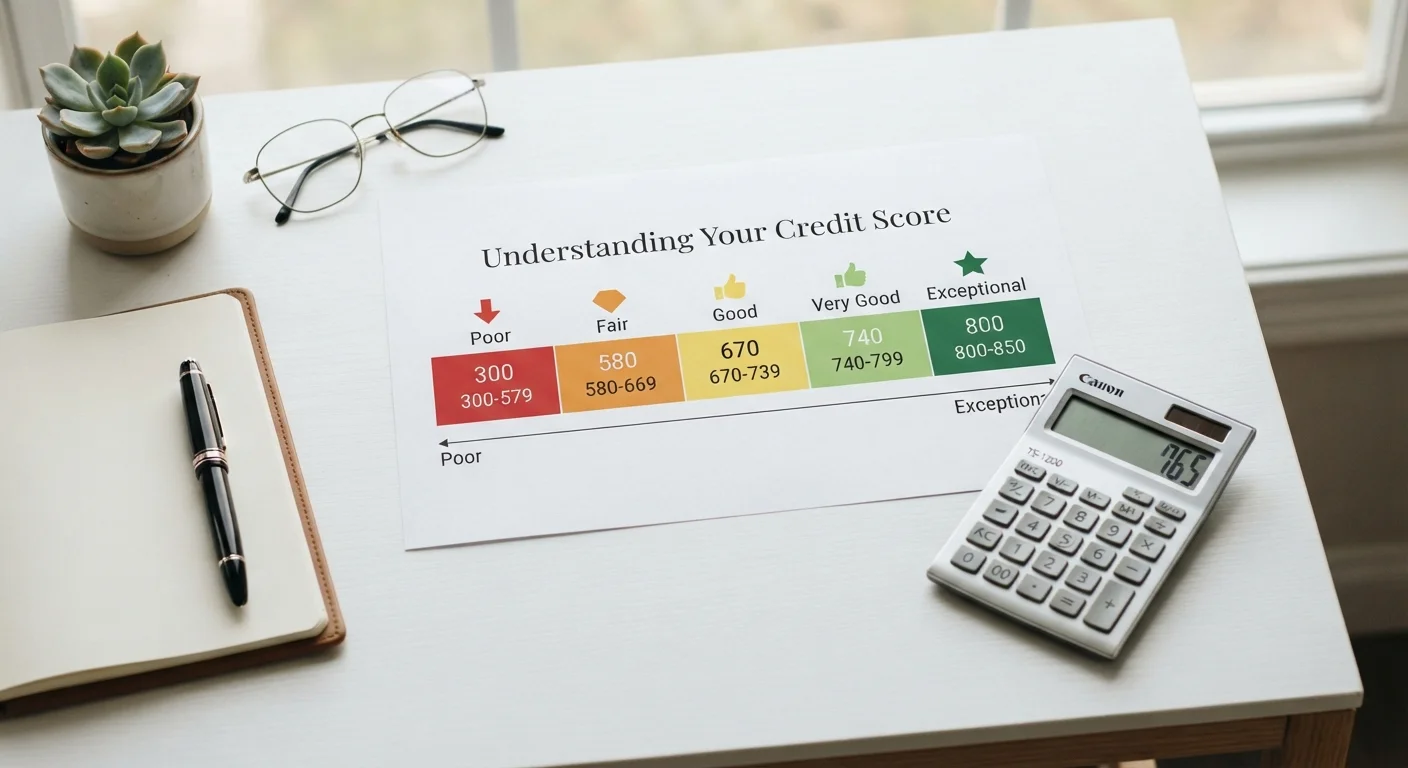
The Credit Score Scale at a Glance
Most credit scores in the United States follow the FICO scoring model, which ranges from 300 to 850. A parallel model called VantageScore uses the same 300-850 scale with slightly different tier boundaries. While lenders use many versions of these scores, understanding the general tiers gives you a reliable frame of reference for any credit decision you face.
| Score range (FICO & VantageScore) | 300 to 850 (FICO / VantageScore) |
| Poor credit threshold | Below 580 (FICO score classification) |
| Good credit minimum | 670 (FICO score classification) |
| Exceptional credit minimum | 800 (FICO score classification) |
| Payment history weight | ~35% of FICO score (myFICO.com) |
| Amounts owed weight | ~30% of FICO score (myFICO.com) |
For a deeper look at what these numbers actually capture - and what they leave out entirely - see what your credit score actually measures.
Breaking Down Each Score Range
Each tier carries real-world consequences for borrowing costs, approval odds, and even non-lending decisions like rental applications and security deposits.
Poor: 300-579
Scores in this range signal significant past credit difficulties - such as missed payments, collections, or bankruptcy. Most mainstream lenders will decline applications outright or require secured products. If you are approved, expect high interest rates and low credit limits. Building from this tier takes consistent, patient effort.
Fair: 580-669
Sometimes called "subprime," this range opens more doors than poor credit but still comes with notable costs. You may qualify for unsecured credit cards and auto loans, but interest rates will generally run higher than average. Landlords and some employers may also view scores in this band cautiously.
Good: 670-739
This is roughly the national median range. Lenders consider good-credit borrowers acceptable risks. You will typically qualify for conventional mortgages, standard auto loans, and most credit cards - often at competitive, though not necessarily the lowest available, rates.
Very Good: 740-799
Borrowers in this tier receive favorable terms across most lending products. The difference in lifetime interest costs between a good and very good score can be thousands of dollars on a mortgage or auto loan.
Exceptional: 800-850
Lenders treat exceptional-credit borrowers as low-risk. This range typically unlocks the best publicly advertised rates, the highest credit limits, and the smoothest approval experiences. However, improvements within this band produce diminishing practical returns - an 810 and an 845 are treated nearly identically by most underwriters.
FICO Score
A credit scoring model developed by the Fair Isaac Corporation, widely used by U.S. lenders. Scores range from 300 to 850, with higher scores indicating lower credit risk.
Credit Utilization
The percentage of your available revolving credit (such as credit card limits) that you are currently using. A lower ratio generally supports a higher credit score.
Hard Inquiry
A credit check initiated when you apply for new credit. Hard inquiries appear on your credit report and can temporarily lower your score by a few points.
Subprime
A lending industry term for borrowers with credit scores below approximately 670. Subprime borrowers are considered higher risk and typically receive less favorable loan terms.
VantageScore
A credit scoring model created jointly by the three major credit bureaus (Equifax, Experian, and TransUnion) as an alternative to FICO. It uses the same 300-850 scale but may weigh factors slightly differently.
Why Tiers Matter Beyond Interest Rates
Credit scores influence more than loan approvals. Landlords in competitive rental markets routinely pull credit reports, and a score below the good threshold can mean a larger security deposit or a declined application. Some employers - particularly in financial or security-sensitive roles - review credit as part of background screening, though they require your written consent and cannot see your actual score.
Auto and homeowners insurance premiums in many states are also partly determined by credit-based insurance scores, a related but distinct calculation. The practical reach of your credit tier extends well beyond a bank's lending desk.
716
Average U.S. FICO score
According to Experian's State of Credit report, the average American FICO score has remained in the "good" tier in recent years.
~23%
Americans with poor or fair credit
The Consumer Financial Protection Bureau has estimated that tens of millions of U.S. adults carry scores below 670, limiting access to affordable credit.
If your score has recently dipped unexpectedly, common causes behind a score drop can help you identify the likely trigger.
Moving Between Tiers: What Actually Works
Two factors dominate FICO score calculations: payment history (roughly 35% of your score) and amounts owed, including credit utilization (roughly 30%). Addressing these two areas produces the most meaningful score movement for most people.
- Pay every bill on time. A single 30-day late payment can drop a good score by 60-100 points.
- Reduce revolving balances. Keeping utilization below 30% - and ideally below 10% - supports higher scores.
- Avoid unnecessary new accounts. Each hard inquiry causes a small, temporary dip.
- Let accounts age. Length of credit history rewards patience over time.
For a fuller picture of sustainable habits, see responsible credit habits that support your score over time. And if you want to separate myth from reality - like the common belief that carrying a balance helps your score - persistent credit score myths worth knowing addresses those directly.
This article provides general financial education and is not personalized financial or credit advice. Consult a licensed financial professional for guidance specific to your situation.