How the Calculation Actually Works
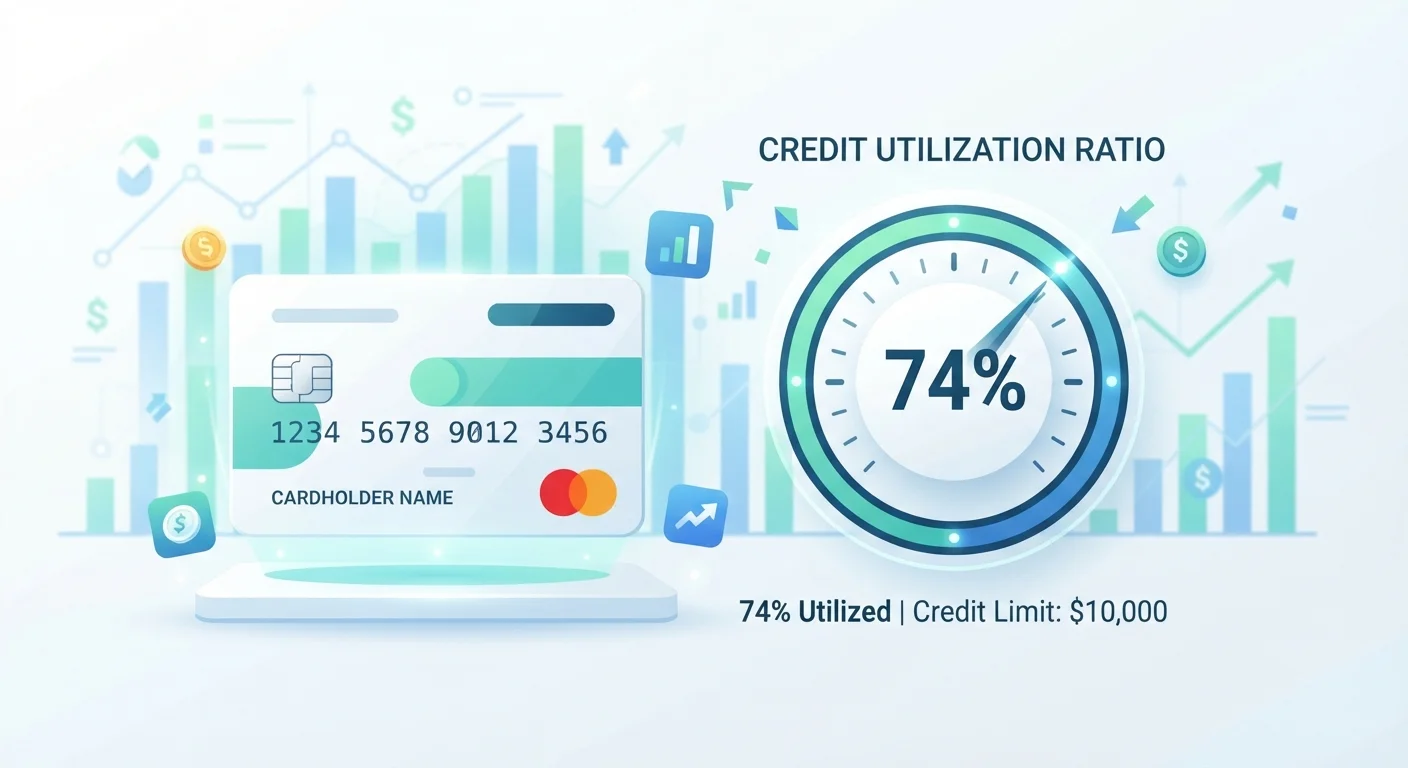
Credit utilization sounds technical, but the math is straightforward. Take all the balances on your revolving credit accounts - primarily credit cards - add them together, then divide by the sum of all your credit limits. Multiply by 100 to get a percentage.
For example: two cards with limits of $5,000 and $3,000 give you $8,000 in total available credit. If you carry $1,600 across both cards, your aggregate utilization is 20%. That's the figure scoring models use as one of their key inputs.
But aggregate utilization is only part of the picture. Scoring models also assess each card individually. If one of those cards has a $3,000 limit and a $2,700 balance, that card's utilization is 90% - and that alone can drag down your score, even if your overall ratio looks manageable. This is why spreading balances across multiple cards isn't always the solution it's assumed to be.
To understand where utilization fits within the broader scoring framework, see what your credit score actually measures.
~30%
Weight of utilization in FICO score calculation
According to FICO's published scoring model documentation, amounts owed - which is dominated by credit utilization - accounts for approximately 30% of a FICO score.
<10%
Utilization rate among highest-scoring consumers
FICO data on high scorers (800+) consistently shows average revolving utilization rates in the single digits, illustrating how aggressively low utilization correlates with top-tier scores.
30%
Commonly cited utilization guideline threshold
Credit educators and bureaus including Experian frequently cite 30% as a practical ceiling to aim for, though lower is better for scoring purposes.
Why Small Percentages Have Real Consequences
A few percentage points of utilization can translate into a meaningful score difference - and that score difference carries real financial consequences. Lenders use credit scores to set interest rates, approve applications, and in some cases determine deposit requirements for utilities or rental housing. Even a modest score improvement can move a borrower from one rate tier to another, affecting the total cost of a loan over its lifetime.
The reason utilization carries so much weight is what it signals to lenders: someone consistently near their credit limits may be experiencing financial stress or managing cash flow poorly. Conversely, someone who uses credit moderately and pays it down regularly looks financially stable and lower-risk.
“Amounts owed is an important factor in credit scores because it shows lenders how much of your available credit you're using - and how dependent you may be on non-cash funds.”
— myFICO (FICO's Consumer Division), Official consumer education resource from Fair Isaac Corporation
Importantly, utilization has no memory. Unlike a missed payment - which can remain on your credit report for up to seven years - a high utilization figure from last month disappears once your balance is paid down and the new, lower balance is reported. This makes utilization one of the most actionable levers available for improving your score in the near term.
For a full picture of how score tiers translate into borrowing outcomes, see credit score ranges decoded.
Common Misconceptions That Can Cost You
One of the most widespread misunderstandings is that carrying a small balance each month - rather than paying in full - somehow demonstrates credit activity and helps your score. This is a myth. Scoring models measure the balance reported, not whether you're actively using credit. Carrying a balance only costs you interest without scoring benefit.
Another common error is assuming that paying by the due date is the same as paying before the reporting date. Your lender typically reports your balance to the credit bureaus once per month - often around your statement closing date, which can precede your due date by two weeks or more. If you make a large purchase and then pay it off by the due date, the balance may have already been reported at its peak. Paying balances down before the statement closes gives you more control over what gets reported.
Pay Before Your Statement Closes
Your lender typically reports your balance to the credit bureaus around the statement closing date - not the payment due date. Making an extra payment before your statement closes can lower the balance that gets reported, which directly reduces your utilization for that cycle. Check with your card issuer to confirm when they report to the bureaus.
Finally, many people don't realize that requesting a credit limit increase can lower utilization - but it may also trigger a hard inquiry. For context on how inquiries interact with your overall score, the article on hard inquiries vs. soft inquiries is worth reviewing before making that request.
Several other myths about utilization and credit behavior are addressed in detail in the truth behind 7 persistent credit score myths.
Practical Steps to Lower Your Utilization
The most direct approach is simple: pay down existing balances. Prioritize any card where individual utilization is high, since per-card ratios matter independently. Even a partial paydown - not just the minimum payment - will reduce what gets reported.
If you have multiple cards with varying utilization levels, redistributing spending to cards with more available room can help balance per-card ratios. However, this is a short-term adjustment, not a substitute for reducing overall debt.
Keeping accounts open - even ones you rarely use - preserves available credit and keeps your aggregate limit higher. Closing an unused card shrinks your total available credit and can unintentionally push your utilization up.
For longer-term habits that support a healthy credit profile beyond just utilization, see responsible credit habits that help your score over time. And if any of the terminology in your credit report is unfamiliar, the vocabulary of credit reports offers plain-language definitions for the terms you'll encounter most.
This article is for general informational and educational purposes only and does not constitute personalized financial or credit advice. Individual results vary. Consult a qualified financial professional for guidance specific to your situation.