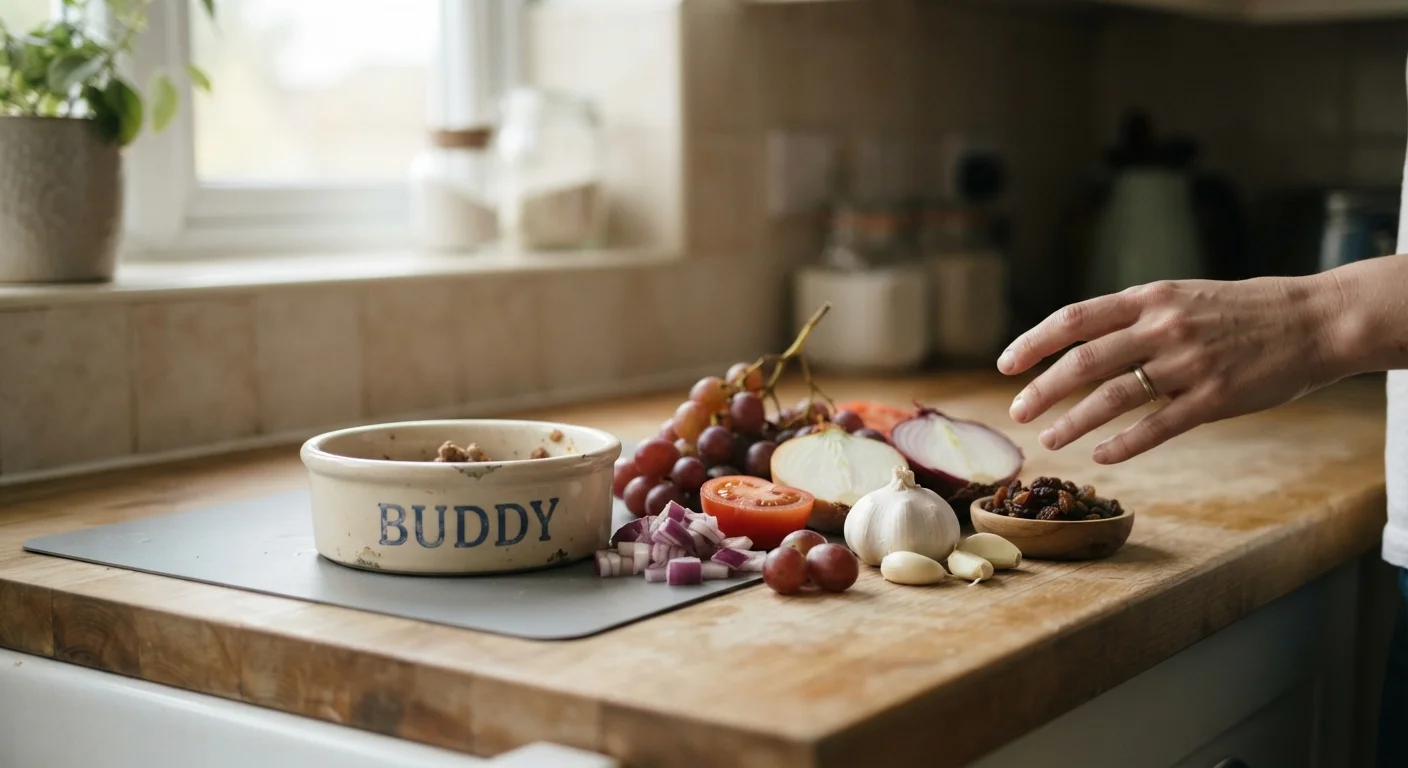
Why Some Human Foods Are Dangerous for Dogs
Dogs metabolize food differently than humans do. Compounds that a human body processes without issue can trigger enzyme failures, red blood cell damage, or neurological disruption in dogs. The danger is not always obvious - some toxic foods cause symptoms within minutes, while others accumulate quietly over repeated exposures before signs appear.
This reference covers the most commonly encountered household foods confirmed to be toxic to dogs, explaining the specific mechanism behind each risk. If you suspect your dog has ingested any of these substances, contact your veterinarian or the ASPCA Animal Poison Control Center immediately. This article is general educational information, not a substitute for veterinary care.
Understanding what to avoid is one of the most practical steps an owner can take - and it pairs well with broader awareness of common feeding mistakes that can quietly affect your pet's health over time.
| Most commonly reported canine toxin | Chocolate (methylxanthines) (ASPCA Animal Poison Control Center, annual reports) |
| Xylitol risk threshold | Even small doses can cause harm (Veterinary toxicology consensus) |
| Onset time for grape/raisin toxicity | Vomiting often within 6 hours (ASPCA Poison Control clinical data) |
| Garlic toxicity form | Raw, cooked, and powdered all hazardous (Merck Veterinary Manual) |
| Emergency contact for poisoning | ASPCA Animal Poison Control: (888) 426-4435 (aspca.org) |
The Major Offenders: Food-by-Food Breakdown
The following foods are consistently flagged by veterinary toxicologists as hazardous for dogs:
Grapes and Raisins
Grapes - and their dried forms, raisins and currants - can cause acute kidney failure in dogs. The exact toxic compound has not been definitively identified, which makes all grape products suspect regardless of quantity. Even small amounts have caused severe illness in some dogs. Symptoms include vomiting, lethargy, and reduced urination.
Onions, Garlic, and Other Alliums
Onions, garlic, leeks, and chives contain organosulfur compounds that damage red blood cells in dogs, leading to hemolytic anemia. Toxicity applies whether these foods are raw, cooked, or powdered - powdered garlic and onion are particularly concentrated. Repeated small exposures from table scraps can accumulate to harmful levels over time.
Xylitol
Xylitol is an artificial sweetener found in sugar-free gum, some peanut butters, candies, baked goods, and certain medications. In dogs, xylitol triggers a rapid release of insulin, causing dangerous hypoglycemia (low blood sugar). At higher doses it can also cause liver failure. Always read ingredient labels before sharing any packaged food product with your dog.
Chocolate and Caffeine
Chocolate contains theobromine and caffeine - two methylxanthine compounds dogs cannot efficiently metabolize. Dark chocolate and baking chocolate contain the highest concentrations. Effects range from vomiting and restlessness to seizures and cardiac arrhythmia depending on the amount consumed and the dog's size.
Macadamia Nuts
Macadamia nuts cause a syndrome unique to dogs: weakness, hyperthermia, tremors, and vomiting within 12 hours of ingestion. The toxic mechanism is not yet fully understood, but the reaction is well documented in veterinary literature.
Alcohol and Raw Yeast Dough
Alcohol affects dogs at far lower doses than humans - even small amounts can cause disorientation, vomiting, and respiratory depression. Raw yeast dough poses a related risk: it ferments in the stomach, producing ethanol and carbon dioxide, which can cause bloating and alcohol poisoning simultaneously.
Theobromine
A naturally occurring stimulant found in cacao plants and present in all chocolate products. Dogs metabolize it very slowly, allowing toxic levels to build up in the body.
Hemolytic Anemia
A condition in which red blood cells are destroyed faster than the body can replace them, reducing oxygen delivery to tissues. In dogs, allium vegetables are a common dietary trigger.
Xylitol
A sugar alcohol used as a low-calorie sweetener in many human food products. It is harmless to humans but causes severe insulin release and potential liver damage in dogs.
Organosulfur Compounds
Sulfur-containing chemicals found in plants of the allium family (onions, garlic, leeks). In dogs, these compounds oxidize red blood cells, impairing their ability to carry oxygen.
Hypoglycemia
Abnormally low blood sugar levels. In dogs, xylitol ingestion can trigger a sudden drop in blood glucose, causing weakness, seizures, and in severe cases, loss of consciousness.
Methylxanthines
A class of compounds that includes caffeine and theobromine. They stimulate the central nervous and cardiovascular systems; dogs are far more sensitive to their effects than humans.
Being informed about what goes into your dog's bowl extends beyond treats and table scraps. If you prepare food at home for your pet, nutritional gaps in homemade diets are another important area to understand. And when reading commercial food labels, our guide on decoding dog food ingredient lists can help you spot hidden additives like xylitol before they reach your dog's dish.
This article is for general informational and educational purposes only and does not constitute veterinary or medical advice. Always consult a licensed veterinarian for guidance specific to your dog's health and situation.