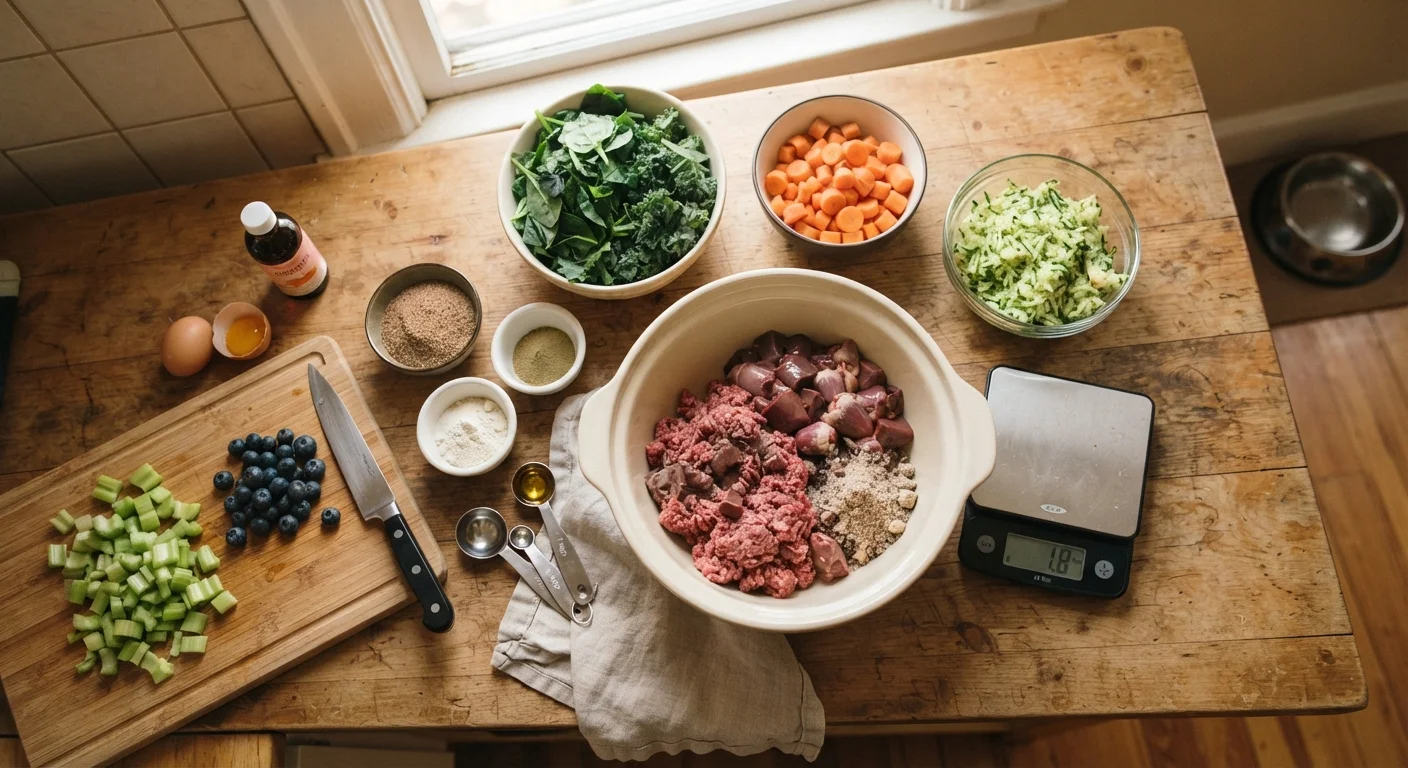
Why Homemade Diets Fall Short More Often Than Owners Expect
Cooking for a pet feels like an act of care, and in many ways it is. But the nutritional science behind a complete and balanced pet diet is genuinely complex - more so than most owners realize until something goes wrong. Research published in peer-reviewed veterinary journals has repeatedly found that the vast majority of homemade pet food recipes available online or in popular books fail to meet the minimum nutrient guidelines established by the Association of American Feed Control Officials (AAFCO).
The problem is rarely the protein source. Most owners get that part right. The gaps tend to cluster around micronutrients - the vitamins, minerals, and trace elements that don't show up in a chicken breast or a cup of rice but are absolutely essential for organ function, immune health, and skeletal integrity. Understanding where those gaps appear is the first step toward addressing them responsibly.
For a broader look at how to evaluate whether any diet - homemade or commercial - is working for your pet, see our pet nutrition checkup guide.
The Most Commonly Missed Nutrients in Home-Cooked Pet Meals
Certain deficiencies appear with troubling consistency across poorly formulated homemade diets. Knowing them by name - and understanding what each one does - helps owners ask better questions and make more informed choices.
Account for calcium and phosphorus balance, not just total protein.
A diet high in meat but low in calcium creates an inverted calcium-to-phosphorus ratio, which draws calcium out of bones over time. In puppies and kittens, this can cause nutritional secondary hyperparathyroidism - a serious and sometimes irreversible skeletal condition. Even adult pets are vulnerable to long-term bone density loss.
Include a reliable source of taurine, especially for cats.
Taurine is an amino acid that cats cannot synthesize in adequate amounts on their own, making it an essential dietary nutrient for felines. Deficiency leads to dilated cardiomyopathy (an enlarged, weakened heart) and retinal degeneration, both of which can be fatal or cause permanent vision loss. Dogs have some synthetic capacity but may still fall short on certain homemade diets.
Do not rely on vegetables or grains alone to supply vitamin D.
Vitamin D3 - the form most bioavailable to dogs and cats - is found almost exclusively in animal tissues and certain fish oils. Unlike humans, pets cannot synthesize adequate vitamin D through sun exposure. A deficiency impairs calcium absorption and immune function; excess supplementation is also toxic, making precision essential.
Address iodine, which is almost never present in adequate amounts in unsupplemented meat-and-vegetable diets.
Iodine is required for thyroid hormone production, which regulates metabolism, energy, and growth. Plain muscle meat contains very little iodine, and most vegetables are not reliable sources. Without supplementation or inclusion of iodine-rich ingredients, hypothyroidism-related symptoms can develop gradually and go undetected.
Consult a board-certified veterinary nutritionist to formulate or review any long-term homemade diet.
A diplomate of the American College of Veterinary Nutrition (ACVN) can analyze a proposed diet against established nutrient profiles and prescribe specific supplements and quantities tailored to your pet's species, age, weight, and health status. This is not a one-time step - recipes should be reviewed periodically as your pet's life stage changes.
95%+
Homemade recipes failing AAFCO standards
Multiple veterinary studies have found that more than 95% of homemade pet food recipes - including those from published books and veterinary websites - did not meet all AAFCO minimum nutrient guidelines.
Top 3
Most deficient nutrients in DIY diets
Calcium, zinc, and vitamins D and E consistently rank among the most deficient nutrients identified when veterinary nutritionists analyze client-submitted homemade pet food recipes.
Practical Steps for Doing This Right
Choosing to prepare food at home for your pet is not inherently unsafe, but it does require a level of rigor that goes well beyond following a popular recipe. The following habits are the foundation of a genuinely nutritious homemade feeding plan.
Rotate Proteins, But Don't Skip the Supplement
Rotating between protein sources - chicken, turkey, beef, fish - adds variety and can reduce the risk of food sensitivities developing over time. However, rotation does not solve micronutrient gaps; each protein source has its own nutrient profile, and none covers everything a pet needs on its own. A properly formulated supplement added consistently to every meal remains non-negotiable regardless of how varied the protein rotation is.
If you are also questioning whether commercial alternatives might better suit your pet's needs, our comparison of dry food vs. wet food can help you weigh the options. Similarly, owners curious about raw approaches may find value in our review of raw feeding claims and evidence.
This article is for general informational and educational purposes only and does not constitute veterinary or medical advice. Always consult a licensed veterinarian or board-certified veterinary nutritionist before making significant changes to your pet's diet.