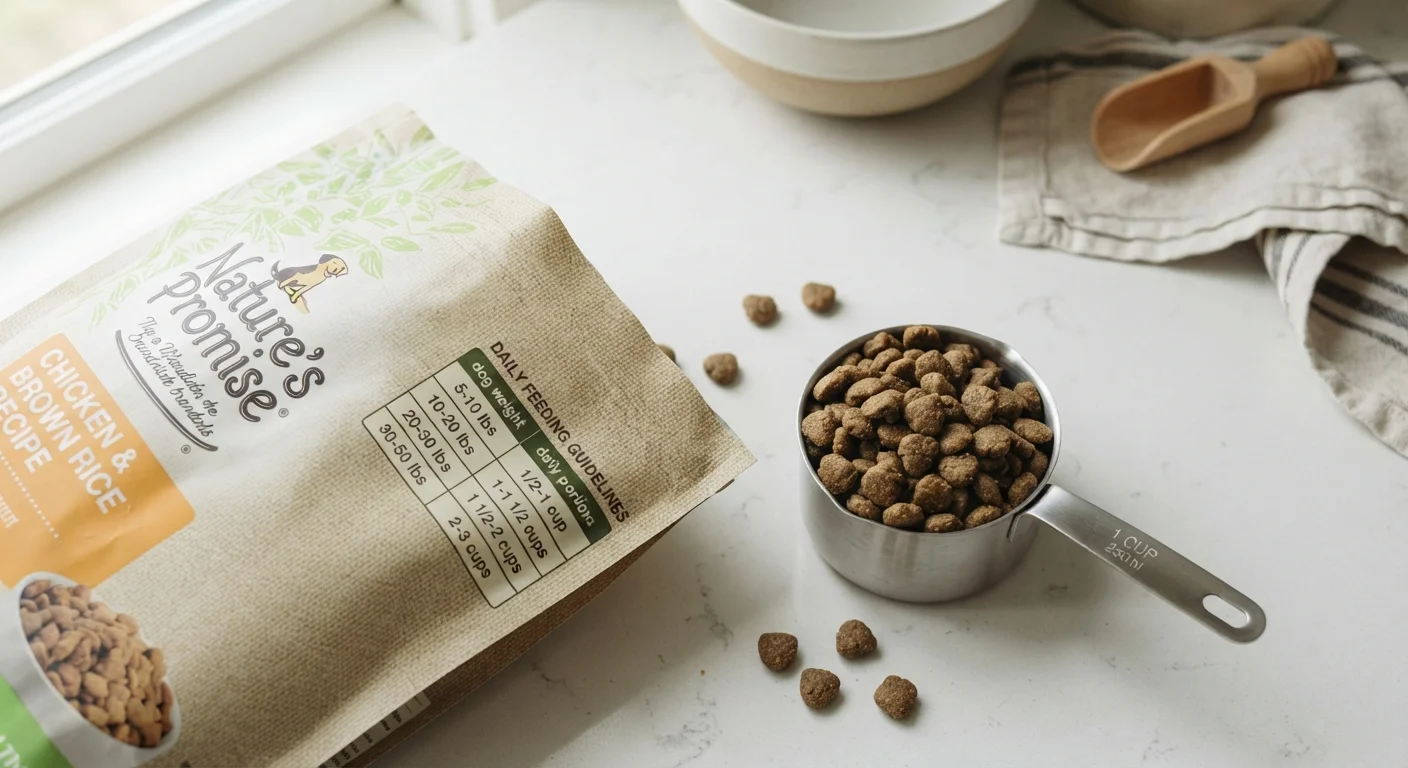
How to Read the Chart's Weight Column Correctly
The weight ranges on a feeding chart are meant to reflect your pet's ideal body weight - not necessarily what they weigh today. This distinction matters enormously. If your dog currently weighs 65 pounds but carries excess body fat, feeding to the 65-pound row will maintain that excess weight rather than help correct it.
Ask your veterinarian to assess your pet's body condition score (BCS) - a standardized 1-9 or 1-5 scale that evaluates fat coverage over ribs, spine, and hips through both sight and touch. Once you know the target healthy weight, use that number as your chart reference point. For overweight pets, your vet may recommend feeding to a slightly lower weight tier as a temporary reduction strategy.
Also note that most charts use ranges (e.g., "40-50 lbs"). When your pet falls in the middle of a range, starting at the middle of the corresponding portion range and adjusting from there is a reasonable approach.
What the Daily Amount Actually Includes
The daily portion shown on a feeding chart accounts for the main food only - it does not automatically reserve space for treats, food toppers, meal mixers, or scraps. Every calorie your pet consumes across the day contributes to their energy balance, and the chart total should reflect all of it.
Measure Every Time - Don't Eyeball
Studies on pet feeding consistently find that owners who estimate portions by eye tend to overfeed by 10-30%. Use a standard dry measuring cup or, for even greater accuracy, a kitchen scale set to grams. Weigh your measuring cup of food against the calorie-per-gram figure on the packaging for the most precise daily tracking.
A practical habit: measure your pet's full daily kibble allotment into a container each morning. As you give treats or add toppers throughout the day, remove a proportional amount of kibble from that container. This keeps daily intake visible and prevents gradual overfeeding - one of the most common feeding mistakes that quietly harm pets.
If you feed a combination of wet and dry food, both contribute calories. Many brands publish calorie-per-cup or calorie-per-can figures on their packaging or websites; use these to calculate a blended daily total rather than applying each food's chart independently.
Factors That Require Adjusting Away From the Chart
Feeding charts are built around statistical averages. Your pet is an individual. Several factors commonly push real-world needs above or below the printed recommendation:
- Activity level: A working dog or a cat that roams outdoors burns significantly more energy than a sedentary house pet of the same weight. Highly active animals may need 20-30% more than the chart suggests.
- Life stage: Puppies and kittens need more calories per pound than adults. For puppies specifically, see our puppy feeding guide for stage-by-stage detail. Senior pets often need fewer calories but may have higher protein or phosphorus considerations - a topic covered in our senior pet nutrition guide.
- Spay/neuter status: Altered pets typically have lower metabolic rates and may need 10-20% fewer calories than intact animals of the same weight and breed.
- Health conditions: Kidney disease, diabetes, thyroid disorders, and other conditions can significantly alter nutritional requirements. Always follow veterinary guidance over any chart when a health condition is present.
- Food formula changes: Caloric density varies between formulas, even from the same brand. If you switch products, recalculate rather than assuming the old portion still applies. Our guide to reading dog food labels explains where to find caloric content on packaging.
Building a Simple Adjustment Routine
Rather than re-evaluating your pet's portions only when a problem appears, build a light monitoring habit into your routine. Weigh your pet once a month using a consistent method - a bathroom scale with you holding the pet, then subtracting your own weight, works well for dogs. Perform a quick body condition check by running your hands along the ribs: you should feel them without pressing hard, but not see them prominently from a distance.
If weight or condition drifts, adjust daily portions in small increments - roughly 10% at a time - and allow two to three weeks before evaluating the effect. Rapid, large changes can be harder to calibrate and may cause digestive upset.
Keep a simple log: date, current weight, and current daily portion. Over time this makes patterns easy to spot. If you're uncertain about what you're observing, your veterinarian is the right resource - they can run a thorough nutrition checkup and adjust your plan accordingly.
~60%
Pet dogs and cats estimated to be overweight or obese
The Association for Pet Obesity Prevention's annual surveys have consistently found overweight rates at or above 55-60% in U.S. dogs and cats over multiple reporting years.
10%
Maximum share of daily calories from treats
Veterinary nutrition guidelines broadly recommend treats represent no more than 10% of a pet's total daily caloric intake to preserve dietary balance.
This article is for general informational and educational purposes only and is not a substitute for personalized veterinary advice. Always consult a licensed veterinarian regarding your pet's specific health and nutritional needs.