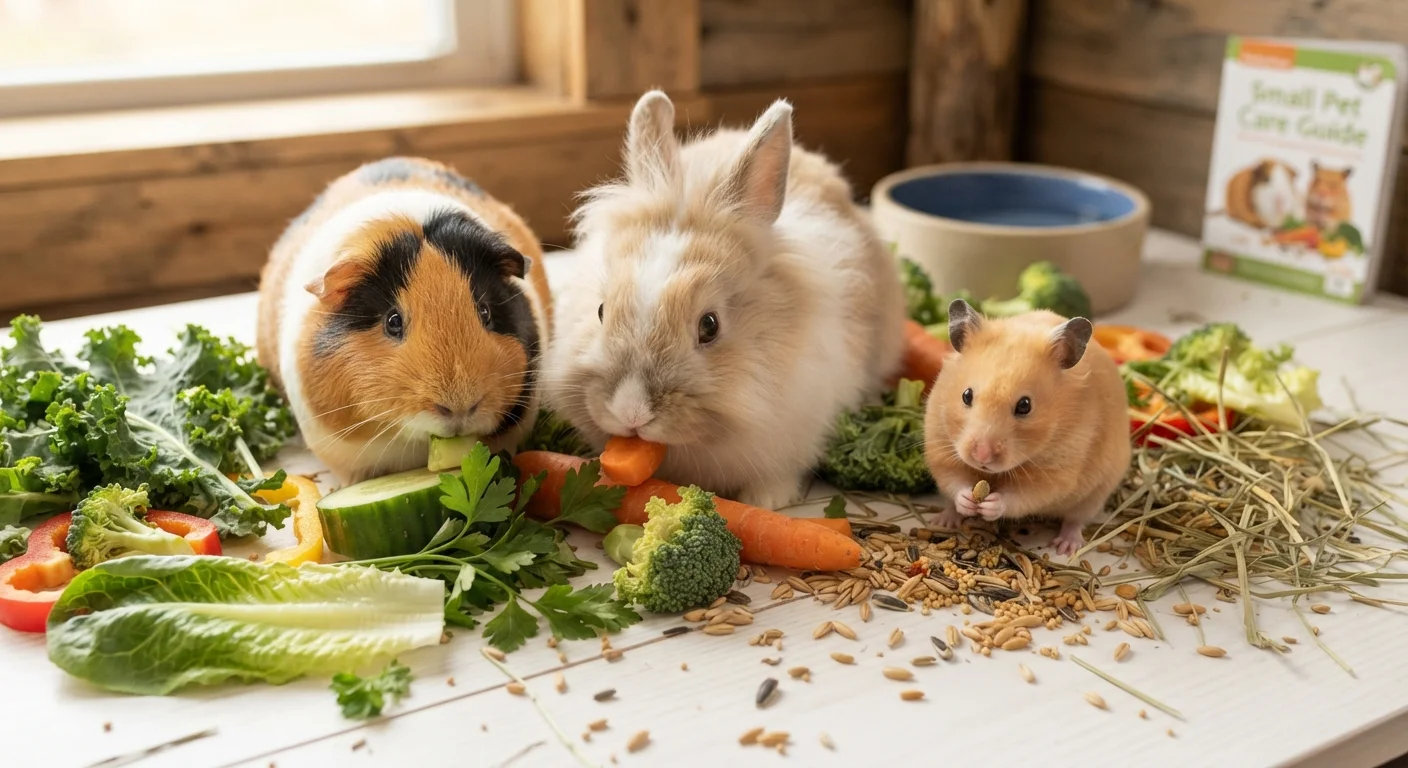
Why Small Mammal Diets Aren't Interchangeable
It's tempting to treat all small pets as nutritionally similar, but guinea pigs, rabbits, and hamsters have meaningfully different digestive systems, metabolic needs, and food sensitivities. Feeding one species' diet to another can cause deficiencies, digestive problems, or worse. This guide breaks down what each animal actually needs - and where owners most commonly go wrong.
| Guinea pig diet base | 70-80% timothy hay, daily |
| Rabbit diet base | ~80% grass hay (unlimited) |
| Hamster diet type | Omnivore - seeds, grains, limited fresh veg, occasional protein |
| Guinea pig vitamin C requirement | Approx. 10-30 mg/day from food sources |
| Fruit for rabbits and guinea pigs | Occasional treat only - not a daily food |
| Dwarf hamster special concern | Higher diabetes risk - minimize sugary foods |
If you suspect your current approach may be falling short, our pet nutrition checkup guide outlines signs that a diet may need revisiting.
Guinea Pig Nutrition: Hay, Vitamin C, and Variety
Guinea pigs are strict herbivores whose digestive systems are built around continuous fiber intake. Timothy hay should make up at least 70-80% of their daily diet - it supports healthy gut motility and naturally wears down constantly growing teeth.
The most critical nutritional fact about guinea pigs: they cannot synthesize vitamin C. Unlike most mammals, they lack the enzyme needed to produce it internally. Without a reliable daily source - typically 10-30 mg depending on age and health status - they develop scurvy, a serious and painful condition. Fresh bell peppers, leafy greens like romaine lettuce, and small amounts of kiwi are commonly used sources. Vitamin C degrades rapidly in water, so adding it to a water bottle is generally not an effective delivery method.
Fresh vegetables should supplement, not replace, hay. Fruit should be offered only occasionally due to its sugar content. Pellets formulated specifically for guinea pigs can round out the diet but should not be the foundation.
GI Stasis
A dangerous condition in rabbits (and sometimes guinea pigs) where gut movement slows significantly or stops entirely. It can become life-threatening within hours and requires prompt veterinary attention.
Cecotropes
Soft, nutrient-rich droppings produced by rabbits and guinea pigs that the animals consume directly from their hindquarters. This is a normal, essential part of digestion - not a hygiene problem.
Vitamin C (Ascorbic Acid)
A water-soluble nutrient that guinea pigs must obtain from food because they cannot produce it themselves. Deficiency leads to scurvy, causing lethargy, joint pain, and poor wound healing.
Timothy Hay
A dried grass hay that is the dietary cornerstone for guinea pigs and rabbits. Its long fiber strands support healthy digestion and wear down continuously growing teeth.
Omnivore
An animal that naturally eats both plant and animal material. Hamsters are omnivores, which distinguishes their nutritional needs from the strictly herbivorous rabbit and guinea pig.
Rabbit Nutrition: Hay Is the Foundation
Rabbits share guinea pigs' need for unlimited grass hay - ideally timothy, orchard grass, or oat hay - which should constitute roughly 80% of their intake. The long fiber strands are essential for preventing GI stasis, a life-threatening condition where digestive movement slows or stops.
Fresh leafy greens (such as romaine, cilantro, and arugula) should be offered daily in quantities appropriate to the rabbit's body weight. High-calcium greens like kale and spinach are fine in small amounts but should not dominate the rotation. Pellets are appropriate in limited quantities for adults - a common guideline is roughly ¼ cup per 5 lbs of body weight daily, though your veterinarian can help individualize this.
Fruit, carrots, and starchy treats should be genuine occasional treats rather than daily staples. Rabbits have a sweet tooth that doesn't align with their metabolic needs. For a broader look at how well-intentioned feeding habits can backfire, see our article on feeding mistakes that quietly harm your pet's health.
Hamster Nutrition: Omnivores With Different Needs
Unlike guinea pigs and rabbits, hamsters are omnivores. In the wild, they eat seeds, grains, insects, and plant matter. In captivity, a quality hamster-specific seed and pellet mix forms the dietary base. Hamsters have cheek pouches they use to hoard food - a normal behavior, but one that means owners should remove perishable items like fresh vegetables before they spoil.
Fresh vegetables such as broccoli, cucumber, and leafy greens can be offered in small amounts several times a week. Protein sources like mealworms or a small piece of cooked egg white can be offered occasionally - this more closely mirrors their natural foraging diet.
Avoid citrus fruits, onion, garlic, and anything high in sugar or salt. Dwarf hamster breeds are particularly prone to diabetes, so sugary fruits and treats should be minimal or eliminated for those animals. Hydration matters, too - fresh water should always be available via a sipper bottle checked daily for blockages.
Keep in mind that as small mammals age, their needs can shift. Our article on how dietary needs shift with age - written for dogs and cats but covering useful general principles - is a good companion read.
When in Doubt, Ask a Veterinarian
The dietary guidelines in this article reflect general veterinary consensus for healthy adult animals. Pregnant, nursing, juvenile, elderly, or ill animals often have different requirements. A veterinarian with small mammal experience - sometimes called an exotic animal vet - can provide individualized guidance for your pet's specific life stage and health status. This article is for general informational purposes and is not a substitute for professional veterinary advice.