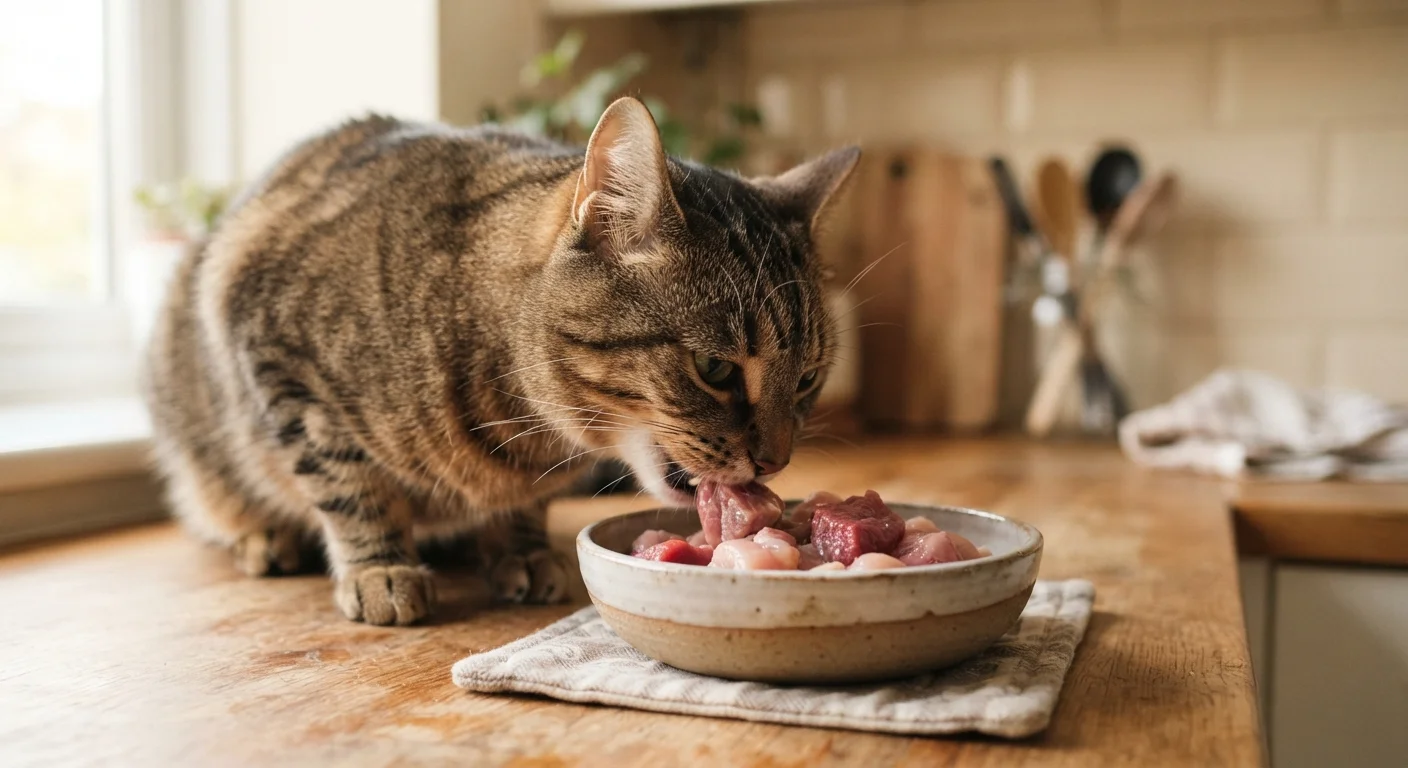
The Biology Behind the Label
When nutritionists and veterinarians call cats obligate carnivores, they are describing something deeper than a food preference - they are describing a biological reality shaped by millions of years of evolution. Cats evolved as solitary hunters in arid environments, where their primary prey was small rodents, birds, and reptiles. Over time, their bodies streamlined around that food source, outsourcing the production of several critical nutrients to the animals they ate.
This evolutionary shortcut has a cost: cats lost the enzymatic machinery needed to synthesize those nutrients themselves. The result is a species that is nutritionally dependent on animal tissue in ways that dogs and humans are not. Understanding this biology is the foundation of sound feline feeding decisions.
“The cat is a true carnivore - it is unable to adapt its metabolism to a low-protein diet the way an omnivore can. Protein is not just a fuel source for cats; it is a metabolic necessity.”
— James G. Morris, Professor of Animal Nutrition, University of California, Davis (paraphrased from published nutritional research)
Nutrients Cats Cannot Make on Their Own
Several nutrients illustrate the obligate carnivore distinction in practical terms:
- Taurine: An amino acid essential for heart function, vision, and reproduction. Most mammals synthesize taurine from other amino acids, but cats produce only trace amounts. Taurine is found almost exclusively in animal tissue, particularly organ meat and seafood.
- Arachidonic acid: An omega-6 fatty acid cats cannot convert from linoleic acid the way dogs and humans can. It must come preformed from animal fat sources.
- Preformed Vitamin A (retinol): Cats cannot convert beta-carotene from plants into usable vitamin A. They require the active retinol form, which comes from liver and other animal sources.
- Niacin (Vitamin B3): Most mammals convert the amino acid tryptophan into niacin. Cats do this so inefficiently that dietary niacin from meat is effectively required.
Each of these gaps reflects a metabolic adaptation to a meat-exclusive diet - one that works seamlessly as long as the cat eats animal tissue, and breaks down quickly when they do not.
~2%
Taurine in typical cat prey by dry weight
Research on feline nutritional requirements has established that wild-caught small mammals provide consistent taurine levels that domestic cat diets must replicate.
70%
Water content of wild prey animals
Veterinary nutritionists cite this figure to explain why cats evolved a low thirst drive and depend on food moisture for daily hydration needs.
3-4×
Higher protein requirement vs. omnivores
Cats require proportionally more dietary protein than omnivorous mammals of similar size, according to established comparative nutritional physiology.
How Protein Metabolism Works Differently in Cats
Beyond specific nutrients, cats handle protein in a fundamentally different way than omnivores. Most animals have flexible protein metabolism - when dietary protein is low, the body downregulates enzymes that break down amino acids for energy, conserving protein for essential functions. Cats lack this flexibility.
A cat's liver enzymes that process amino acids run at a consistently high rate, regardless of how much protein is in the diet. This means a cat fed a low-protein diet is still burning through amino acids rapidly - and if dietary protein doesn't replace what's lost, the body begins breaking down muscle tissue instead. This is one reason low-protein diets can cause muscle wasting in cats even when calorie intake seems adequate.
Evaluate Protein Quality, Not Just Quantity
When reading a cat food label, look for a named animal protein (e.g., 'chicken,' 'salmon') as the first ingredient, not a generic 'meat meal' or plant protein. Digestibility and amino acid completeness matter as much as the protein percentage listed on the guaranteed analysis panel.
For cat owners considering homemade diets, this protein-metabolism reality carries serious implications. See our guide to nutritional gaps in homemade pet food for what the science says about getting the balance right.
What This Means When Choosing Cat Food
The obligate carnivore framework gives cat owners a clear lens for evaluating food labels. Named animal proteins - such as chicken, turkey, salmon, or beef - should appear prominently in the ingredient list. Because cats extract little nutritional benefit from starches and grains, a food with animal protein as its foundation is more aligned with feline biology than one built around plant-based fillers.
Moisture is also relevant. Wild prey is roughly 70% water, and cats evolved with a naturally low thirst drive, relying on their food for most of their hydration. This makes the choice between wet and dry food a meaningful nutritional consideration, not just a matter of convenience. Our article on wet food vs. dry kibble nutritional trade-offs breaks down how these formats compare in moisture, protein, and long-term health implications.
As cats age, their protein and nutrient needs shift further, often requiring closer attention to diet quality. Our piece on senior pet nutrition covers how to adapt feeding strategies in older cats in consultation with a veterinarian.
This article is for general informational and educational purposes only and is not a substitute for professional veterinary advice. Always consult a licensed veterinarian or veterinary nutritionist before making significant changes to your cat's diet.