Why the Scale Gives You an Incomplete Picture
When pet owners worry about weight, the natural instinct is to check the scale. While weight is one data point, it tells you almost nothing about body composition - the ratio of fat to muscle to bone. A small, muscular dog and a small, sedentary dog of the same breed can weigh exactly the same, yet one may be in excellent health and the other carrying enough excess fat to stress joints and organs.
This is why veterinarians rely on a tool called the Body Condition Score (BCS) - a hands-on, visual evaluation that assesses fat coverage and muscle mass directly. Understanding BCS helps you move beyond the number on the scale and toward a more complete picture of your pet's health.
Weight changes, however, are still worth tracking. Sudden or unexplained shifts - especially weight loss without a diet change - can be early signals of medical issues. If you notice changes in your pet's physical cues or behavior alongside weight fluctuations, our guide on reading your pet's body language covers the signs that warrant a vet call.
What you will need
How to Assess Your Pet at Home
The following steps walk you through a simplified version of the BCS evaluation that any owner can perform between veterinary appointments. You don't need any special equipment - just your hands, your eyes, and a calm pet.
Use a Consistent Surface for Home Assessments
Always perform your hands-on BCS check on a firm, flat surface with your pet standing. Sitting or lying postures change how ribs and spine feel under your hands, which can skew your assessment. A non-slip mat on the floor works well for larger dogs.
Measuring cup or kitchen scale
Accurately portions dry or wet food to avoid accidental overfeeding.
Notebook or pet health app
Records BCS assessments and weight over time so you can track trends between vet visits.
Bathroom scale (for small pets)
Weigh yourself holding your pet, then subtract your own weight to estimate your pet's weight at home.
Understand what Body Condition Score (BCS) actually measures
The Body Condition Score is a standardized, hands-on assessment that evaluates fat coverage and muscle mass - not just total weight. Most veterinary practices use a 1-9 scale, where 1 is severely underweight, 5 is ideal, and 9 is obese. A smaller 1-5 scale is also used by some clinics; ask your vet which system they use.
BCS matters because two pets of the same breed and weight can have very different body compositions. A muscular dog and an overweight dog of the same breed may weigh identically, yet one is fit and the other at health risk. BCS captures that difference by evaluating what the body is actually made of.
Perform the rib check
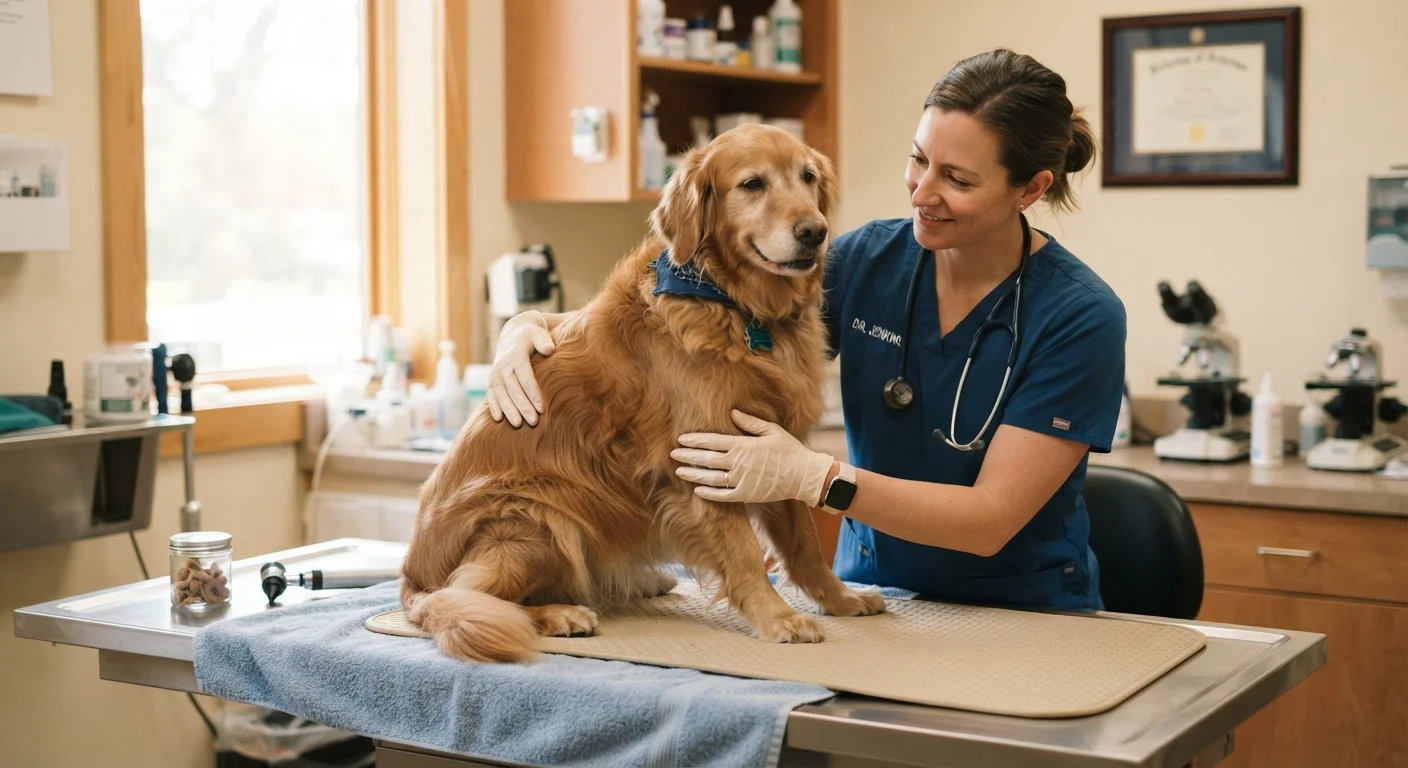
Place both hands on either side of your pet's ribcage, thumbs resting on the spine, fingers spread along the sides. Apply gentle, even pressure - you should be able to feel individual ribs without pressing hard, but they should not be visually prominent from across the room.
- Can't feel ribs without pressing hard: excess fat cover - pet may be overweight.
- Ribs feel like knuckles under thin skin: too little fat cover - pet may be underweight.
- Ribs feel like the back of your hand - detectable but cushioned: generally in the healthy range.
Assess the waist and abdominal tuck
Step back and view your pet from two angles: from above and from the side.
From above, a healthy dog or cat should show a visible narrowing behind the ribs - a defined waist. From the side, the belly should tuck upward toward the hind legs rather than hang level or droop downward.
Flat or absent waist definition from above, or a sagging belly from the side, are common visual indicators of excess weight. Conversely, an extremely sharp tuck or highly visible hip bones may signal underweight.
Check muscle mass along the spine and hindquarters
Run your fingers gently along the spine from the base of the neck to the tail. In a well-conditioned pet, you should feel the vertebrae but they should have adequate muscle padding on either side. Prominent, sharp vertebrae with little surrounding tissue may indicate muscle loss - which can occur even in an overweight pet.
Then lightly squeeze the muscles over the upper hind legs. These muscles should feel firm and substantial. Significant muscle wasting in the hindquarters, especially in older pets, can be a sign of aging-related changes or underlying illness and warrants a vet conversation.
Record your findings and compare to previous checks
Note your observations - rib palpation result, waist visibility, abdominal tuck, and muscle feel - along with the date and your pet's current weight if available. A single snapshot is less useful than a trend. If you perform this check monthly alongside the tasks in the monthly pet health maintenance checklist, you'll build a meaningful picture over time.
If your assessment consistently shows the same result, that's useful baseline information. If you notice clear changes in either direction over 4-6 weeks, bring your notes to your veterinarian.
Audit portion sizes and treat calories
If your at-home BCS check raises concerns, the most common culprits are portion inaccuracy and treat overload. Measuring cups are often used loosely, leading to consistent overfeeding. A heaping cup can contain 20-30% more calories than a level cup.
Treats should generally make up no more than 10% of your pet's daily caloric intake - a guideline most veterinary nutritionists support. For a detailed look at habits that quietly add up, see our article on overfeeding mistakes that lead to pet obesity.
Always Consult Your Vet Before Changing Diet
If you suspect your pet is overweight or underweight, do not make dramatic diet changes on your own. Rapid calorie restriction can be dangerous, particularly for cats, who can develop hepatic lipidosis (fatty liver disease) when food is cut too quickly. Your veterinarian can calculate a safe caloric target and rule out underlying medical causes for weight changes.
What to Do With Your Findings
A single at-home assessment is a starting point, not a diagnosis. If your evaluation consistently suggests your pet may be overweight or underweight, the next step is a conversation with your veterinarian - not an immediate diet overhaul.
Your vet can confirm the BCS professionally, rule out medical causes, and build a safe, gradual plan. For older animals especially, nutritional needs shift in ways that require careful attention; the article on senior pet nutrition explains how dietary requirements evolve with age.
If your pet's BCS appears healthy but you're still unsure whether the current diet is working well overall, the pet nutrition checkup guide offers a broader set of indicators - coat quality, energy levels, digestion - to evaluate alongside weight.
Weight Loss Can Signal Illness, Not Just Diet
Unexplained weight loss - even when appetite seems normal - can be an early sign of conditions like hyperthyroidism, diabetes, or kidney disease. If your pet is losing weight without a change in food, contact your veterinarian promptly rather than assuming the cause is behavioral.
This article provides general educational information about pet health and is not a substitute for professional veterinary advice. Always consult a licensed veterinarian for guidance specific to your pet's health needs.