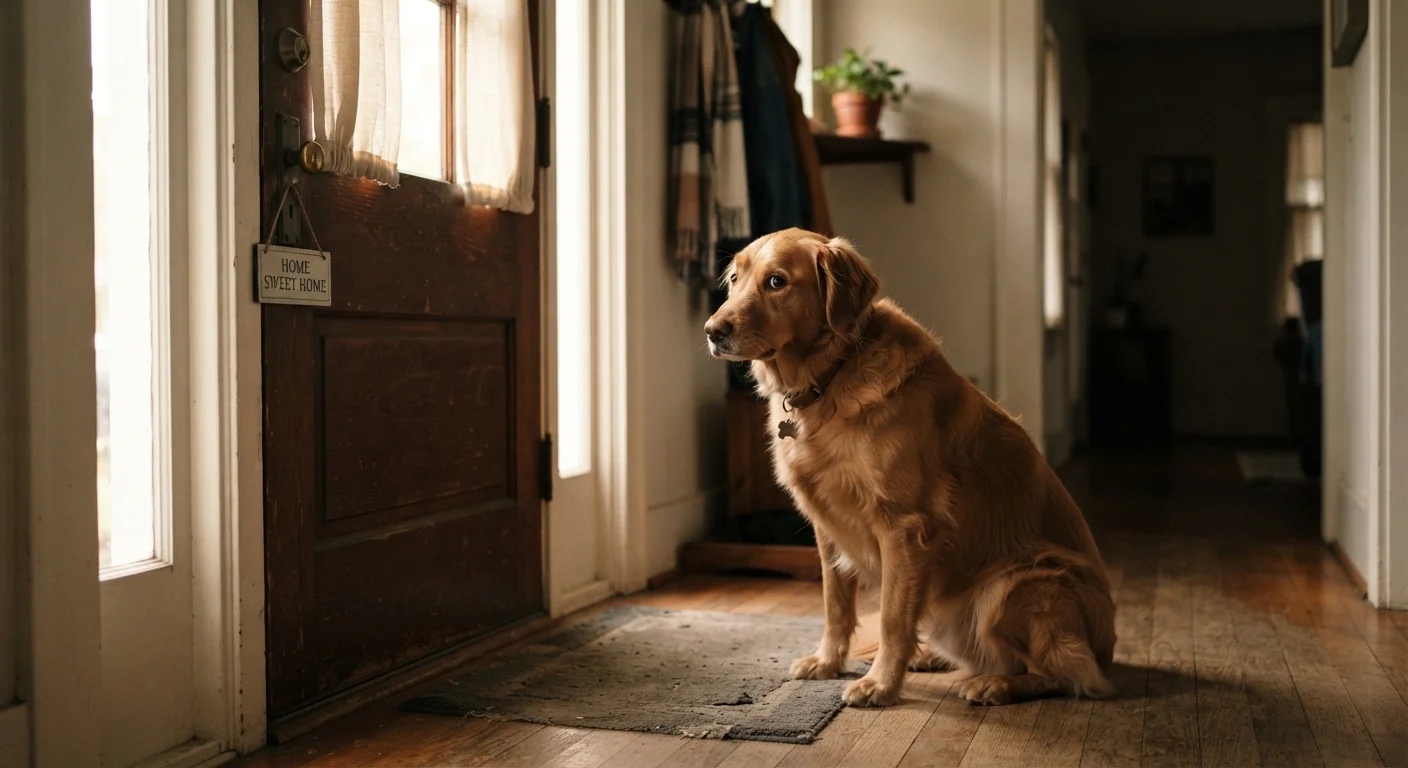
What Separation Anxiety Actually Looks Like
Separation anxiety produces a predictable cluster of behaviors that appear specifically when a dog is left alone - or even when they anticipate being left alone. Common signs include:
- Destructive behavior concentrated near exit points (doors, windows)
- Excessive vocalization - barking, howling, or whining that begins at or shortly after departure
- House soiling in a dog that is otherwise reliably housetrained
- Pacing, drooling, or panting disproportionate to the environment's temperature
- Attempts to escape that can result in self-injury
Crucially, these behaviors are driven by emotional distress, not disobedience. The dog is not acting out of spite or dominance - concepts that behavioral science does not support as motivations for this type of behavior. For a broader look at how anxiety manifests across pets, see our article on stress and anxiety in pets.
Isolation Distress vs. True Separation Anxiety
Not all alone-time distress is the same. Isolation distress occurs when a dog is distressed by being alone but is calm in the presence of any person or animal - including a neighbor or a pet sitter. True separation anxiety is specifically tied to the absence of one or a few key people. This distinction matters because the intervention strategies differ. A veterinary behaviorist can help clarify which pattern applies to your dog.
What It Isn't: Ruling Out Common Lookalikes
Many cases labeled as separation anxiety are actually one of the following:
- Boredom or under-stimulation
- A dog that does not receive adequate physical exercise or mental enrichment may chew furniture, bark, or dig - but typically settles within 30-60 minutes and is calm when you return. The emotional state is frustration, not fear.
- Incomplete house training
- A young or newly adopted dog may have accidents simply because they have not yet learned appropriate elimination habits indoors.
- Barrier frustration
- Some dogs become agitated when confined to a crate or room, not because of separation per se, but because of the physical restriction.
- Medical causes
- Conditions such as urinary tract infections, gastrointestinal issues, or pain can produce behavioral changes that superficially resemble anxiety. Always rule out medical causes first with your veterinarian. Our guide on reading your pet's body language can help you notice early physical signals.
Video recording your dog during the first 30 minutes after you leave is one of the fastest ways to understand what is actually happening in your absence.
Evidence-Based Approaches to Separation Anxiety
Once you have a clearer picture of your dog's behavior, structured intervention can begin. The following approaches have strong support in behavioral science:
Desensitization to Departure Cues
Dogs with separation anxiety often begin to show distress before you even leave - the moment you pick up your keys or put on your shoes. Systematically exposing your dog to these cues without actually leaving (picking up keys, then putting them down; putting on a coat, then sitting back down) helps reduce their predictive power over time.
Graduated Absences
Begin with very short separations - seconds, not minutes - that stay below your dog's distress threshold. Gradually extend duration only when your dog remains calm. This process requires patience; moving too fast typically sets progress back.
Avoid Making Arrivals and Departures Emotionally Charged
Calm, low-key comings and goings reduce the contrast between your presence and absence. This does not mean ignoring your dog - it means keeping greetings brief and settled rather than highly excited.
Start Smaller Than You Think You Should
Many owners underestimate how short the initial absence intervals need to be. If your dog begins to show anxiety within two minutes of you leaving, your starting point for graduated absences might be 20 seconds. Working within your dog's comfort threshold - even if it feels trivially brief - builds a genuine foundation. Rushing the timeline is the most common reason desensitization programs stall.
For dogs with moderate to severe anxiety, these techniques work best alongside professional guidance. See our article on when to seek a professional trainer or veterinary behaviorist to understand when DIY approaches have reached their limits.
~17%
Dogs estimated to experience separation anxiety
Research published in behavioral veterinary literature suggests approximately 14-20% of dogs present with separation-related behaviors significant enough to affect welfare.
Top 3
Most common reason dogs are surrendered to shelters
Separation-related behavior problems are consistently cited among the leading behavioral reasons owners relinquish dogs, according to shelter intake surveys.
Building a Longer-Term Plan
Separation anxiety is rarely resolved in a week. A realistic plan accounts for the dog's current threshold, the owner's schedule, and the consistency of training. A few principles guide durable progress:
- Enrich the environment - food puzzles, chew items, and enrichment toys can reduce baseline arousal, making the dog more capable of tolerating brief absences.
- Establish predictable routines - dogs generally regulate better when daily schedules are consistent.
- Avoid flooding - forcing a dog to endure long absences before they are ready does not build tolerance; it deepens fear.
- Consider professional support - a certified applied animal behaviorist (CAAB) or veterinary behaviorist can build an individualized protocol. In some cases, a veterinarian may discuss whether medication is appropriate as part of a multi-modal treatment approach.
Progress is uneven - some days will go better than others. Tracking your dog's behavior with video or a simple log helps you see genuine trends rather than reacting to individual setbacks. Understanding broader behavioral principles, such as those involved in building calm routines through consistent training, can also reinforce the patience-first mindset separation anxiety work requires.
This article is for general informational and educational purposes only. It is not a substitute for professional veterinary or behavioral advice. If your dog is showing signs of distress, consult a licensed veterinarian or certified animal behavior professional.