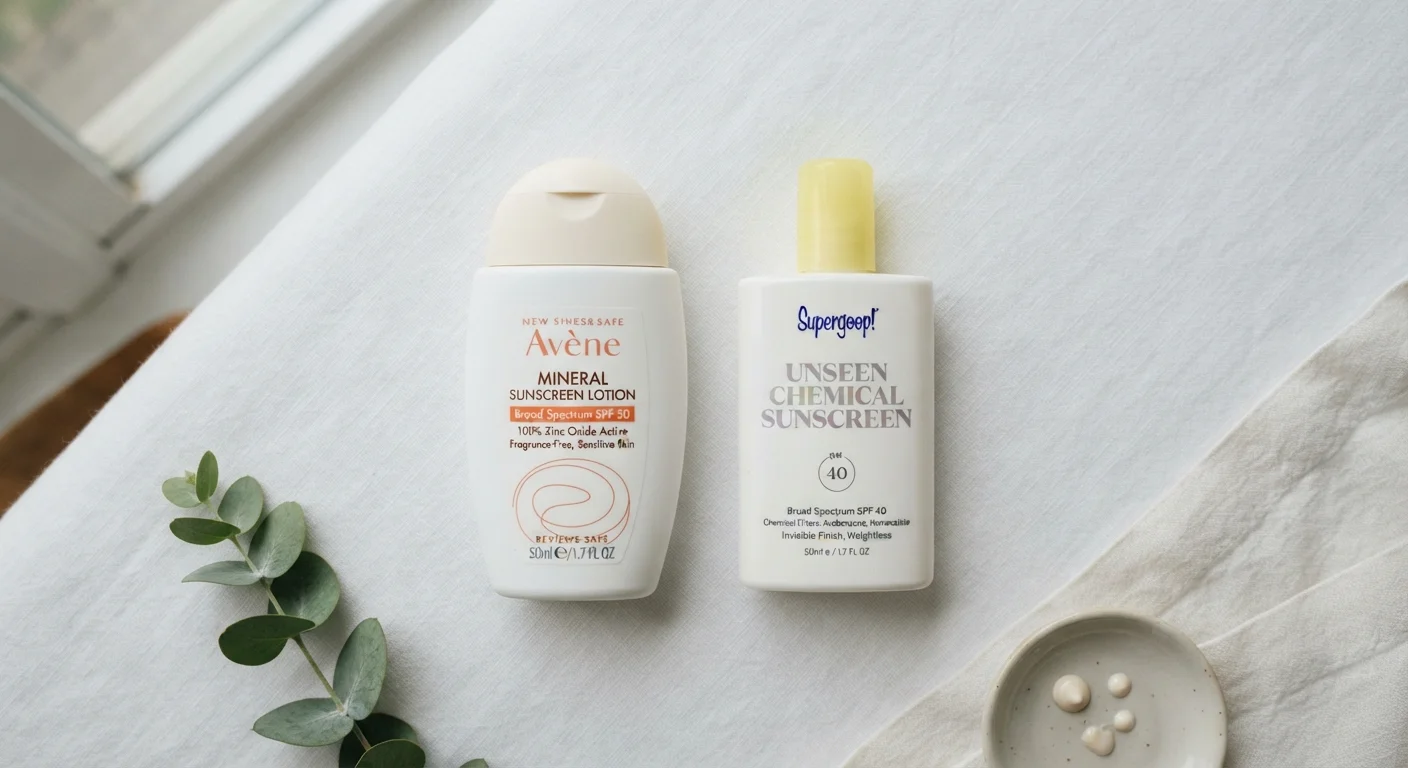
How Each Type Actually Filters UV Radiation
The core difference between chemical and mineral sunscreens comes down to mechanism of action, not protection strength.
Chemical sunscreens use organic (carbon-based) compounds - such as avobenzone, oxybenzone, octinoxate, or homosalate - that absorb UV photons and convert that energy into a small amount of heat, which then dissipates from the skin. Different chemical filters are tuned to absorb either UVA or UVB wavelengths, which is why many formulas blend several active ingredients to achieve broad-spectrum coverage.
Mineral sunscreens use inorganic compounds - zinc oxide and/or titanium dioxide - that sit on top of the skin and physically scatter and reflect UV radiation before it penetrates. This is why they're sometimes called "physical" sunscreens. Zinc oxide alone covers both UVA and UVB; titanium dioxide is stronger in the UVB range and requires a complementary UVA filter to be truly broad-spectrum on its own.
Understanding this distinction helps when reading labels. As our guide to skincare ingredient labels explains, active ingredients always appear in a separate "Drug Facts" box on U.S. sunscreen packaging - which makes identifying your filter type straightforward.
| Criterion | Chemical Sunscreen | Mineral Sunscreen |
|---|---|---|
| How it works | Absorbs UV, converts to heat | Reflects and scatters UV rays |
| Active ingredients | Avobenzone, oxybenzone, octinoxate, others | Zinc oxide, titanium dioxide |
| Time to activate | 15-20 minutes after application | Immediate upon application |
| FDA GRASE status | Insufficient data (most filters) | GRASE (both zinc oxide & titanium dioxide) |
| Finish on skin | Typically sheer, no white cast | Possible white cast, varies by formula |
| Sensitive skin suitability | Variable; some filters may irritate | Generally well-tolerated |
| Ingredient list complexity | Often multiple active UV filters | Typically one or two actives |
Safety, Skin Sensitivity, and the FDA Regulatory Picture
In the United States, sunscreens are regulated as over-the-counter drugs by the FDA, not as cosmetics. This distinction matters because the FDA periodically reassesses the status of UV filters.
As of the FDA's most recent proposal, only two active ingredients - zinc oxide and titanium dioxide - are classified as Generally Recognized as Safe and Effective (GRASE). Several commonly used chemical filters, including oxybenzone and avobenzone, have been categorized as needing more data before a GRASE determination can be made. This does not mean those ingredients are proven harmful - it means the FDA has determined that existing safety data is insufficient to meet its current standard. Research is ongoing.
For everyday consumers, the practical takeaway is that mineral filters have a longer regulatory track record. People with sensitive skin, reactive conditions like rosacea, or post-procedure skin often find mineral formulas less irritating - partly because zinc oxide has demonstrated anti-inflammatory properties in dermatological literature.
2
UV filters currently GRASE-classified by the FDA
Only zinc oxide and titanium dioxide hold the FDA's General Recognition as Safe and Effective designation among all currently marketed U.S. sunscreen actives.
SPF 30+
Minimum SPF recommended by dermatologists
The American Academy of Dermatology recommends using a broad-spectrum sunscreen with SPF 30 or higher for daily protection.
Every 2 hrs
Reapplication interval for effective protection
Both chemical and mineral sunscreens require reapplication every two hours of sun exposure, or immediately after swimming or sweating heavily.
That said, no sunscreen type is universally better for every skin type. Some individuals find that the emollients or preservatives in a mineral formula cause breakouts, while a lightweight chemical SPF causes no issues at all. Formulation quality - not just active ingredient type - plays a significant role in tolerability.
This article provides general informational guidance only and is not a substitute for advice from a licensed dermatologist or healthcare provider. Consult a qualified professional for personalized skincare recommendations.
Practical Differences: Texture, Application, and Routine Fit
Beyond mechanism and safety classification, the experience of using each type differs meaningfully day-to-day.
Activation Time
Chemical sunscreens require approximately 15-20 minutes after application before they become effective, as the filters need time to bind to skin. Mineral sunscreens are effective immediately upon application - relevant if you're heading outside quickly.
Finish and Wearability
Traditional mineral formulas - particularly those with higher concentrations of titanium dioxide - leave a visible white cast that can appear chalky on medium to deep skin tones. Micronized (finely milled) zinc oxide and titanium dioxide particles reduce this dramatically, but some cast may remain. Chemical sunscreens are typically sheer, making them easier to layer under color cosmetics.
Stability and Reapplication
Some chemical filters degrade more quickly in UV light than mineral filters do. Avobenzone in particular is photounstable unless paired with a photostabilizer like octocrylene or bisoctrizole (more common in European formulations). This is one reason experts universally emphasize reapplication every two hours, regardless of sunscreen type.
For those incorporating sunscreen alongside actives like retinoids - a topic explored in more depth in our retinol and retinoid breakdown - mineral SPF is often recommended during the adjustment period when skin is most photosensitive.
Broad-Spectrum Labeling: What It Means
A sunscreen labeled "broad-spectrum" in the U.S. must pass the FDA's critical wavelength test, confirming it provides meaningful protection across both UVA and UVB ranges. SPF alone only measures UVB protection. Always look for both "broad-spectrum" and an SPF of 30 or higher - the two together give you the most complete picture of a formula's protective scope.