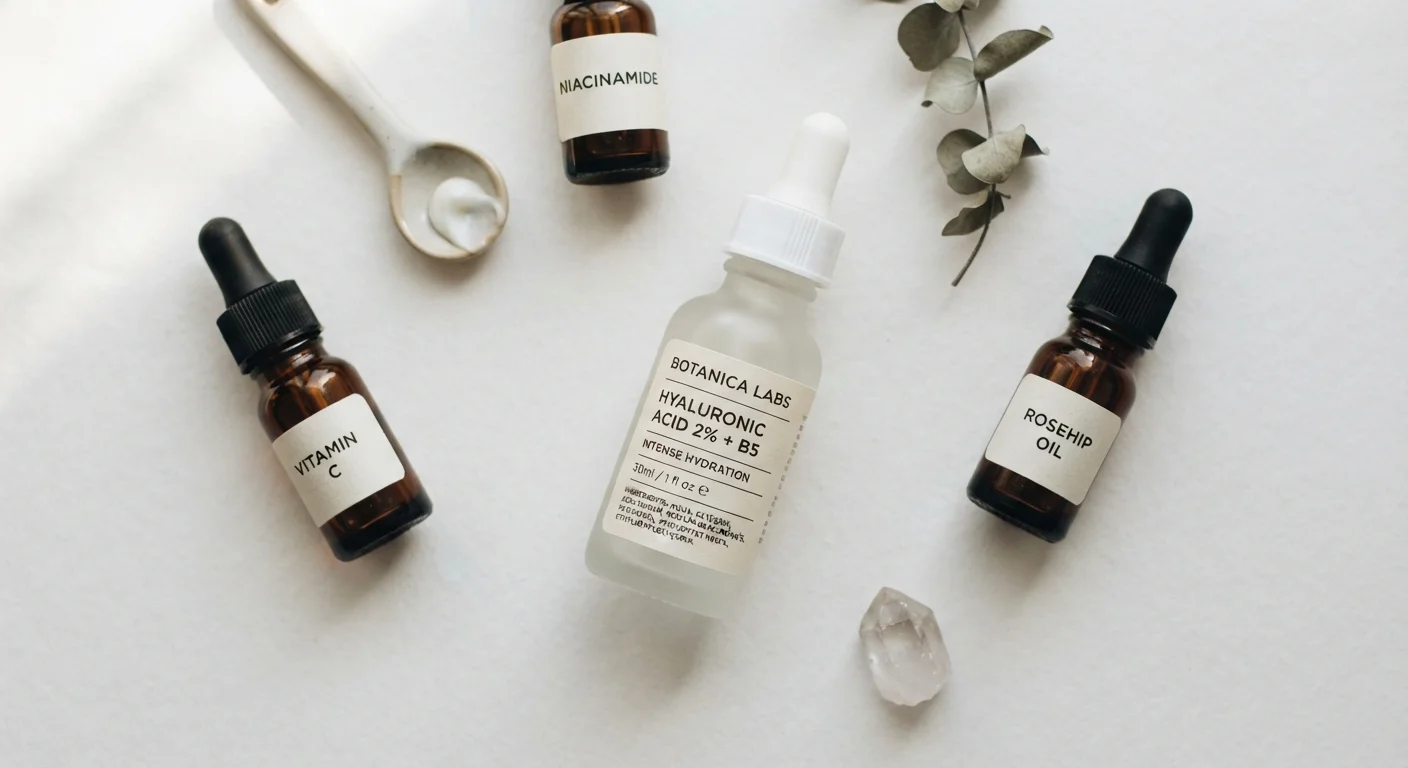
Why the Ingredient List Is the Most Honest Part of the Label
Front-of-package copy is written by marketers. The ingredient list is written by regulators. Under U.S. law, every cosmetic sold domestically must carry a complete INCI ingredient list - and unlike claims such as 'brightening' or 'age-defying,' the list is not optional or decorative. It's the closest thing to a factual disclosure you'll find on a beauty product.
The same logic applies here as it does when reading a food label. Just as reading a nutrition facts label trains you to look past serving-size tricks to the actual numbers, reading an INCI list trains you to look past packaging to the actual formula.
Label Reading Connects to Routine Decisions
Understanding what's in a product also affects how you use it. Knowing whether a formula is water-based or oil-based, or whether it contains a low-pH acid, informs the order you should apply products. For the logic behind sequencing, see our guide on skincare layering order.
Learning to read labels also pays off when you move into more advanced topics - like understanding how ingredient interactions affect skincare layering order.
How Concentration Order Works - and Where It Gets Complicated
The descending-concentration rule is straightforward at the top of a list. Water, glycerin, or an emollient base usually leads because they make up the bulk of a formula. But once you pass the 1% threshold, the rules relax: manufacturers may list sub-1% ingredients in any order they choose. That means two ingredients sitting next to each other near the bottom could have very different actual concentrations.
This matters when evaluating actives. Niacinamide, for instance, shows meaningful skin benefits in studies at concentrations of 2-5%. If it appears in the bottom quarter of a long list, that's worth noting. For a closer look at what the research actually says about this ingredient, see our article on niacinamide's evidence base.
~80%
Share of a typical emulsion that is water
Water commonly makes up the majority of water-based skincare formulas, which is why 'Aqua' appears first on most moisturizer and serum labels.
1%
Threshold below which ingredient order is flexible
U.S. cosmetic regulations permit manufacturers to list ingredients present at or below 1% concentration in any order after higher-concentration ingredients.
Dozens
Potential compounds behind a single 'fragrance' entry
Under U.S. law, a fragrance blend qualifies as a trade secret, meaning its individual components do not need to be disclosed on the ingredient label.
Similarly, retinol is active at fractions of a percent, so its position near the end of a list doesn't automatically signal a weak formula. Understanding the ingredient's effective dose range is as important as reading its position. Our guide to retinol, retinal, and retinoids explains the potency differences across this ingredient family.
Red Flags, Catch-Alls, and Marketing Language
A few label conventions are worth learning specifically because they obscure information rather than reveal it.
- Fragrance / Parfum: A single entry that can legally represent a proprietary blend of many chemical compounds. People with reactive skin commonly flag this as a variable to watch.
- 'Natural' and 'Clean': No federal legal definition exists for either term in U.S. cosmetics. These are voluntary marketing claims, not regulated certifications. The full breakdown of beauty marketing claims covers this in detail.
- Hyaluronic acid at multiple molecular weights: Some formulas list it more than once under different names (e.g., sodium hyaluronate). This isn't deceptive - different molecular weights penetrate differently - but it's worth knowing they're related compounds. See our piece on hyaluronic acid's actual function for context.
Sunscreen Labels Follow Different Rules
Products with SPF protection are regulated as over-the-counter drugs, not just cosmetics. Their active sunscreen ingredients appear in a separate 'Active Ingredients' section at the top of the label, before the INCI list for the rest of the formula. Don't confuse this separate section with a higher concentration - it's a regulatory distinction, not a formulation one.
Sunscreen is a special case: active sunscreen ingredients (like zinc oxide or avobenzone) are regulated as drug actives and listed separately under 'Active Ingredients' before the main INCI list. For more on how these differ, see chemical vs. mineral sunscreen.
A Practical Approach to Reading Any Label
You don't need to memorize hundreds of ingredient names to get value from an INCI list. A working method that serves most shoppers:
- Identify the base: The first three to five ingredients form the bulk of the formula. This tells you whether you're dealing with a water-based serum, an oil-rich cream, or a silicone-forward product.
- Locate your target actives: Search for the ingredients you're buying the product for. If they appear in the bottom fifth of a long list, research whether they're effective at low concentrations before drawing conclusions.
- Scan for known sensitivities: If you react to certain ingredients - fragrance, certain preservatives, specific botanical extracts - a quick scan of the list takes seconds and prevents a lot of frustration.
- Cross-reference unfamiliar names: INCI names are often Latin-derived and look nothing like a common name. Our beauty ingredient glossary translates 40 of the most commonly encountered terms into plain language.
This article is for general informational and educational purposes only. It is not a substitute for advice from a licensed dermatologist or qualified healthcare professional. If you have a skin condition or known sensitivities, consult a professional before changing your skincare routine.