Why Layering Order Actually Matters
Skincare products aren't interchangeable in sequence. Each formula has a molecular weight, a pH level, and a texture - all of which affect whether it can penetrate skin at all, or whether it gets blocked by whatever went on before it.
The core principle is simple: apply thinnest to thickest. Water-based products (toners, serums) have smaller molecules and need direct contact with skin to work. Oil-based products create a physical barrier - helpful for locking in moisture at the end, but counterproductive in the middle of a routine when you still need water-soluble actives to absorb.
pH also plays a role. Vitamin C serums and AHA/BHA exfoliants are formulated at low pH levels and work best applied to skin that hasn't been made more alkaline by another product. Applying them after a high-pH moisturizer can blunt their effectiveness.
If you're building or revising a routine from scratch, especially for sensitive skin, our sensitive skin routine guide walks through how to introduce products carefully and identify what your skin genuinely needs.
Cleanser
Removes surface debris, excess oil, and residual makeup before actives are applied.
Toner or essence
Restores skin's pH balance and can deliver a first layer of hydration or mild exfoliation.
Targeted serum
Delivers concentrated active ingredients (e.g., vitamin C, hyaluronic acid, niacinamide) to address specific concerns.
Moisturizer
Seals in earlier layers and maintains the skin barrier with humectants, emollients, and occlusives.
Facial oil
Adds an occlusive layer to lock moisture in; always applied after water-based products.
Broad-spectrum sunscreen (SPF 30+)
Protects against UV damage; the final step every morning without exception.
The Step-by-Step Routine
The following sequence applies broadly to both morning and evening routines, with key differences noted. Not every step is required every time - a minimal routine that you stick to consistently is more effective than a complex one applied inconsistently.
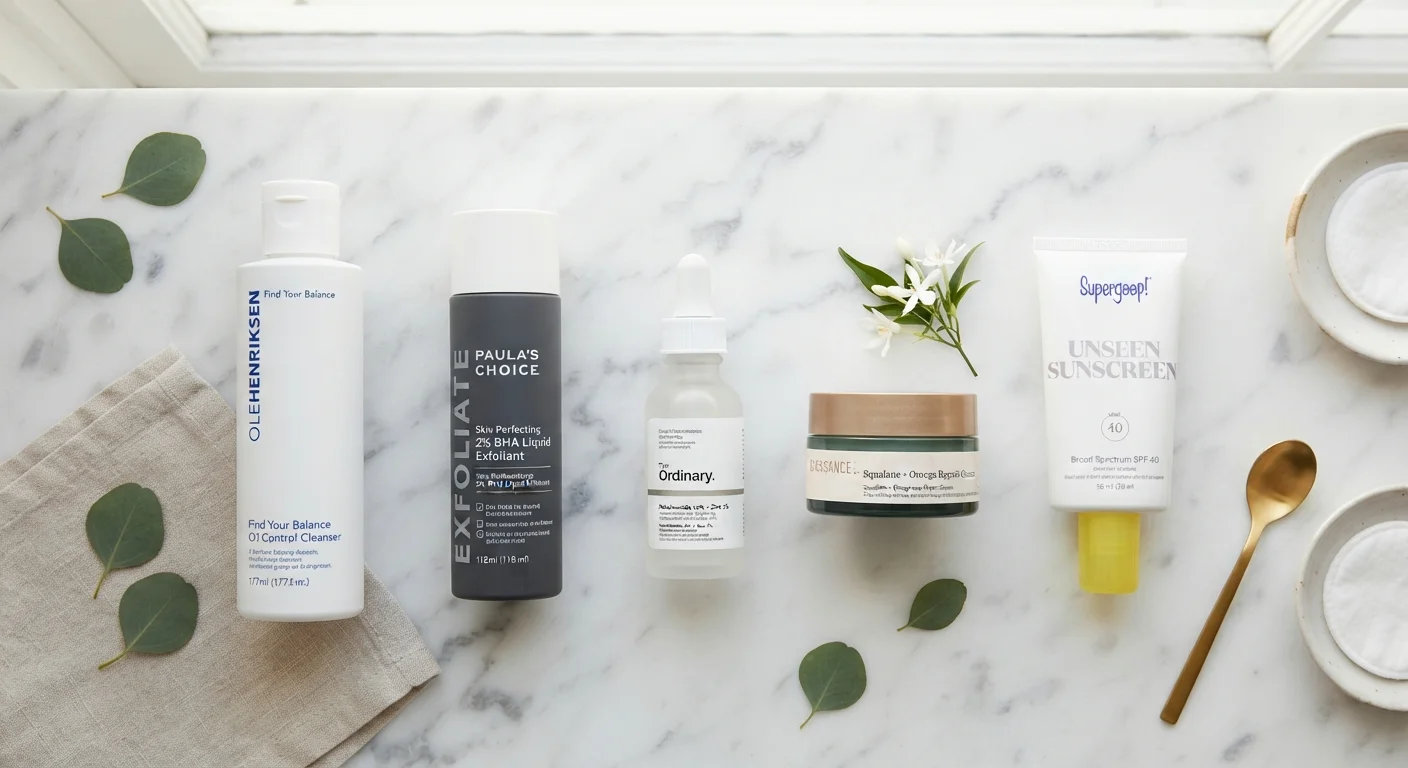
What you will need
Cleanse with a formula suited to your skin type
Start with a clean canvas. Cleansing removes the layer of oils, pollutants, and residue that accumulates on skin - if you skip this, subsequent products have to compete with surface grime to reach skin cells.
Use a gentle, pH-balanced cleanser. Foaming cleansers work well for oilier skin types; cream or gel cleansers tend to be less stripping for dry or sensitive skin. Avoid hot water, which disrupts the skin's lipid barrier - lukewarm is sufficient.
Apply toner or essence (if using)
Toners and essences are optional but functional. A hydrating toner can boost moisture uptake before serums; an exfoliating toner (containing AHAs or BHAs) removes dead skin cells to improve product absorption. Apply to a cotton pad or pat directly onto skin with clean hands.
If you're using an exfoliating toner, don't combine it with other acids or retinoids in the same routine without understanding the interaction. Our active ingredient compatibility guide covers which combinations to avoid.
Layer serums from thinnest to thickest
Serums contain higher concentrations of active ingredients than most other products. Because they're water-based and have smaller molecular weight, they need to contact skin before heavier creams create a barrier.
If you're using more than one serum, apply the thinnest (most watery) one first. Wait 30-60 seconds before the next. Common serum actives include hyaluronic acid (hydration), vitamin C (antioxidant protection), niacinamide (barrier support), and retinol (cell turnover - typically reserved for evening use).
To understand what those ingredient names on the label actually mean, see our skincare ingredient label decoder.
Apply eye cream (if using)
Eye creams are formulated for the thinner, more delicate skin around the eye area. If your regular moisturizer is fragrance-free and gentle, many dermatologists consider it adequate for the orbital area - a separate eye cream isn't mandatory.
If you do use one, apply it after serums and before your main moisturizer. Use your ring finger and tap gently rather than dragging.
Moisturize to seal and protect the barrier
Moisturizer serves a structural role: it locks in the layers applied before it and reinforces the skin barrier. Look for formulas that combine humectants (draw in moisture - e.g., glycerin, hyaluronic acid), emollients (smooth and soften - e.g., ceramides, fatty acids), and occlusives (seal moisture in - e.g., shea butter, squalane).
Apply while skin is still slightly damp from the previous step - this helps humectants do their job more effectively.
Finish with SPF every morning
Sunscreen is the final step in every morning routine. Broad-spectrum SPF 30 or higher is the general recommendation from dermatology organizations for everyday use. Apply it generously - under-application significantly reduces effective protection.
Chemical sunscreens (which absorb UV) and mineral sunscreens (which physically reflect UV, using zinc oxide or titanium dioxide) both work; the key is consistent daily use regardless of weather or season.
Morning and evening routines serve different purposes beyond just SPF. Our morning vs. evening skincare guide explains why certain ingredients belong at night and what your skin actually needs in the morning.
Don't Layer Incompatible Actives
Combining certain active ingredients - such as AHAs with retinol, or vitamin C with niacinamide at high concentrations - can reduce effectiveness or cause irritation. Before stacking serums, understand which actives play well together. See our guide to active ingredient combinations for details.
When in Doubt, Simplify
A three-step routine done consistently - cleanser, moisturizer, SPF - outperforms a ten-step routine applied haphazardly. Start with essentials and add one product at a time so you can identify what's working (or what isn't). This approach also makes it easier to spot the cause if your skin reacts to something new.
SPF Goes Last - No Exceptions
Applying moisturizer, facial oil, or any other product over sunscreen physically disrupts the UV-filter film and reduces protection. In a morning routine, sunscreen is always the final step before makeup. Using a separate, dedicated sunscreen is generally more reliable than relying solely on the SPF in a moisturizer.
This article provides general skincare education and is not a substitute for advice from a licensed dermatologist or healthcare professional. If you experience persistent irritation, breakouts, or other skin concerns, consult a qualified professional.