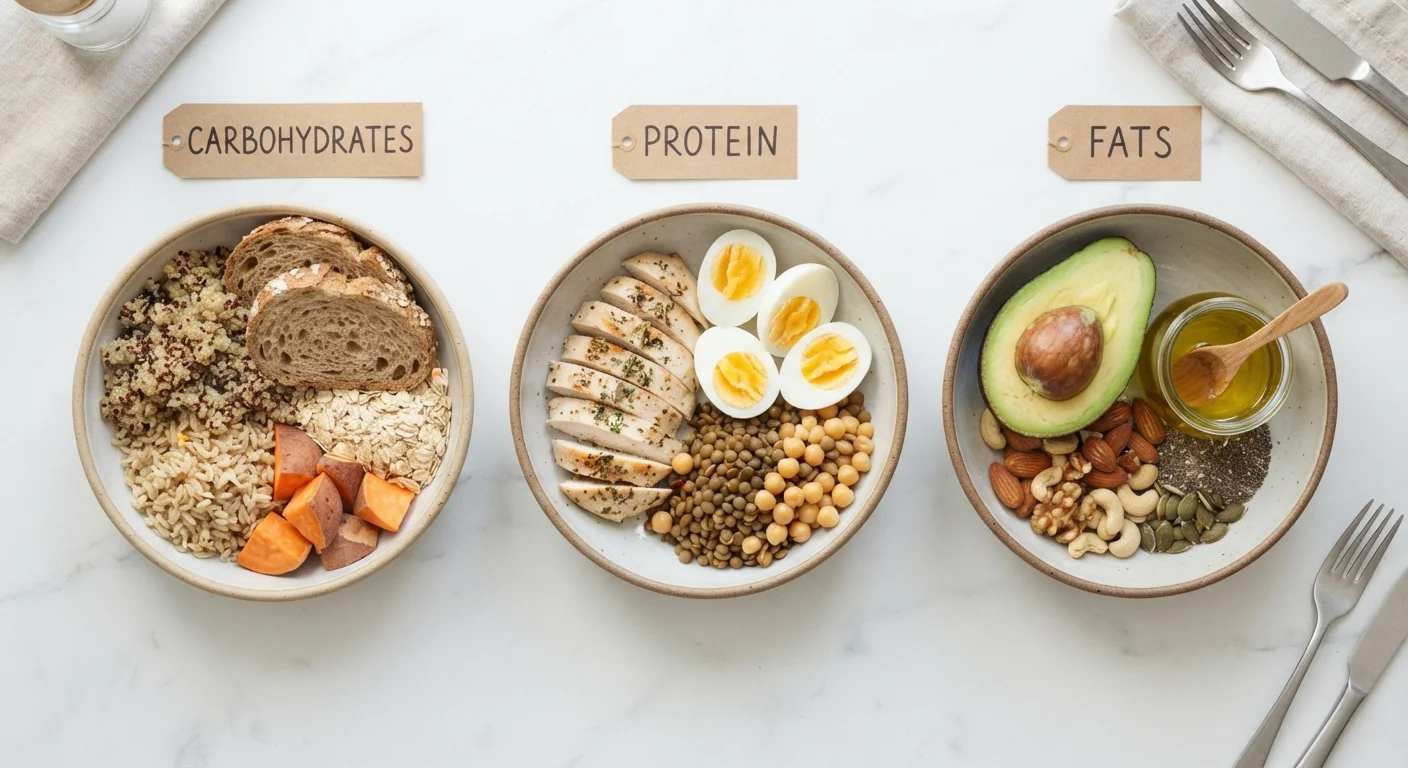
Carbohydrates: Your Body's First Choice for Fuel
Carbohydrates are the body's most readily available energy source, and the brain's preferred fuel. When you eat carbs - whether from oatmeal, fruit, or bread - your digestive system breaks them down into glucose. That glucose enters the bloodstream and powers cells throughout your body, including neurons that keep you thinking clearly.
Not all carbohydrates behave the same way. Complex carbohydrates - found in whole grains, legumes, and most vegetables - are digested more slowly, producing a steadier rise in blood sugar and providing fiber that supports gut health. Simple carbohydrates, found in table sugar and many refined snacks, are digested quickly and can cause sharper blood glucose swings.
Fiber, technically a carbohydrate, deserves special mention. Most Americans consume far less than the recommended amount. Adequate fiber intake is consistently associated with lower risks of heart disease, type 2 diabetes, and digestive disorders, according to research published by the Dietary Guidelines Advisory Committee.
Start with Food Quality, Not Macro Math
Before tracking grams or percentages, focus on the quality of your food sources within each macronutrient category. Swapping refined grains for whole grains, choosing lean or plant-based proteins, and favoring unsaturated fats are changes that tend to improve nutritional profiles without requiring a calculator. Small, consistent shifts in food quality often yield more sustainable results than strict macro targets.
For a practical look at how carbs, proteins, and fats appear on packaging, see our guide on reading a Nutrition Facts label.
Protein: The Building Block Your Body Cannot Skip
Protein is made up of amino acids - organic compounds your body uses to build muscle, produce enzymes, synthesize hormones, and repair tissue after injury or exercise. Of the 20 amino acids your body works with, nine are considered essential, meaning your body cannot manufacture them and must obtain them from food.
Animal-based proteins - such as meat, fish, eggs, and dairy - are considered "complete" proteins because they contain all nine essential amino acids. Many plant-based proteins are lower in one or more essential amino acids, but eating a varied diet of legumes, grains, nuts, and seeds over the course of a day can meet your body's full amino acid needs.
Protein also plays a meaningful role in satiety - it tends to keep people feeling fuller for longer compared to equivalent calories from carbohydrates or fat, which may help with appetite regulation. Older adults have particular reason to pay attention: age-related muscle loss (sarcopenia) is a real concern, and adequate protein intake is one evidence-supported factor in slowing it.
“The evidence consistently shows that the overall dietary pattern matters far more than any single nutrient. Demonizing one macronutrient while glorifying another has led to decades of unnecessary confusion and repeated diet failures.”
— Walter Willett, Professor of Epidemiology and Nutrition, Harvard T.H. Chan School of Public Health
Understanding protein needs alongside physical activity can sharpen your health strategy - our explainer on cardio vs. strength training covers how different exercise types affect muscle and energy use.
Fats: Essential, Not the Enemy
Dietary fat spent decades as a nutritional villain, but the evidence tells a more nuanced story. Fat is essential for absorbing fat-soluble vitamins (A, D, E, and K), producing steroid hormones including estrogen and testosterone, insulating organs, and maintaining the integrity of every cell membrane in your body.
The type of fat matters considerably. Unsaturated fats - found in olive oil, avocados, fatty fish, nuts, and seeds - are associated with reduced inflammation and better cardiovascular outcomes in numerous large-scale studies. Saturated fats, present in red meat and full-fat dairy, are still part of many healthy diets when consumed in moderation. Trans fats, once common in partially hydrogenated oils, are now largely banned from the U.S. food supply by the FDA due to their clear link to increased cardiovascular risk.
Because fat provides 9 calories per gram - more than twice the calories per gram of carbs or protein - it is energy-dense. This is not a reason to avoid it, but it is useful context when thinking about overall dietary balance.
90%
Americans not meeting daily fiber recommendations
The Dietary Guidelines for Americans identifies dietary fiber as a 'nutrient of public health concern' due to widespread underconsumption across all age groups.
9 kcal/g
Calories per gram of dietary fat
Fat is the most calorie-dense macronutrient - providing more than twice the energy per gram compared to carbohydrates or protein, each of which supply 4 kcal/g.
0.8 g/kg
RDA for protein in sedentary adults
This figure, established by the National Academies of Sciences, Engineering, and Medicine, represents a minimum baseline; needs increase with age, illness, and physical activity level.
If you want to explore structured dietary approaches that thoughtfully balance these macronutrients, our overview of popular diet patterns like Mediterranean and DASH breaks down the evidence behind each.
Why Balance Matters More Than Elimination
Fad diets frequently target one macronutrient for elimination - low-fat diets were dominant in the 1990s; low-carb and ketogenic approaches have dominated more recently. While short-term studies show that various approaches can produce weight loss, long-term adherence data is less consistent, and any diet only works if a person can realistically maintain it.
The broader picture from nutritional epidemiology suggests that diet quality - the overall pattern of what you eat - matters more than fixating on any single macronutrient. A diet rich in whole, minimally processed foods across all three macronutrient categories is consistently associated with better long-term health outcomes than one that severely restricts any category.
Persistent myths about macros - like the idea that carbs alone cause weight gain or that eating fat makes you fat - have been addressed repeatedly in the research literature. Our article on nutrition myths that refuse to die unpacks many of these misconceptions with evidence-based corrections.
This article is for general informational and educational purposes only and is not a substitute for professional medical or nutritional advice. Consult a qualified healthcare provider or registered dietitian before making significant changes to your diet.