Why Budget Eating Gets a Bad Reputation
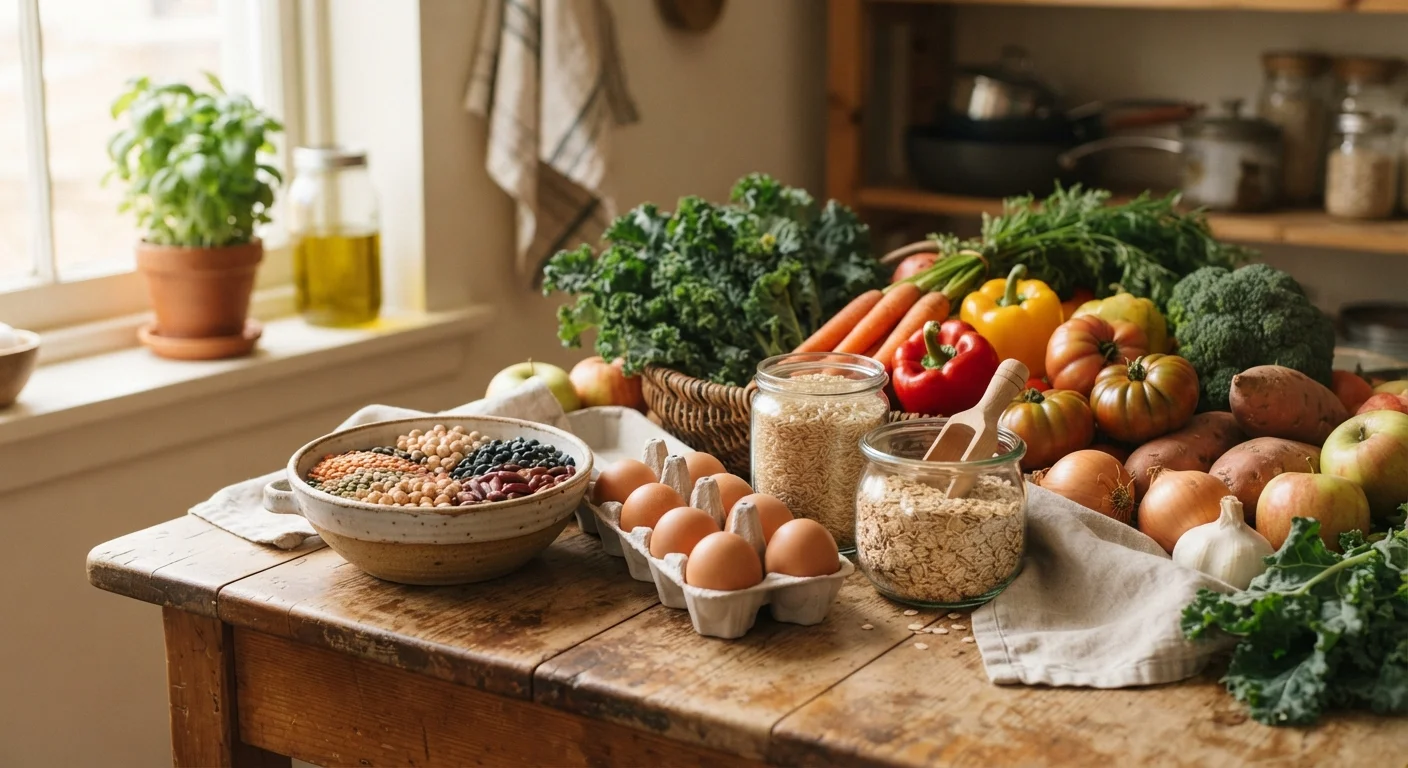
Many people associate affordable eating with nutritional compromise - less variety, fewer fresh ingredients, and more highly processed convenience foods. That perception is understandable but largely inaccurate. Research in nutritional epidemiology consistently shows that some of the most nutrient-dense foods available are also among the least expensive: dried legumes, eggs, canned fish, oats, cabbage, and frozen vegetables routinely outperform pricier alternatives on a cost-per-nutrient basis.
The challenge isn't that nutritious food is inherently expensive. It's that grocery shopping without a strategy tends to inflate the bill and reduce food quality simultaneously. Understanding a few durable principles can change that. For a complementary overview of what a balanced meal actually looks like, see Building a Balanced Plate.
“The most nutritious diets in the world are not expensive diets. Legumes, vegetables, whole grains - these are ancient foods that fed populations for centuries and remain among the most affordable items in any market.”
— Walter Willett, Professor of Epidemiology and Nutrition, Harvard T.H. Chan School of Public Health
Core Principles for Eating Well Without Overspending
The following practices are grounded in established nutrition guidance and practical household economics. They are not rigid rules - they're flexible frameworks that work across different incomes, household sizes, and dietary preferences.
Anchor meals around low-cost, high-nutrient protein sources
Protein is often the most expensive line item in a grocery budget. Shifting toward plant-based proteins like dried beans, lentils, and split peas - or affordable animal proteins like eggs and canned sardines - dramatically reduces cost without reducing nutritional value. These foods also provide fiber, iron, and other micronutrients that support overall health.
Buy frozen vegetables without nutritional guilt
Frozen vegetables are harvested and flash-frozen at peak ripeness, which preserves most vitamins and minerals. They reduce food waste significantly compared to fresh produce and cost less per serving. Nutritional science supports their use as a fully equivalent substitute for fresh in most cooking contexts.
Build meals around whole grains instead of refined alternatives
Whole grains like oats, brown rice, barley, and whole wheat pasta are modestly priced, filling, and associated with better long-term health outcomes in population studies. They provide fiber that supports digestive health and helps regulate appetite, making meals more satisfying per dollar spent.
Write a focused grocery list and stick to it
Unplanned purchases are a primary driver of both food waste and grocery overspending. A list built around a weekly meal plan keeps spending targeted, reduces duplicate purchases, and ensures ingredients are actually used before they spoil. It also makes it easier to shop across store formats - discount grocers, farmers markets, and standard supermarkets - without losing track of what's needed.
Cook from scratch more often, even in small increments
Home cooking is one of the most reliable levers for reducing food costs without reducing nutritional quality. Even partially scratch-cooked meals - combining canned beans with fresh aromatics and grains, for example - typically cost less per serving than packaged equivalents and allow control over sodium, fat, and ingredient quality.
Planning as a Nutritional Tool
Meal planning is often discussed as a budgeting tactic, but it functions equally well as a nutritional one. When you decide meals in advance, you're more likely to hit variety targets across food groups and less likely to rely on last-minute, high-cost convenience purchases.
~$1.50
Average cost per serving of dried legumes
USDA food cost data consistently places dried beans and lentils among the most affordable protein sources available in U.S. grocery stores.
30-40%
Estimated household food wasted annually
USDA estimates suggest that American households discard roughly a third of the food they purchase, making waste reduction one of the highest-impact budget strategies available.
A simple weekly plan doesn't need to be elaborate. Mapping out five to six dinners, using overlapping ingredients across meals, and building a focused grocery list around that plan can meaningfully reduce both waste and spending. Our weekly grocery planning guide offers a structured checklist to make this process straightforward. For broader household budget context, the principles in building a sustainable monthly budget apply directly to grocery spending as well.
Avoiding Common Mindset Traps
One of the quieter obstacles to budget-conscious healthy eating is all-or-nothing thinking - the belief that eating well requires organic produce, specialty grains, or expensive supplements. This framing, reinforced by wellness marketing, sets an unnecessarily high bar that can lead people to abandon realistic progress in favor of unattainable ideals.
Conventional frozen vegetables are nutritionally comparable to fresh, and in some cases retain more micronutrients due to rapid post-harvest freezing. Store-brand canned goods carry equivalent nutritional profiles to name-brand equivalents. Recognizing where these traps show up in your own thinking is part of building a sustainable approach. Common nutrition thinking patterns worth recognizing covers this in useful depth.
If you're also curious how structured eating patterns - like Mediterranean or DASH - fit within a budget, see how these three diet patterns compare.
This article is for general informational and educational purposes only and is not a substitute for personalized advice from a registered dietitian or qualified healthcare professional. Individual nutritional needs vary; consult a qualified professional for guidance specific to your health situation.