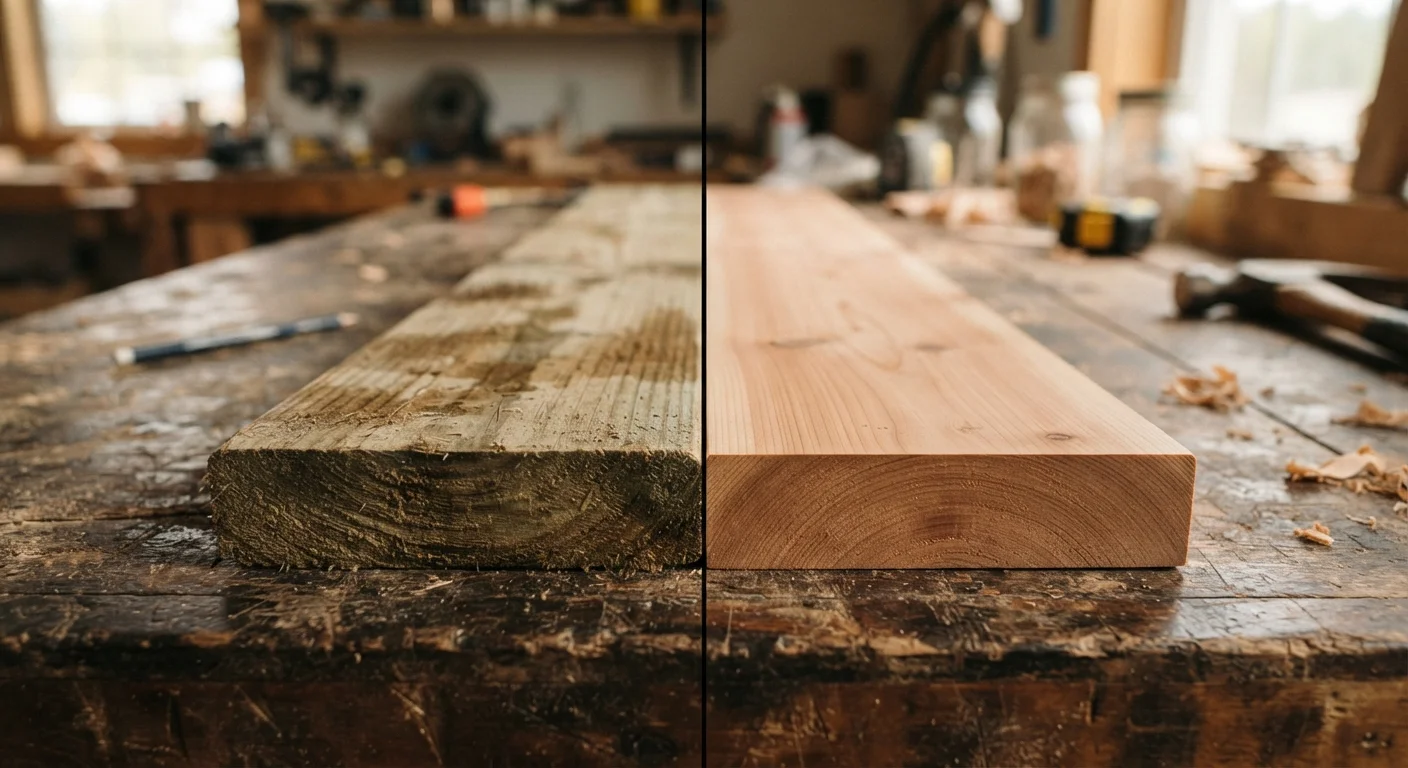
How Each Wood Resists Rot and Insects
Understanding why these two woods hold up outdoors helps you choose the right one for your project. The mechanisms behind their durability are completely different.
Pressure-treated lumber starts as softwood - typically southern yellow pine - that is vacuum-impregnated with chemical preservatives. Modern formulations use copper-based compounds (most commonly alkaline copper quaternary, or ACQ, and copper azole) that make the wood toxic to fungi and insects at a cellular level. Boards are rated by their retention level, from above-ground use (UC3) to ground contact (UC4A/UC4B) and even below-grade or marine environments.
Cedar - usually western red cedar in North American markets - contains natural oils and tannins that resist moisture absorption, fungal growth, and insect damage. No chemicals are added. However, these oils gradually leach out over time, which is why older cedar requires more diligent sealing to maintain its resistance.
Check the Treatment Rating Before You Buy
Pressure-treated lumber comes in multiple use classifications. Boards rated for above-ground use (UC3) are not the same as those rated for ground contact (UC4A or UC4B). Using the wrong rating in a ground-contact application can lead to premature rot. Always confirm the stamp on the board before purchasing, and check with your local building department regarding code requirements for your specific project.
A practical rule of thumb: use pressure-treated lumber anywhere the wood contacts or is close to soil, concrete, or standing water. Use cedar where the wood is above grade and visible.
Cost, Workability, and Practical Handling
Budget and ease of use are real factors in any DIY project, and these two materials differ meaningfully on both fronts.
| Criterion | Pressure-Treated Lumber | Cedar |
|---|---|---|
| Rot resistance mechanism | Chemical preservatives (copper-based) | Natural oils and tannins |
| Typical cost (relative) | Lower (40-60% less than cedar) | Higher per board foot |
| Weight | Heavier (moisture-laden when fresh) | Lighter and easier to handle |
| Appearance | Greenish tint; less attractive naturally | Warm reddish-brown; attractive grain |
| Ground-contact suitability | Excellent (rated UC4A/UC4B) | Not recommended |
| Ideal for raised vegetable beds | Debated; many gardeners avoid it | Preferred choice |
| Typical lifespan (maintained) | 40+ years (ground contact) | 15-25 years (above grade) |
| Ready to finish after install | No - needs 6-12 months to dry | Yes - can stain relatively quickly |
Cost: In most U.S. markets, pressure-treated lumber runs roughly 40-60% less per linear foot than cedar of the same dimension. For a 400-square-foot deck, that difference can add up to hundreds or even thousands of dollars in material costs alone.
Workability: Cedar is lighter and softer, making it easier to cut, nail, and screw without pre-drilling. Pressure-treated pine is denser and heavier, and freshly treated boards contain significant moisture - they can be difficult to work with immediately and often warp as they dry. Many professionals recommend letting pressure-treated lumber acclimate for several weeks before installing finish surfaces.
Safety handling: Always wear gloves and a dust mask when cutting pressure-treated lumber, and wash hands after handling. Treated sawdust should not be burned or composted. Cedar dust is also an irritant, but the handling precautions are less stringent. Check the manufacturer's safety data sheet for the specific treatment used.
Maintenance, Longevity, and Where Each Wood Fits Best
Neither wood is truly maintenance-free, but their upkeep needs differ and should factor into your planning.
Pressure-treated lumber should be sealed or stained after it has dried (typically 6-12 months after installation). Once sealed, it benefits from reapplication every 2-3 years. When properly maintained in a ground-contact application, quality treated lumber can last 40 years or more. In above-ground use without maintenance, expect 10-15 years before significant degradation.
Cedar should be sealed or stained within the first year, and resealed every 1-3 years depending on sun and moisture exposure. Untreated cedar will gray naturally - some homeowners prefer this look - but its rot resistance diminishes over time without sealer. Maintained cedar decking or fencing typically lasts 15-25 years above grade.
For raised garden beds, cedar is the conventional recommendation because of concerns about chemical leaching near edible plants - though current research and the EPA suggest that modern copper-based treated lumber poses minimal risk at normal exposure levels. Still, many gardeners prefer to avoid it for food-growing areas. See our guide on raised beds vs. in-ground planting for more on building productive garden setups.
If your project involves both structural framing and visible decking surfaces, a common professional approach is to use pressure-treated lumber for the joists, posts, and beams - then cedar (or composite) for the deck boards themselves. This hybrid approach balances structural durability with a better surface appearance and feel.
For other outdoor material decisions, the same logic of matching material properties to use conditions applies - as covered in our comparison of hardwood vs. engineered wood flooring.
40+ years
Potential lifespan of ground-contact treated lumber
According to the American Wood Protection Association, properly maintained UC4B-rated pressure-treated wood can last 40 years or more in ground-contact applications.
15-25 years
Typical above-grade lifespan of maintained cedar
Industry guidance from forestry extension programs suggests well-maintained cedar fencing and decking lasts 15-25 years under typical North American weather conditions.
40-60%
Cost premium of cedar over pressure-treated lumber
General lumber pricing comparisons across major U.S. home improvement markets show cedar boards commonly cost 40-60% more per linear foot than equivalent pressure-treated pine.